Men strapped into floating beds, and other things we don’t understand

Why is the man strapped into the bed Grandma?” And there begun the attempt to explain gravity to a two and a half year old during her bed time story as she pointed at the picture book. But she wasn’t taken in. “Why is the bed floating in the sky?”

This grandmother didn’t tell the young girl to stop being stupid because you know, bed’s don’t fly. Nor did she say stop asking questions, just accept that the bed is floating in the sky.

Small children are inquisitive, they ask questions, and they know when you’re not given them the full answer. They keep asking questions, they want to understand. Because beds stay on the floor and people aren’t strapped into beds. So why is the man strapped into the bed, and why is the bed floating round the sky?

If this young girl decided to start a global conversation about beds flying around the sky and the inequity of men being strapped into such beds we might find it cute, we might admire her pluck and wish her well.

But we’d also want to encourage her to look at some books, consider what others have said and discovered in the past as they explored the same dilemma. Why does the apple fall from the tree? Why do objects float in space?

I don’t really understand why beds float through space, or would if there were any out there. You can tell me it is about gravity, and why that disappears in space. You can explain to me the pull of the earth, the moon and the tides. I can read and I can learn. And this makes me think, perhaps I should understand a little more about gravity – I have stopped asking the questions that are obvious to a small child and just accepted that when I get to bed tonight I don’t need to be strapped in.
open-bible Continue reading

If young people don’t go to church, what should we do about it?

iPhone July 2011 005 - Copy

What can the church do about the crisis of young people and the church, and what should it do about it?

There are young people in churches up and down the country, but there are less than there were, and they tend to go to certain churches. So why do they go to some and not others? What do those churches which are growing do right, and what do others do wrong? Or, is it that those churches which are growing are selling an easy faith which may swell the attendance but weaken the body of Christ?

We could get all the young people in the country into a church building on a Sunday morning and miss the point.

The reality is that many young people stop going to church. The Titanic drowned with a fatality rate of 68 per cent. That’s about the same rate of attrition of young people from the church.

A friend introduced me to the difference between something being difficult and it being hard. There are many things which are hard, but not difficult, for example, it is hard for me to ask a girl out, it is hard to admit fault when you’re responsible for something going wrong. These things are not difficult, they’re hard. And maybe church should be like that. Maybe it should be a challenge, something that takes effort, not laden with obstacles and complexities to weave through and overcome but a hard thing to do.

In the West Wing Josh and Toby are in a bar after getting left behind by the campaign motorcade, they talk to a chap worrying over paying for his daughter to go to college – the stock market had taken a tumble that day. It should be hard. I like that it’s hard. Putting your daughter through college, that’s-that’s a man’s job. A man’s accomplishment. But it should be a little easier. There is a value to something that is hard that is missing if it doesn’t require effort. (We’ll ignore the gender stereotyping.)

Our approach to getting young people into church has bordered on the, if we try hard enough we’ll get them into church without them ever noticing it’s church, and voilà! we have success.

The gospel is a challenge, the cross is a stumbling block, the life of a disciple is not a promise of an easy way ahead.

Some terms need clarifying, principally, what is meant by young people? Traditionally this would mean those below 18, but it’s now a term without clear boundaries and reflects the onset of adult adolescence across society. This matters because the stage of life that people would previously been at in their early twenties is now rarely the case. Far fewer are settled in a career, married, and starting a family, and this affects their relationship with church. Young people usually refers to those up to 30, and in church context sometimes includes them quite a bit older than that. It also usually applies to single people regardless of age over and above married couples and those with children. Youth becomes a synonym for flexibility and in turn understood as a lack of commitment.

Secondly, are we interested in getting people into a church building and sitting through services, or helping people follow Christ? We’ve done too much of the former and not enough of the later.

We’ve tried to be culturally relevant. And we find that culture changes. We’ve cropped our services of the bizarre and our beliefs of the baffling. We’ve heard the cries and criticism levelled against the church and there’s been calls from within to dance to their tune. If people don’t go to church because of this or that (judgemental, hypocritical and bigoted usually cited as the unholy trinity) then if we change surely they will come.

But Andrew Evans makes a good point, where are the flocks of young people heading to those churches and faith communities which have jettisoned much of Christian teaching to be more like the mores modern society apparently demands?

I do not want to be dismissive of the critiques with which the church is charged. They are serious and often based on very real experiences and observations. The church can be hypocritical, judgemental and bigoted. But I don’t think they’re the full reason many stay away from church.

I think they play a greater role in explaining why people might have stopped going to church, when the picture of Christianity painted by the church manifestly fails. When it is wrong, when authority is abused, when being right is the most important thing. In so many places in so many ways the church falls down in its role as Christ’s bride. It does a disservice to the God it represents.

If the church changes to what it thinks people want it to be then it loses its foundation. It becomes nothing more than a religious themed social club.

Before the church decides to adopt this or ditch that in an effort to attract more people or cling onto those drifting off the edge it has to first know what it is that it wants people to join or remain a part of. Otherwise it is a catch all for whatever works best.

The church is a people transformed by the grace of God and called to serve Him and make him known. The church is to be the agent that helps bring about heaven on earth, to rend open the curtains of darkness and find a way for the light to shine in. We don’t do this by throwing a blanket over the lamp just in case it blinds someone.

We need confidence in who we are, and what we’re called to, and then we can shed the extraneous baggage that is a barrier to people coming to know Jesus. But if we start jettisoning with our focus on people liking the church, or increasing attendance at services, when people reach the curtain to find out what is behind, it could be a bit like the Wizard of Oz, with a faith castrated and a god shrunk to the size we can understand and enjoy.  

Church: a place, a people and a purpose

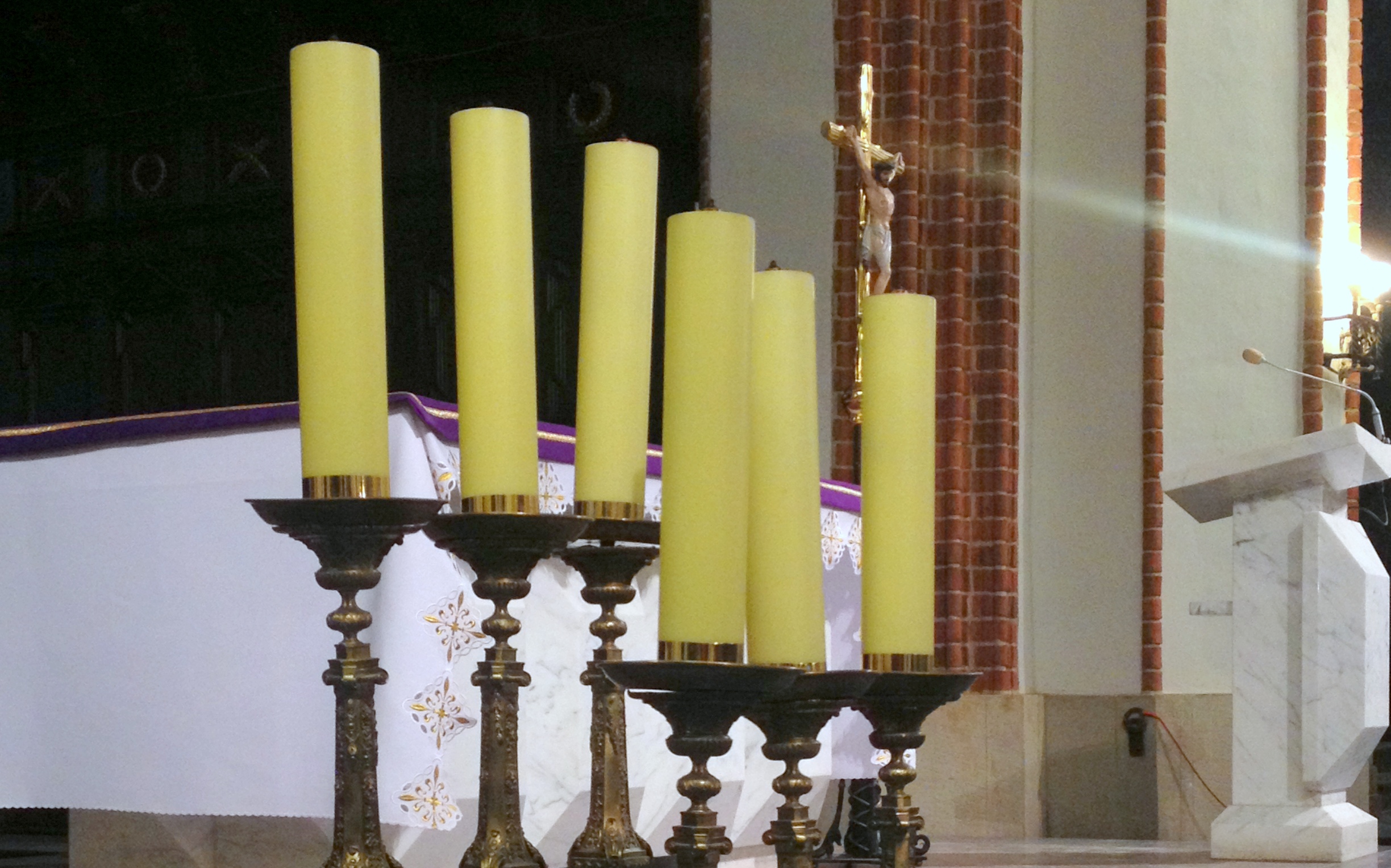
Warsaw church candles

Every Sunday afternoon I cross the Thames, usually over Millennium Bridge and walk into a conference centre. Some weeks I’m away, but I can’t remember the last time I missed a Sunday I could make.

I go to church.

I walk into a crowd of a few hundred people, more than I can ever know, even their names. And yet, it is the place that I am known. There are people who know my fears, who know my doubts, have seen my failings, have heard my anger. And those who’ve seen me kind, watched me excel, encouraged me to grow, pushed me outwards, upwards, and delved into the places I would choose to keep to myself.

Church is home.

It’s not always easy, it’s frequently hard, painful, annoying, boring, it exhibits all those dreadful traits, the ones we have ourselves but expect the church to be above. For the first eighteen months I went to this church I would arrive as the worship team struck the first chords and slip out as the ministry team offered prayer at the front. I was leading a small group for most of this time, I had responsibility, I welcomed people into a place and into a community that I didn’t feel welcomed in.

Some essential caveats to begin with. I know the church is not about buildings. I grew up in a charismatic congregation began by students in the 1970s, and which my parents joined soon after, it met in schools, colleges, graduated to a lecture hall in Southampton University before buying the old Methodist Central Hall in the city centre. We held a church picnic when the purchase was completed, all I remember was playing hide and seek and finding a nook to hide in the huge organ soon to be ripped from its setting. Continue reading

Good works or good news – must we choose?

Good works or good news – must we choose? from Evangelical Alliance on Vimeo.

Last November I gave a talk at the Evangelical Alliance Confidence in the Gospel consultation on ‘A Public Gospel’. I discuss the challenge for churches in working with local authorities, and in particular whether working with them affects their ability to share the good news.

You can read more or less what I said here, but this is a subject I am going to return to. Mez McConnell, who I heard at the Scottish Prayer Breakfast last year, has written about mercy ministries and provokes the evangelical church to have a long hard think about the impact such activities have, both on the ability to share the gospel, and also on providing real and lasting help.

His words contain one of the most striking indictments against the UK church – the frequency with which he is called by pastors who have someone who has come to know Jesus and they don’t know what to do because they don’t fit into the middle class church they have.

I think churches running food banks are fantastic. Churches are the people who stay in communities when everyone else leaves. They are there before the funding kicks in and after it is cut. They are lifesavers. But the church must also critically reflect on what it is doing, and the impact that is having – both on the community and the church.

The reasons for mercy ministries are fairly obvious, at least I would hope so. But what are the downsides, or perhaps phrased better, what are the unintended consequences we must be aware of?

Knowing when it’s time to leave

Heart of Tuscany July 2013 089 - Copy

I’ve been part of four churches in my life. I’ve visited many more but I’ve only ever changed church when I moved city.

From birth to 18 I went first at my parent’s bequest and then under my own intent to the same church, it moved venue, morphed form, but it was the same church. It never crossed my mind that I would leave it but for the reason I did. I moved nearly 200 miles north and very quickly found the next church which would be my home while I studied. There was a year in London which I’ll come to soon, then back to Southampton for a couple of years at the church I grew up in, and back to London with over five years in the bank at my present church.

And in only one phase of my life have I thought seriously about leaving church because of something to do with it rather than my circumstances.

Recently I’ve had quite a few conversations about leaving church. It’ll crop up in different environments, some who I know well, others I don’t. Some go to my church, others might end up coming there. I also remember several in the past with people who had left my church and were going elsewhere or not really going at all.

After I graduated I moved to London. Having grown up in a church there was always an element of familiarity about the congregation, and at university there was the safety of crowds as we visited churches and decided which we would be a part of. There were special activities for students, special groups, courses, socials, buses laid on to get to campus and back. There were lunches and bouncy castles, worship nights and designated pastors. I was catered for.

And then came the prospect of walking into church alone, searching for a place of worship I would fit into, a place I would be known and know others. I went to a service I liked, a location that worked, one with friends and they were three different places. I opted for the first, a place a little distance from home but most familiar in style and substance. On paper it was a good fit. And yet, a year later I left London and my exit from church required no send off, there was no point of departure, I had already drifted far from the church, my attendance on Sundays required only the vaguest excuse to slip, and small group was a tyranny of small talk among people I never got to know.

It was a church I should have left earlier. Back in Southampton I felt at home, I felt like I belonged and I feared returning to London. When I returned to the capital in the summer of 2008 finding a church where I could settle was the most pressing of my anxieties. I had the same dilemma, the same lonely sense of walking into a crowd. For the first year, even as I took on responsibilities and leadership, I walked in and walked out, I connected occasionally with individuals but church was a difficult place. It was not home.

I don’t know when it changed but I know what happened. I turned around and realised that the people I worship with on a Sunday, the leaders who’s authority I respect and the friends I spend time with, times of prayer and times of pranks. I realised these people were the ones I wanted to be walking this road with.

Leaving church is not a question of doctrine or principle. It is at root a pastoral concern. There are good and bad reasons to leave church, and behind each good reason can be bad motives, and behind each bad reason a strand of good.

I first heard about “5 really bad reasons to leave church” when Hannah Mudge responded to it. Her substantive point is one I agree with, this has to be about responsibility on both sides, that of the pastor looking after their congregation and those attending looking for something more than the next thing to consume to make them feel better. Relevant reposted it and even more people were talking about it. 

Of his points, on not agreeing with everything taught, I have little to add, although it does pose the question of where does this end? Should we accept any amount of disagreement with what is taught? Sarah Bessey poses the question whether egalitarians should attend complementarian churches and presumably a similar question would work in the opposite direction.

His point about size is lacking in any nuance, big is not always beautiful, and nor is it always preferable to small. I don’t think it’s good for churches to despise growth, or go out of their way to avoid getting bigger, and I like big churches (by UK standards), but there are many valuable things about smaller congregations his comment ignores.

On conflict, again this is a point that requires nuance and we get a little bit. Conflict is a fact of life but there comes a point when it is detrimental to the life and ministry of the church and its members. If and where it can be resolved that is to be welcomed but it shouldn’t be held out as an an elixir that will one day come.

His other two points are basically the same, congregations are too consumerist and leave when they don’t get what they want. This is a problem that is legion across out culture and he is right to point it out. At the RZIM training day on Saturday Michael Ramsden addressed this point, when we treat church and its component parts as something we can use we devalue it. When we are only in it for what we get out of it we deprive the relationship of the very thing that makes it a relationship. When we do not connect, with God and others, when we do not commune, we use. And when a relationship becomes about use and what we can get out of it we start to question the purpose of the relationship in the first place. It’s an important point he makes and a challenge the church has to address.

But he overstates his point and misses the other side of the story. For each of his reasons there could be good motives behind them and bad motives. Leaving church is a pastoral issue and one not best dealt with by criticising people for consuming church. Otherwise the congregation becomes an object of use for the pastor and not a people with whom to connect. It can sound, as Hannah Mudge noted, rather like asking someone to stay in an abusive relationship.

Leaders of churches have a responsibility to listen to their congregation, if people are leaving, then maybe something needs to change. There is a responsibility on leaders to do more than tell their congregation to suck it up and stop complaining. Telling the congregation they can listen to podcasts if they’re not getting enough teaching suggests maybe teaching in a church service doesn’t matter that much. We should seek to serve the church and not just be served, but we should aim for more than that. We should search for a church where it is home. Where we treat one another as family. Where we grieve when one another leaves. When while we may give to the child who only comes to visit when they need bailing out of debt, we long for so much more.

Church cannot be about people stifling their criticisms or using the internet as a permanent addendum to the Sunday service. It must be about where frailty is welcome, from the pews and from the pulpit. When the teaching can be improved and the service strengthened. When size and shape are methods and modes and not metrics of success.

Church should be a home with all the honesty and the struggles and the tensions that any family has.

I never really criticised the church I was part of for a year when I first lived in London. I didn’t care enough about it. I wasn’t in relationship with it. I was consuming but not connecting. When we connect we care, and when we care we want to see things grow closer to how they ought to be.

UPDATE

It’s been pointed out that I don’t answer the question I pose, when is the right time, or the right reason to leave church? I think that’s because I don’t know, for me I know in hindsight I should have left one church earlier, not because there was anything particularly wrong with it, but because I wasn’t connected to it. But I can’t give you 5 reasons why you should leave a church. I think leaving a church is a hard thing to do, and often involves letting go of relationships. Ultimately, I think churches should be positive about their members going elsewhere if that will enable them to grow closer to God and into greater likeness to him. There’s a tension between listening to concerns, being committed to the mission of the church, and being willing to let people go. Also, there is departure that is about going onto something new, and departure that is about getting away from something. Both in their time have their place but are two quite different situations to address.  

What if?

What ifI wrote this in February 2007 inspired by this advert from Honda. I remembered it yesterday. (I realise I’m supposed to be on a break from blogging.)

If we know how much God loved us would we need anything more?

Would we be stranded by our indifference yet alienated by our cause?

Would we be intoxicated by worldly charms yet remain so unfulfilled?

Would we barely blink at the pain of millions and turn our noses up at the poor?

Would we accessorise the crucifixion instead of making it our core?

We switch channels to ignore the plight of the dying, the used, the abused.

If we know how much God loved us would we walk by our enemy on the floor?

Would we live our lives in secret, with a false façade to who we are?

What if we shrugged off our respectability and refused to conform?

Stood up to be counted joining hands with the poor,

What if we know we were no different, broken to the core?

What if the world around us noticed that we are all losers and freaks?

But that the grace of God is greater than the depths of our grief.

What if the broken world around us provoked us to react?

Towards conciliation not Constantine or compromise.

What if we know God has a plan for us all?

Not just those in full time ministry or missionaries to the poor,

A life for everyone of us, dedicated to his cause,

What if to get to Heaven you had to go through Hell?

If our brokenness and sinfulness was overruled by Imago Dei.

He taught us to walk but we fled from his throne room.

What if our chains of pride were broken?

Our bonds and shackles released?

What if our dreams and fears existed in the same place?

What if everything we ever wanted cost us everything we had ever achieved?

And earthly things meant nothing,

Could not break our resolve,

Could not shake our conviction,

Could not capture our soul,

What if we stepped out believing that God had more for us than this?

A hope for the future,

A better day to come,

A life that is worth living, for the glory of the son.

What if we all began to pray like it was our last day here on earth?

What if we know how much God loved us, would we need anything more?

Hitting the pause button

single contact person

I thought it would be good to write a spectacularly emotive piece today. I wanted to conjure up sentences that flowed smoothly together building up into a powerful picture.

But actually, the fact I cannot illustrates my point far better than they would.

I am tired. I am exhausted. I am doing too much. I am stopping blogging.

Yesterday was an abnormally busy day. I started writing that day’s post, on why I was giving up on my fundraising drive. And ended it writing a guest post for the God and Politics blog on the ludicrous new report out from the National Secular Society. And in between worked flat out.

That’s one day, and an unusual one at that. But I have realised I need space. I read yesterday on a slightly feminine blog about the need to keep the margins of life clear. My life has no margins.

I have tried, in these last few weeks, to find some smidgen of space to assess my busyness and what I can do about it. Except I haven’t had the time to

I have found I have not given to my relationships what I would like to give to them. I have avoided entanglement opting instead to keep things simple, superficial and easier to withdraw from. That’s why I wrote on Wednesday about the challenges I find with blogging and tweeting and the social side of social media. I don’t want to make claims that are too wide or accuse others where it is me at fault, but I have found it oppressive.

Sometimes I want the world to stop. Sometimes I want to pause the internet. I want time to think, work out how to respond, what to say and how to say it sensitively and clearly. Unfortunately I don’t have that power.

I need to spend time with people building relationships, not spend time writing about relationships.

I find it hard to know when to engage, when to step back, when to fight with all my might and when to ignore the latest controversy that would barely break the surface if it wasn’t for the response it generated.

The pressure to write a few times a week to keep the traffic levels up, to mix in stuff I know will get hits with the mellow thoughtful pieces read by 17 people. The challenge to be the spokesperson for Christian guys on relationships issues (next Sunday I think you’ll be able to hear my thoughts on singleness and the church for various local BBC stations).

It all became too much.

So I am walking away. This blog is officially on hiatus. I don’t have the power to pause the internet but I can pause writing and responding. And when I say officially I mean I have decided not to blog for a while. There’s really nothing official about it, I haven’t asked anyone’s permission. For how long I do not know, probably at least a few months, probably six. (But may change my mind if there’s something I really really must write about…)

I am taking the self imposed burden to write off my shoulders. And I hope to free up some space both in my mind and in my diary.

I’ll carry on writing, I owe a couple of people guest posts I promised months ago. And if you want me to write something I’m happy to consider it. But I have assessed my priorities, and I have decided that right now, this blog is not one of them.

I’m also contemplating a medium term break from twitter, but not quite ready to go cold turkey on that one yet!

When I throw the towel in

Over the past few weeks I’ve posted a couple of times about a crazy scheme I’d thought up, half stolen, slightly adapted, and planned to implement in the run up to my 30th birthday.

My plan was to raise £30,000 to help tackle violence against women before I turned 30 – which is in March. I thought I would raise awareness, encourage people to take the issue seriously, know that it’s far closer than they might think. Violence against women is not something that happens to other people. It is not something the church is immune from either.

I was going to come up with some amazing fundraising initiatives, I was going to get hundreds of people on board, I was going to use them to exponentially increase the amount of money I could raise.

I was going to do a remote fundraising activity. Wherever you are in the world on one particular morning we would all do the same endeavour. This was my masterplan.

But I am throwing the towel in.

The worth in doing this is undoubted, the need for raised awareness: the need for raised money at a time when shelters are losing funding.

But I wouldn’t do it justice. I am exhausted, I am distracted, I can come up with a hundred reasons why I should still do it, but I don’t think I should. For this to work I would have to commit time and effort that I simply do not have.

I could drop other things, I could work earlier, I could work later. I have plenty of train journeys with time to use. That’s not what this is about. More about that tomorrow.

I also felt I was walking blindfolded into a complicated and challenging issue, I was conscious that I might say the wrong thing, back a project doing something in a way a swathe of people opposed. And this meant I stalled, I waited, I hoped it might miraculously fall into place.

I heard the passion of people who have done similar things, set themselves an outrageous goal and sacrificed to make it happen. The thrill of it, discovering themselves, finding someone on the journey. When they gave themselves to a goal this or that wonderful thing happened. I wondered if that might happen to me.

So I’m not doing it. I’m not trying to raise £30,000. But this is not about me, it’s not about my achievement, or my effort, or even my willingness to admit fault and do what I am doing now and packing the endeavour in before I have really begun. I hadn’t even settled on which charities I was going to do it for. There was no perfect project, nothing that really fitted what I wanted, I was being too picky.

Here’s some of the organisations I was looking at supporting, I’ll be making donations to each of these and I would hugely encourage you to do likewise.

Restored – Ending violence against women

Waterfall

A Way Out

When I fall out of love with social media

Church pews in Tuscany

I

Are there ever days when you can’t face getting out of bed, when the trauma seems too much, when people seem difficult, circumstances challenging and it all just a little bit too much.

I have those days.

I have the days when crowds are claustrophobic and friends seem faux.

I have days when I am not very sociable, nights when I skip the party and times after church when I walk out the door without talking to anyone.

I have the good days too. Not just those when everything goes easy, when friendships are smooth when fun is effortless. But also those where it is hard.

When eye looks into eye. When words spoken meet ears listening. When hearts opened meet arms stretched.

II

I’ve been blogging for just over two years, tweeting for nearly five.

I’m neither a philistine or a fanatic of the social media variety. I like being social and sometimes I think I do a pretty good job of it.

Do a pretty good job of it? What kind of way of talking is that?!

It’s instinctive I tell people, it’s like a language, you just have to find your voice. Don’t listen to those who tell you rules on who to follow, how to tweet, the etiquette of engagement.

Social media is a world many people don’t know. I tried to explain tweeting to my sister last year and all I got was a blank stare.

Social media is a world some people claim to own. Not in a legal possession sort of way, but in a these are the ways you should engage and you’re welcome regardless, but really, if you’re going to do social media properly, then this is how you should do it. I’ve always reacted against that sort of thing.

Sometimes it is oppressive. I found myself defending myself for not following more people on twitter recently. I’ve tried to keep it to a realistic number, and my excuse is I’m pretty good at engaging beyond that, I’ll almost always reply, I’ll jump into amusing conversations, hilarious memes.

I felt it necessary to defend that I was doing twitter right. Or at least acceptably. Or maybe that my way was right.

III

I chose to blog about relationships.

I chose to write about emotions and feelings, and the way they find their way like water into the recesses of our life.

I chose to make honesty and openness the hallmarks of my writing. I chose to make myself vulnerable, to make myself known across the ether to those who do not know me.

And people read what I wrote. Not loads, but enough. My family, my friends. The odd influential blogger who might tweet about my writing. Retweets that generated traffic, comments from journalists and those the subject of my posts. Attention that I never felt I deserved but started to crave.

The shock finding that according to some algorithm this blog is ranked 5th out of all religion and belief blogs in the UK. Nice but weird. And unsustainable, at some point the new rankings will come and I’ll tumble off that perch.

The cost of my hallmarks was each post got harder to write. Vulnerability cuts deep. I had exposed each layer and to take the next off was painful. Writing about fear, about shame, about doubt, about past experiences or lack thereof. Writing about hopes and dreams and fears and anxiety. And fears.

IV

Walking into church after one of those posts was always hard. When I say I find going to church hard. And then walking through the doors the next day.

I tell myself if I’ve helped some people grapple a bit better with their own struggles with church, if I’ve provided an ounce of hope to those unable to see the light, then that’s worth it.

V

I never hesitate before opening up twitter to share my latest thoughts, join in whatever conversation is the topic of the day, tweet links to my latest post. I only pause a moment before making my most vulnerable statements.

I’ll spend evenings when I don’t feel like going out browsing twitter jumping into and out of conversations, commentating on the latest TV, on whether or not I should watch another episode of Breaking Bad. When I leave church early I’ll banter with people I do not know. I joke in ways I wouldn’t normally. Not in real life.

It’s not like real life.

Yes I said it. Shoot me down. I don’t think social media is real life. It’s a construct, it’s a facade. It has elements of reality mediated through technology and distance that can be great.

I enjoy it, sometimes I love it. I’ve met people I would never have otherwise, and kept up friendships that might have waned. I’ve learnt and I have grown. I’ve had in depth conversations with people I’ve never met.

But I think we ask of it too much.

It is not the same as the person sat before you. The eyes that look into eyes, the words and the silence that speak compassion. The hug at the end of a conversation. Social media hasn’t learnt how to transmute a hug.

I’ve jumped the shark. Any suggestion I might know what I’m on about gone. Any social media credibility abandoned. I don’t think my Klout score will ever recover.

VI

It’s not only the how but the what. Not only how you engage in social media or blogging that is focused through an informal never quite agreed on set of norms. But also what views are valid. What is acceptable, what will be met with nods of approval, affirming responses.

I know I can write that stuff.

Sometimes I’ve shied away from topics because it might lose me credibility. The people I want to like what I write might not like me if I said this about that, or that about this.

The feeling that my words need to speak for themselves. Because they are what I leave.

VII

When I think about the people I love the most. Those closest to me. My family and my best friends.

It is not their words that I value. It’s not their clever phrases or ability to find humorous words to add into Christian book titles.

I have a friend who is annoyingly good at cutting to the heart of situations, of getting to grips with what’s really going on. But that only works when I’m looking into their eyes.

When I think about a community that cares I think of people around me. Those I see and know and am able to touch. Those in real life. Sure social media can give me a boost. It can be loving, it can be kind, it can be compassionate.

But I don’t think it will ever be more than a bolt on to the community of people I call my friends. And if it becomes more than that maybe I’m not giving enough to my friends. Those who I can give a hug to.

Syria: Prayer is not a weapon of last resort

Last night Threads hosted a gathering to discuss Syria and what we can do in response to it. It also involved a broken chair which I was unfairly characterised as having ‘brandished’, but the less about that the better.

The need acutely highlighted by articles such as ‘9 questions about Syria you were too embarrassed to ask‘. A meme spread a few weeks ago where you had to pin point on a map where Damascus is – I was relieved to only be about 80 miles out, apparently better that most other users.

That the situation is complex is a statement so obvious it borders on meaningless. Neither side are angels (are they ever?), the crimes committed are disputed, the efficacy of military action disputed.

Complexity can blind us. Imperfect options can ground us. Fear can stall us. Fatigue can make us turn away.

I put the case last night that while there is a just cause and a moral case for intervention, we should still not take military action. I made the case that without a good prospect of success, or a clear idea of what that success looks like, the moral weight behind military intervention would be scuppered. Continue reading