Ignoring Mark Driscoll

I may have said that when I write I have in mind what people want to read and that effects what makes into on the page. But some people take it a whole lot further.

Writing to meet your readers’ demands is one thing. Writing to provoke a response can have its place. Even courting a bit of controversy to get people thinking can be accepted.

But there is a line. We could probably even select a passage of scripture and create a grid of what we should and shouldn’t do. Maybe along the lines of what is permissible under the law, and what is helpful. I can see the attraction in that sort of approach, it would help us know where we stand. What is fine and what is beyond the pale.

Because someone who belittles men because of their personality or effeminate manner shouldn’t be paraded as a hero.

And hopefully we can agree that advocating fighting as an expression of Christianity is not the best way of imitating the suffering saviour.

Surely we can see that a book about marriage should have at it’s centre the model of Christ and the church. But instead spends too much time in crude, reductionist, interpretations of scripture.

Without a doubt we should know that encouraging a nation to intentionally raise up celebrity pastors is a step in the wrong direction.

Because when these sort of messages are pushed it harms the church. When these things are said it cannot just be accounted for and excused by looking to the following the author and speaker has, or the size of his congregation, or his place in the Amazon best seller charts.

It is not enough to say that because someone is popular and have had success in building a church they should be given license to say what they like.

It is nonsense to say that certain messages are necessary because men are leaving the church. The problem is not solved by taking lessons from the worst parts of a consumer driven, sex obsessed, violence glorifying, celebrity culture.

When such things are said by people with a following it is even more urgent that they are not allowed to get away with it. That they are corrected, and rebuked, and then in the future ignored. No more invitations to conferences, or interviews in magazines – then trailed to increase publicity, building second hand on his penchant for the controversial. Just left alone.

Maybe I should just man up, get on a flight to Seattle and pull him into the car park and smack him down. He’d probably have some respect for me if I did that.

But that would miss the point, because that’s not how I work, or who I am. Instead I’m just a granny in her pyjamas writing behind the invisible walls of the internet.

I’m not going to call anyone out in a fight to prove I’m right, after all, I’m not always sure I am right, especially about all this. If I’m wrong I’m sure Pastor Mark will be happy to help me out.

My hypocrisy evidenced in this post is duly noted.

Returning from Narnia

I guess this is not your typical beginning of year blog post. You know the the sort I am thinking of, where I talk about all the wonderful things that I will do in the coming twelve months. A kind of public statement about my New Year’s resolutions, one of which it seems, must be to commit to write here with a certain frequency.

But just because this is the first time I sit down to write since before Christmas does not mandate that I should write with such cheery optimism. And that’s not because I am full of gloom about what 2012 holds, but maybe I have a more circumspect character not easily given to grand public declarations. Like many I find it easier to express my self in considered words and letters refined through a pen and paper onto the screen and posted online, than in the instant unprepared communication so often foisted upon me. It means that I am always thinking that there is more to any situation, any dilemma, any quandary awaiting on the path ahead.

I began 2011 with two hunches in the back of my mind about things that might happen during the year. Neither of them did. I also decided mid way through January that I’d try and read 100 books during the year, and I lost the list I’d been keeping at the beginning of November. By my reckoning I probably fell just a few books shot. And I was surprisingly okay about that. Normally I would put myself under a stupid and irrational pressure to meet an arbitrary target no one else cared about. But rather belatedly I decided that if all I was doing was reading to get through books then I was colossally missing the point.

So I don’t really begin this year with any resolutions or predictions. I have no labelled goals to lose weight, take up exercise, achieve some incredible feat or master a new art. Nor am I going to tie myself to writing any more than I know I should, which is often and without fear. Maybe it’s because I don’t want to set myself up for failure. Maybe I am afraid of voicing my hopes and dreams aloud in case the scoffers turn and sneer at my dreams. Or in case my hopes are not mine alone to dream of.

Now that’s what this is not about, what I’m not doing at this commencement of the annual cycle of days and weeks and months that roll across the calender with remarkable speed and tell us that time has passed while we are otherwise engaged. But maybe it is also where this starts, the space between out hopes and fears, the thing that holds us back from throwing everything we have toward a goal, and the very thing that makes us know that we must.

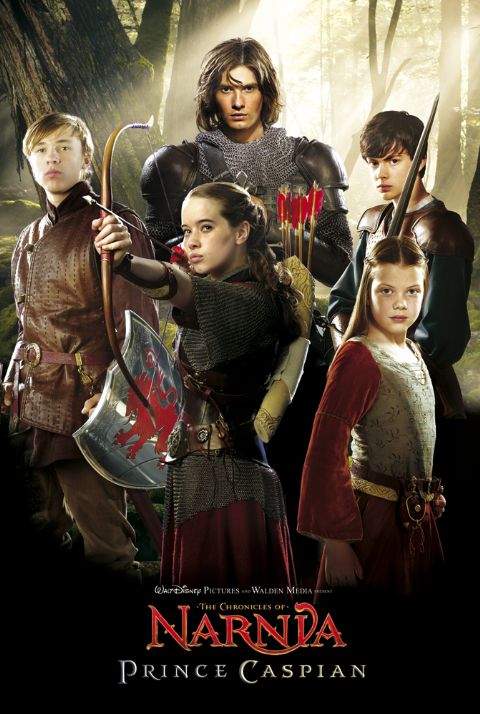
Christmas television has a certain form and order that I think we miss, the very best of the scheduling occurs when they think you’re not looking. So when everyone else was out enjoying a New Year’s day stroll I was closeted safely inside away from the rain watching Prince Caspain from the Narnia series. And at the end there’s something added in from the book, my sister and other Narian purists would dissent but for me it made the film just that little bit more special. Susan and Peter are told they will not return to Narnia, and Lucy looks heartbroken, because in some little way Narnia has always been a little more special to her than all the rest, she discovered it, saw Aslan where the others didn’t, she was the one who held the faith when the others faltered. But what Aslan said in explanation was profound. They had learnt what they would from Narnia, it was time they returned to the world they knew as their home, to live out the lessons.

Narnia fans will know that it didn’t quite work out that way. Lucy had a crisis of faith of her very own in the Voyage of the Dawn Treader, and maybe Susan had not learnt quite enough of Narnia to prevent the vices of make-up and the like taking their toll. In the end she chose the world she lived in over the other world she knew lay just beyond, and sometimes broke into her own.

We do not have to be living in a special world to experience our own crises of belief. Nor do we have to be abandoned back in our own for the graft of life to hit us hard. All of the boys and girls who find their way into Narnia have their own struggles, from Edmund and his choice for more Turkish delight, to Peter refusing to believe Lucy, to Susan and her rebellion back at home, to Lucy in the Magician’s House, wishing she was the one in Susan’s place. So far away from that time on the hill top when her eye’s filled with sadness that her sister would not return. Now she was despising the gift that she had been given, wishing that she could swap her journey for another. Wanting a life that was not her own.

How often is that the case. How often do we want a life that is not our own, look with envy at others for the path they walk, the world they live in, the people they love, and the people who love them? With what incredible frequency do we despise the gifts and opportunities that we have been given, the place we are in, or the people we are around.

I’ve started 2012 with two books, one has made me angry and the other nostalgic. One, ‘Getting Away With It’ by Dave Boniface pays homage to a place I was and people I have known over the past fifteen years. It’s the wonderfully creative writings of a man who has criss-crossed the world and made his way in and out of a couple of tight spots. Not sure I quite make it into the book but I recognise the events and people now told in hindsight showing with a long lens some of the incredible things that went on just a few years ago.

The other, the one that got me angry, that’s ‘Mugabe and the White African‘ and it is the tale of people fighting for their land, fighting for justice, standing up against a tyrant who will do anything to enforce his will and suppress dissent. It makes me want to jump out of my seat and do something. The two work together, one tells tales of the past and the other provokes me for the future. Maybe that’s how we should start this year.

Know where we come from. Know what God has done. And have an idea what gets you angry, what you know is wrong and what needs fixing. Because if we have not learnt the lessons from where we have been how will we make it count when we return to the world of the present with all it various charms and vices.

Failure is compulsory

The waiting, for whatever comes next. The hoping, for that which you dream of. The silence, when it does not appear. The anguish, when the hope starts to fade. The joy, when dreams turn to reality. The peace, when silence is a pleasure.

I’ve wondered why we can be so obsessed with achievement. Whether it is the hunt for money, for status, for a woman to wear on our arms. Whether it is in our family on the monopoly board, among our friends as we embellish to impress, or at work when we drive ourselves crazy to get ahead.

Does our affirmation come from what we achieve, or how others view us? And in the end does it all come down to the same thing? That we are judged by others on our achievements. It could be as simple as whether we are funny. Or if we got through the day at work without knocking over the tea.

But it drives us to distraction. This constant effort to impress. Often impress ourselves above all. To think that we have done something. To not feel like our existence is without meaning.

It distracts us from who we are. We allow ourselves to be defined by what we do well.

Here’s a thought: what if we got a whole lot better at failing?

At getting things gloriously and magnificently wrong. What if we embraced failure with the same enthusiasm with which we greet success? Getting it right can be so tiring, so demanding. The pressure to maintain an aura of invincibility. Yet we still try and pretend that failure doesn’t bother us, we try to shrug it off and move forward. Surely a thorough grappling with failure would not deny the pain that it can cause, the upset, the let downs, the cost.

We’re not to pursue failure out of some martyr complex, but we must address it because, and I hate to break this to you if it is news, but we are going to do it quite a lot.

When it all goes wrong and you want to run away from the world. When no one seems to care that the time you have spent has been wasted. When you summon up the guts to tell a girl you like her, and she turns you down. When the world falls from around your feet.

But not everything that does not go as we planned is a failure. There is pain, there is embarrassment and then there are the adventures in faith we take. The paths we tread even when we know not where they lead, when the outcome is vague, perplexing, daunting. I sometimes wonder if the lives we lead are the instruments of a capricious God, one who toys with us, playing games with our lives. Pushing us down roads that will lead to heartache and disappointment.

Failure is not only about learning lessons. Sometimes there seem none to learn.

Failure is not just about building emotional capacity. Sometimes the pain is too much to bear.

Failure is not the opposite to success. Sometimes it is the only option.

And it’s too often us who judge what success looks like. Perhaps we have a warped take on it all. Perhaps the greatest failures are the greatest achievers. After all, isn’t that written somewhere else?

For a little while I’ve played around with whether utilitarianism is consistent with Christianity (yes, I just brought some philosophy into this). Surely we all want what is best for the greatest number of people.

Except it assumes that we know what is best.

So here’s a thought to end with, is utilitarianism just the philosophy of delusions of grandeur? That we know what is best for the most. And this is worth whatever cost it requires.

The art of (enforced) waiting

It’s been a long day.

Up early, far too early, especially after a late night. But that was my fault and I knew what I was letting myself in for. I’d chosen to take a slightly psychotic day trip to Liverpool for the Labour party conference. Even with everything going to plan I wouldn’t be home before midnight.

But everything didn’t go according to plan, and there was nothing I could do about it. My train home suddenly stopped at Rugby station. And then the announcement came over the tannoy, that we were being held here indefinitely because of a fatality near Watford Junction.

I looked around the carriage and there was the awkward mix of reactions fused across my travelling companions’ faces. Frustration of delays on a late night train, questions of how they’d get home, whether they’d be stranded here all night, along with a sense that such annoyance was out of place when a life had been lost. I turned to twitter and the outrage was less filtered. The train buffet car suddenly started doing a brisk trade, the coffee machine getting exercise usually reserved for the breakfast rush.

So I wait. And there is nothing more I can do. There are no words that I can say that will make any difference, my actions would be less futile.

And I wonder: just how much do we rely on ourself? How frequently are we lulled into thinking that we are the masters of our existence? When all too often we are ships that are tossed on the waves, subject to the whims of the elements, affected by the comings and goings of the world we live in.

When we are forced to stop. And we have to listen. To the next announcement. And wait. For the rumbling of the train’s under carriage as we hopefully resume our progress.

But even in my compulsory reflection I am focused on where I am going.

How often in life do we do the same? Have our eyes so firmly fixed on someplace else that even when we are made stop and consider our current circumstances we are oriented by the goal that we aim to achieve. Could it be that we miss something of the wonder of the present in our hurry to reach tomorrow.

So for now I continue to gaze across the platforms of Rugby station. My frustration unabated, but without any purpose so I put it to one side.

What else do I think is my responsibility that I need to put to one side?

The dark underbelly of internet dating

I know nothing about internet dating. So I’m not going to blog much about it, if anyone wants to write a guest post about why it’s great, or why it’s dreadful please get in touch. I’m sure it’s something people are interested in and a challenge for Christians to know how to engage with it. Otherwise you’ll just get my ignorant ramblings at some point in the future.

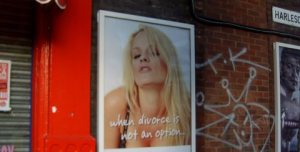
But that’s not what I’m writing about now. This is something that I do not need to know much about to be outraged. Advertising encouraging people to have an affair. It is wrong, it is immoral and it is a deeply disturbing aspect of our society that tolerates and perpetuates such damaging behaviour.

Jon Kuhrt has taken on this shameful type of advertising before, last year a website ran billboard posters encouraging affairs, Jon stepped up to the plate, took them on and won. But now they are back at it again, different name, different website, same horrific attempt to profiteer by ruining marriages. Jon’s written an open letter to the boss, Ross Williams, of the parent company, Global Personals. Read through his letter and I’d encourage you to give them a call and express your thoughts in a kind and considered manner. Also, join the facebook group for the campaign. For good reason the name of the site is being kept out of this, the controversy could just end up sending more traffic to the site.

And that’s almost all I would have to say on the topic.

If it wasn’t for www.justchristiandating.com which I stumbled upon while digging around the Global Personal website, which conveniently seems to be undergoing some redevelopment right now.

So a Christian dating website is part of a company which also runs a site which promotes unfaithfulness. It would seem so. That is, if you want to describe Just Christian Dating as a Christian dating website. Because it can’t be, unless you want to also call the mafia turning up for confession as the epitome of radical discipleship.

There are somethings which we shouldn’t accept. They may not be illegal, but the brazen attempt to make money by pulling people’s lives apart should not go unnoticed. And the thought that by putting ‘Christian’ into a dating site’s address could make it so.

Actually, that’s not so uncommon a problem. It’s not just online dating entrepreneurs who market their products to the church. We do it too. The books and the music, the conferences and the courses. If we call something Christian then surely Christians will buy. Sadly we are too often sucked into this lie.

I’m not convinced about Christian dating websites, but if we are going to use them, please make sure they’re not money spinners tied to an enterprise which Jon Kurht describes as “like a drug dealer who promotes what they are pushing as harmless when really they are trading in something deadly and destructive”.

When love and life collide

Friends are the people we want to be around. But it is not always that easy, it’s not all about a smooth road which veers to our every whim. Because maybe, friendship is fundamentally about conflict.

I want to do something. Someone else wants to do something else. We search for harmony in our relationships, but the life we live pays testament that it is conflict and not harmony that usually wins the day.

It can be mundane, it can be trivial, it can be easy and it can be hard. It could be what to do with a final Saturday in the summer sun. Or maybe who we include in certain activities.

The practicalities will often be verbalised, the differences clear. But many of the areas of conflict will go unspoken, they will simmer under the surface. We will continue as though there is no disagreement, that everything is hunky dory.

But I am committed to getting through it. And I am determined to not let my tendency for isolation to let me flee from challenging situations.

I’ve been away with my friends a couple of times over the summer and each time the fun and harmony was sprinkled with a dose of conflict. And perhaps I was more to blame than most for the disruption. While I may not have handled the specific situations particularly well, they did cause me to think about how much space we allow for conflict in our friendships.

There’s a memorable line in the film “Good Will Hunting” when Sean is telling Will about his relationship with his wife: ‘The little idiosyncrasies that only I know about: that’s what made her my wife. Oh she had the goods on me too, she knew all about my little peccadilloes. People call these things imperfections, but they’re not. Ah, that’s the good stuff.’

We think that the best a relationship can be is one with complete harmony and an absence of problems. This simply misses the point. We live in a world where relationships are broken and we are fuelled by selfishness and greed. If our pursuit of relationships, both romantic and platonic does not take this into account we will end up both disappointed and spurred on to build a facade of perfection that does not exist.

Maybe because we have a certain intentionality in romantic relationships we accept the need to ‘get through conflict’, but even this misses the point that it is a never ending challenge. Things do not get better once you’ve argued and made up once. But in friendships there is rarely the acknowledgement of the need for hard graft.

It also seems a bit too eager, to go into a group of friends and start off the conversation. And you can come across as the fun police, especially if you want to say something unpopular. But sometimes these things need to be said, there needs to be room for the dissenting opinion to be voiced. Because it is just in the circumstances that it is not given space that peer pressure takes its toll. When other people are doing something or saying something and you just go along for the ride.

There’s two different categories of conflict here, there are those which are based on subjective preferences, where some form of compromise needs to be found between people with myriad different opinions and views. There’s often not a solid right or a wrong thing to be done. Should we go to the beach or the park on a sunny day?

But there is a second category, and within the church sometimes we consider ourselves exempt from this. We live under the assumption that in our interaction with the wider world we have to be on our guard against temptation, but among our church friends all is fine.

I think I am more tempted to behave in a manner dishonouring to God around Christians. Maybe it is because I don’t take such care, but also because to suggest that something is wrong is not only about my beliefs and values, but I am explicitly questioning theirs.

So how do we create the space for these kind of conversations to take place? How do we let ourselves be challenged when we are behaving in an inconsiderate way, are we too protective of being in the right that we squash any challenges before they are spoken?

Please talk among yourselves…

Because I’m leaving on a jet plane.

20110823-045955.jpg
I’m off on holiday, and I need it. A week in the sun, with little else to do but read and relax, and maybe play a few overly competitive family board games.

I’ve got a couple of posts lined up on handling conflict, especially between friends. However, bus diversions, flying haribo and Jungle Speed conspired last night to prevent me finishing them up and scheduling them for while I’m away. Instead I’m jotting a few thoughts as I hurtle towards Gatwick amid the awakening dawn.

Friendships are tough. I touched on a similar theme in relation to our expectations of romantic relationships, but friendships will not always be easy going. And if they are you’re probably not giving enough to them. I struggle with that, I want things to fall into place without disagreement or discord. But the melee of emotions and personalities will always bring differences to the surface.

So the question to ponder while I’m away, and that’s a hint to offer your thoughts in the comments below, is where do we go from there?

Do we flee from conflict, either to perpetually form new friendships or retreat into ourselves offering less of ourselves to each nascent friendship that emerges?

Do we fight for what is right, and can we ever know where subjective differences and objective rights and wrongs start and end? To put that another way, are we standing up for personal preference or something of value which is shared?

I like things nice and ordered, I prefer to calculate cost and benefit, but should such equations ever be applied to friendships? Isn’t that a bit too clinical, lacking in compassion? But I also get the idea that some people are good for you and others less so.

So where does fighting for friendship and forbearing with others give way staying in a situation that is unhealthy? I’m taking McCould and Townsend’s book ‘Safe People’ with me and it’s all about this, so I’m sure I’ll have some thoughts to share on my return but for now, I’ll just say it’s a tough one.

For someone inclined not to invest in friendships enough I shudder at the thought of pulling away because I know it would just exacerbate my introversion. I got cross with some friends on Sunday, maybe I had a point, I still think I do, but I obscured any valid comment with my aggression and undue personal hostility. The challenge for me is to continue to give more to friendships despite the challenges, but I want to know when it is also necessary to withdraw, maybe for the good of multiple people.

So there you go, the thoughts that hit the keyboard on a train at 4.30am. I cannot say enough how much your comments are a vital part of this blog, so talk among yourselves for the next week…

Postscript: I accidentally picked up the wrong bottle when going for some apple juice, and I discovered the wonder that is Copella apple and mint juice.

Coffee shop theology: Conflict and Cover-ups

Sometimes things don’t quite add up. At first glance everything looks okay, perfectly normal, but when you gaze a little longer, study in more detail, the order becomes disrupted.

As so often I sit alone trying to make sense of the world in which I live, the life I inhabit. In my comfortable leather armchair in a chain coffee shop I sink my double macchiato rather too quickly.

These corporate entities, they’re all the same. The same chairs and tables, artwork on the walls. I could be in any of so many, but there is something different, a hint that this re-creation had to make compromises, that the prefabricated balustrades and floor tiles had to come to an arrangement with the longer lasting historic fabric of the building it inhabits. The walls are not straight, the room is not square, the timbers that hold up the ceiling intersect with walls painted in corporate tones.

So little of our lives happen in isolation, very rarely can we create something without an external influence. We are constantly needing to find accommodation within existing realities, and prepared to negotiate our way through changes that will come along. Put simply we do not live alone.

As my Caffe Nero store in Stratford-upon-Avon sits uncomfortably beneath the Tudor beams, I come to terms with the inconsistencies that plague me. Trying to grasp why things don’t work in the way that I might chose. Reluctantly admitting that it is not feasible to plot all eventualities on a spreadsheet, comprehend the costs and benefits, and devise an appropriate strategy.

But nor is it always possible to paper over the cracks. Without careful attention I would not have noticed that the ceiling rose in one corner, or that the angles of the walls were anything but regular. Likewise I can walk through life paying only passing interest in the lives of those whose paths intersect with mine. And hope that they do not notice where my walls do not quite meet. Or where the veneer has begun to peel away at the edges or that my facade is, in fact, just paper thin.

Because when these inconsistencies rise to the surface, when they get noticed. That is when life gets difficult. The point when I accept that what I want, or think, or feel, is not the same or matched by someone who for whatever period of time joins in my story. Disagreement over plans, frustration at actions, anger over feelings. The emotions that emerge from conflict. The inevitable consequence of two or more people doing just about anything. You can embark on a task with a common cause, an arrangement of convenience, but before long differences emerge. Sometimes these can be confronted, they can be challenged or accepted, but all too often they are simply ignored.

And after a while these little niggles, these things that we do not like, and do not add up simply become part of the fabric of our lives. We accept and acknowledge our imperfections with seeming grace but which is in fact carefully shrouded resentment. I don’t like conflict, so I pretend it is not there. I stay away from challenging people, and shy away from difficult situations. Sometimes, I deny that conflict exists, but more often I just withdraw so that I do not have to face the crevice that I would rather not see.

I view conflict as a sign that something has gone wrong. And I would rather not accept that anything has. So I perpetuate the pretence that everything is okay. I cling onto the hope that if I don’t say anything the other person, other people, might never know anything was wrong.

Alpine Disruption

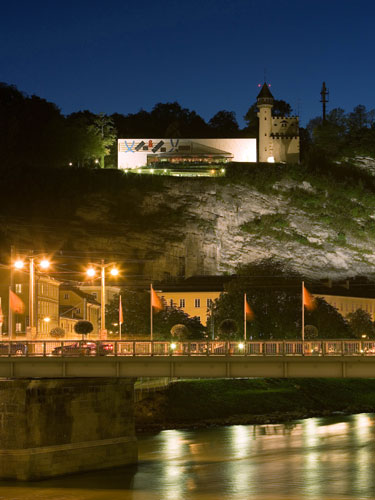
© Museum der Moderne

As I stared across the night-time vista of Salzburg and gazed between the spires and domes of a plethora of churches to find the turrets and parapets of castles and fortresses, my eyes fixed on a rather large white box. The garish sign blazoned across its entrance reminded me of an out of town sportswear supermarket. That it is not, it is the Museum of Modern Art.

Before you get worried I am not about to embark on a rant against planning decisions, or provide a comprehensive review of Salzburg’s architecture. Instead this was something that got me thinking. It disrupted my thoughts and sent them on an entirely different track.

Perhaps I should set the scene. I had gone away on holiday on my own with a train pass purchased and a return flight booked from nearly 1000 miles away. The first stop on my tour was Salzburg in Austria and I had only allocated 22 hours before moving onto Vienna.

I started off determined to do everything that there was to do in Salzburg, yet by mid afternoon, my flight had only landed at 10.45, I was a little worried that I would run out of places to visit. Being a tourist isn’t just about doing things, it is about enjoying the ambience of a place, breathing the air that the locals breathe and other such nonsense.

So my slightly revised action plan kicked into gear. I decided to enjoy some wheat beer while sat in a tavern in Fortress Hohensalzburg, and in the evening went into the 300 year old Cafe Tomaselli to savour some cake and coffee while watching the world go by. Oh, and I read a book. I like to read.

As I visit different places and am not numbed by familiarity, thoughts that had previously been dry and academic come to life. Sometimes it is self-reflection, probably a bit too much of that, and at other times the things around me. I have found God in some of the most unusual places, and other times I long to have something profound to say and nothing comes. Yet I see God at work all over the place. And that most unusual place, well that’s me. The fact that God chooses to work in my life astounds me.

This is the start of me trying to explain what Broken Cameras and Gustav Klimt is, it’s going to take a while, I’ll pop in and out, and hopefully you’ll start to get the picture. Some of the examples from my life you may find just down right quirky. I may have some explaining to do to a few people. But in at least some I hope the lessons are universal.

Anyway, back to Salzburg. Before I went back to the Youth Hostel I thought there was plenty of time left for a little more sightseeing. I wandered along a magnificent little street where the houses on one side are built into the cliff face. Actually, I walked along it one and a half times as I realised I had joined halfway along so went back to the start to do it from the beginning.

The final item on that day’s itinerary (Yes, I had made itineraries for each of the eleven days I was to be away.) was a walk up a hill on the opposite side of town to a convent to catch a night-time panorama of Salzburg. It was when I reached the summit and sat on a convenient park bench on a specially located viewing platform that I was confronted with this glaring floodlight white building.

It had struck me as I was walking (for the second time) down this quaint street and up the hill that you just cannot ‘do’ ambience. And when you try, annoying little things like modern architecture shatter the pretence. Something can seem real enough but really it is just a show.

In the same way that you cannot just do ambience, can we ‘do’ God?

I don’t think you can. And when you try, you generally sell either yourself or God short, and usually both.

Because God is not something that can be summed up in a whistle stop visit or captured on a postcard. There is no one-hour audio guide available in ten different languages with special versions for children in German, Italian and English.

God is not sanitised, convenient, or marketed to the masses.

Rage, riots and redemption

London has become a different place over the past few days. Violence has taken over the streets, the sirens that you become immune to living in the metropolis take on a more sinister tone. As you wait for the bus and 3 riot vans fly through the red lights heading towards the scene of one of last nights trouble spots, there is fear in strangers’ eyes. I know people who live in Brixton and Hackney, my house mate suddenly glad she skipped the cinema last night. This is London, this is my home.

The MP who, somewhat ironically, campaigned against the proliferation of betting shops on Tottenham High Street looks on in dismay as their windows are kicked in. The iconic building housing the carpet shop burnt down on Saturday a symbol of the sheer madness that has taken hold. Not only did it destroy many homes, but the owner, Lord Harris, founded academies in some of the most deprived parts of London. This was senseless violence.

There are grievances, there are reasons, there is rarely such a thing as mindless rage.

The point is, when is this ever the right response? When does a cycle of bullets and bottles and bbm incitement lead anywhere but to more madness. The batons come out, the shields go up, the police coral the crowds, and they have to, just look what they have done. But this provokes more aggression, the police become the enemy.

As I followed the news today, reports of the chaos that had been unleashed and the apprehension about what would come next, the story drifted to the pathology of a riot. Some papers had erroneously suggested that twitter had sparked the mobilisation of disorder. This did not ring true, firstly, most of twitter is public. And although I saw it all unfold on twitter on Saturday and Sunday evening, and photos of burning cars and buildings flooded my stream, this does not mean it was how it started.

Instead, as the post-mortem seemed to confirm it was through Blackberry Messenger that the plans had been orchestrated and broadcast. The disconnect occurred because the media use twitter on their iPhones – and equate this as social media, but the young disaffected looters message constantly in their own private spheres. What struck me was that so much attention was given to how social media played its part. Not so much what was happening, why it happened, and certainly not what could stop it, but how technology played its part.

Maybe crisis leads us to the trivial. Maybe we find comfort in the discussions where we can analyse and dissect, where the answers can fit on index cards and 140 character tweets. And let pass by the far harder dilemma of what could cause such wanton vandalism, and how can we make it stop.

Because we feel as though our hands are empty, and our answers are lacking.

But rage. Rage does not heal wounds. It does not build up. It does not redeem. We can have all the anger and all the rage, and all the deepest desire for retribution and justice but that doesn’t make it better.

I’m left struggling for what might.

Hope. That thing which holds out. The fearless tenacity that tomorrow will be better. The unswerving belief that life is not destined to be like this. That the aches and pains, the scars and suffering are only for a moment. It is hope which spurs us forward, which lets us abandon our baggage, those fears and failures that drag us down.

Hope is said to have two daughters: anger and courage; that force you to see what is wrong and work to make a difference.

We may be angry, as we watch a city drenched in stains, but do we have the courage to fight to make a better world?