Are we worshipping welfare?

jobcentre

The great welfare debate of February 2014 has failed to ask or answer any substantive questions. I add just one caveat to that strong statement, from the looks of Theos’ report The Future of Welfare I suspect it does address many such questions – however, I have only read the introduction, and unfortunately coverage has not penetrated beyond it being another intervention by Christians on welfare.

It is less of a debate and more of a farce. With many who see poverty taking its toll railing against a government accused of worsening the situation. And those taking decisions thanking the commentators kindly for their advice, but also reminding them that they are the ones taking the necessary hard decisions.

There is an almost axiomatic response that a family in poverty requires government action, and specifically legislation.

I think there is a responsibility on us, as a society, to look after each other. But maybe we need to take a deeper look at the solutions that are frequently called for without a pause to consider if they are the best.

We have not asked what kind of welfare system we want.

The automatic response to more people needing food from foodbanks seems to be: the government should offer more generous benefits so this problem doesn’t occur. I care about as little for that logic as I do for the response that: it’s austerity, these are unavoidable choices. All choices are avoidable, it’s just that some options are unpalatable.

Too much of the furore in recent weeks has been focused on who said what, and whether they have the right to say it. By keeping the debate at this level the real questions do not get asked. It’s all about the bishops who intervened and the politicians who slapped them down.

I believe it is vital for church leaders to speak out on political issues, I believe it is vital for them to give testimony to what they see in their ministry. Churches often have the closest contact to communities, they are trusted and they are present where politicians often are not. I also believe politicians shouldn’t be afraid to respond. I think the bishops and fellow church leaders were unwise to give their letter to the Mirror: it was used as a very blunt political tool. I also think David Cameron’s response to Vincent Nichols, whose interview got this ball rolling, was high handed and failed to engage with the concern expressed.

The dynamics of the debate lead to frustration. Where we want something to happen but we don’t get beyond complaining. And part of the problem is it is very complicated. Take banker’s pay, they are often paid inordinate sums, amounts that make the eyes water. Should their pay be capped? In which case they will pay less tax into the Treasury reducing the amount to spread around. Should they be taxed more? They already are, and there is a point at which higher rates of taxation provide a disincentive to earn more. One can argue this shouldn’t be the case, that they are earning more than enough already so the government taking a higher proportion of their pay shouldn’t worry them. But alas, it does.

This week we heard of HSBC paying their chief executive £9 million, changing the structure of his pay to get around rules restricting bank bonuses. And there was outcry. But the restrictions on bonuses came about to address the incentive toward risky activities which set pay would mitigate against. Now that the pay is set and not made up of bonuses the issue seems more with the amount he is paid not how it is structured.

Wayne Rooney also made headlines for his £300,000 a week pay packet, that’s over £15 million a year. This is far more than most people will earn in their lifetime. The tragedy in this case is that Manchester United don’t pay their cleaners the living wage. Maybe the argument would be posited that unless stars like Rooney are retained the fans won’t come and watch, and then the cleaners wouldn’t have jobs at all. I think Manchester United have more pressing concerns when it comes to keeping their fans happy.

These raise the question of what we want the taxation and benefit system to do. Do we want it to provide essential services for all and a safety net for those in particular difficulty, or do we want it to be a mechanism for equalising the distribution of resources? A completely redistributive welfare system removes the incentive for work and effort – the ultimate manifestation of this train of though is toward a common wage for all regardless of the work carried out or whether any work is carried out (I’m sure I read something about this in a university political philosophy class).

On many occasions those relying on benefits are stigmatised, and opinion polls show gross misunderstanding of the cost of out of work benefits and the level of fraud. Most benefits go to the elderly and far too much goes to those in work. Far too much because work should not leave families dependent on the state, when we have business structures dependent on low incomes propped up by the state while money is made for those at the top: this is injustice.

And yet. And yet I think we ask too much of welfare, and our attachment to it as a vital protection can blind us to its limitations and where it over reaches its efficacy. While many accept something has to change, the welfare state has become an idol we dare not deface. So it remains as it is, unsuited to its task, unable to deliver, and inviolable to change. 

The way we as a society, and as a state, look after the poor, the vulnerable and the elderly is a testament to the health of a society. But what says more is the way we help each other beyond immediate care. If helping the Good Samaritan by the road side is only the first step toward countering injustice, campaigning for better street lighting and security is only the second. The ongoing steps of working to remove the danger and the threat that made those first steps necessary is the longer and harder task. In relation to welfare this means strengthening education, promoting work, ensuring there is work to be done and work that is paid sufficiently. And more than the safety net the state can provide it means working to strengthen the bonds of society, the place of family and community, that build resilience and protect against the shocks that will undoubtedly come from time to time. 

I wonder whether our use of the Good Samaritan as a parable for good welfare is a poor one. I wonder if it is an easy tale to latch onto to promote a political point. Do we use it as a catch all for helping other people, almost guilt tripping support for something without considering the alternatives? Because sometimes the alternatives are not unpalatable, they are just harder, and we sometimes like to avoid the hard things. It’s easier when the state does it for us.

Has our faith in the goodness of the welfare system turned it into a god that we worship?

Welfare debate: do politicians want churches’ works but not their words?

20140221-213907.jpg

Hearing a politician say that job of “the Church of England is to evangelise the message that Jesus Christ is the son of God, come to intervene for a humanity that can never meet God’s standards of perfection, and that humanity should concentrate on loving God and loving our neighbour” should be a cause for joy. Unfortunately the words from Charlotte Leslie MP are used as a device to try and shut the church up.

Since the Catholic Archbishop of Westminster, Vincent Nichols, spoke out last weekend against the government’s welfare reforms and austerity measures Christian leaders have made the running for the week’s news. David Cameron replied in an article for the Daily Telegraph attempting to claim a moral mission for his government’s reforms. Theos think tank published a collection of essays on the Future of Welfare, and then 27 bishops along with other church leaders signed a letter to the Mirror calling on the government to act on food hunger, ensure the safety net of the welfare state is secure and make work pay.

There was bluster and counter bluster, the most significant intervention in decades, an unprecedented attack. Forgetting that these unprecedented moments happen a couple of times a year. David Cameron in his response to Vincent Nichols had the courtesy to welcome his comments, and his place in the debate. Others have been less kind, and I would put Charlotte Leslie in that position, at least implicitly criticising church leaders for speaking out.

Christians are welcomed for their work on the front line, collecting food donations, handing them out, counselling those in severe debt, walking the streets at night causing crime to drop. The social action churches do is lauded, their contribution to the voluntary and charitable sector is vital. There are times when the church is loved. And there are times it is loathed, and that’s usually when it conflicts with the prevailing political consensus. Political ostracism is one threat but political co-option is arguably the greater challenge.

When church leaders criticise a political programme the other side can easily grab the religious leaders and use them as a shield. While the comments can be fair, the concerns grounded in reality, the policy asks reasonable, sometimes the political climate can morph an outspoken church leader’s statement into a political point scoring mechanism.

That’s where political interventions are dangerous. They become a clothes horse used to hang whatever particular agenda or priority best suits at that moment. It’s either a sign of strength, or a sign of disconnect, of a church finding it’s fight, or showing all it has left is to complain about the incoming tide and garner the attention given as it expends the last gasps of its relevancy on a fruitless cause. For journalists looking for a story it is the House of Bishops becoming the Labour Party at prayer. For naïve Bishops it is the church saying what they’re seeing on the ground and nothing more. The rest is up to the politicians to sort out.

It’s that sort of attitude towards politicians that gets us in trouble. When we think they are a special cadre of people, somehow more capable, more equipped, more likely to find solutions to the problems we encounter and comment on. When we think something is for politicians, so we don’t need to get our hands dirty, we’re abdicating responsibility. As I put it elsewhere, sometimes campaigning can look a lot like complacency.

Elaine Graham, in her book Between a rock and a hard place identifies this as the paradox of a post secular society, where Christians are welcomed on occasions, usually for the services and good they bring to communities, but also rejected, often for what they have to say. Perhaps, Christians are the new children, best seen but not heard.

Which bring us back to Charlotte Leslie’s intervention as well as John Redwood’s blog questioning whether churches want to pay more tax to fund the welfare they seemingly are calling for.

It was Christians who got involved before the funding of the welfare state started and as Stephen Timms, Labour’s employment spokesperson and chair of Christians on the Left, frequently comments, is it any surprise that it is Christians who have risen to the task in recent years?

A study by the Evangelical Alliance showed that 84 per cent of evangelicals volunteered at least monthly, for an average of two hours at a time, the contribution to the economy of this across the cities, towns and villages of our country is immense, and it more than offsets the gift aid churches receive back on the gifts they receive. If the government wanted to pay the church for its work the nation’s finances would be in a perilous state.

John Redwood doesn’t support higher taxes on churches, he’s not advocating the repeal of rebates which create vital stimuli. He’s a classic small state conservative, liberating voluntary organisations to take responsibility for their communities, Burke’s little platoons, is honey to his lips. But his tongue-in-cheek comments read like a warning shot across the churches’ bows, similar to Leslie’s call for the church to get its house in order before criticising the government.

If I were to caricature the two sides, the politicians and the church leaders, the politicians say to the churches: “thank you very much for the wonderful work you do, now leave us alone to make the important decisions which we know best how to handle”, they like the works but not the words. But the churches shouldn’t get off the hook either, too often their response is: “look at the dreadful impact of what you’re doing, we should know because we see it everyday, sort it. Oh, we don’t know how, just sort it”.

As I say, they’re caricatures, not the truth, but resembling it. The politicians want to keep the church at a safe distance, and the church obliges by lobbing in the odd hand grenade as they did this week, but then retreating to the comparative safety and affirmation of acting the Good Samaritan on life’s Jericho Road, letting others handle the tricky policy questions needing answers. 

Men strapped into floating beds, and other things we don’t understand

Why is the man strapped into the bed Grandma?” And there begun the attempt to explain gravity to a two and a half year old during her bed time story as she pointed at the picture book. But she wasn’t taken in. “Why is the bed floating in the sky?”

This grandmother didn’t tell the young girl to stop being stupid because you know, bed’s don’t fly. Nor did she say stop asking questions, just accept that the bed is floating in the sky.

Small children are inquisitive, they ask questions, and they know when you’re not given them the full answer. They keep asking questions, they want to understand. Because beds stay on the floor and people aren’t strapped into beds. So why is the man strapped into the bed, and why is the bed floating round the sky?

If this young girl decided to start a global conversation about beds flying around the sky and the inequity of men being strapped into such beds we might find it cute, we might admire her pluck and wish her well.

But we’d also want to encourage her to look at some books, consider what others have said and discovered in the past as they explored the same dilemma. Why does the apple fall from the tree? Why do objects float in space?

I don’t really understand why beds float through space, or would if there were any out there. You can tell me it is about gravity, and why that disappears in space. You can explain to me the pull of the earth, the moon and the tides. I can read and I can learn. And this makes me think, perhaps I should understand a little more about gravity – I have stopped asking the questions that are obvious to a small child and just accepted that when I get to bed tonight I don’t need to be strapped in.
open-bible Continue reading

If young people don’t go to church, what should we do about it?

iPhone July 2011 005 - Copy

What can the church do about the crisis of young people and the church, and what should it do about it?

There are young people in churches up and down the country, but there are less than there were, and they tend to go to certain churches. So why do they go to some and not others? What do those churches which are growing do right, and what do others do wrong? Or, is it that those churches which are growing are selling an easy faith which may swell the attendance but weaken the body of Christ?

We could get all the young people in the country into a church building on a Sunday morning and miss the point.

The reality is that many young people stop going to church. The Titanic drowned with a fatality rate of 68 per cent. That’s about the same rate of attrition of young people from the church.

A friend introduced me to the difference between something being difficult and it being hard. There are many things which are hard, but not difficult, for example, it is hard for me to ask a girl out, it is hard to admit fault when you’re responsible for something going wrong. These things are not difficult, they’re hard. And maybe church should be like that. Maybe it should be a challenge, something that takes effort, not laden with obstacles and complexities to weave through and overcome but a hard thing to do.

In the West Wing Josh and Toby are in a bar after getting left behind by the campaign motorcade, they talk to a chap worrying over paying for his daughter to go to college – the stock market had taken a tumble that day. It should be hard. I like that it’s hard. Putting your daughter through college, that’s-that’s a man’s job. A man’s accomplishment. But it should be a little easier. There is a value to something that is hard that is missing if it doesn’t require effort. (We’ll ignore the gender stereotyping.)

Our approach to getting young people into church has bordered on the, if we try hard enough we’ll get them into church without them ever noticing it’s church, and voilà! we have success.

The gospel is a challenge, the cross is a stumbling block, the life of a disciple is not a promise of an easy way ahead.

Some terms need clarifying, principally, what is meant by young people? Traditionally this would mean those below 18, but it’s now a term without clear boundaries and reflects the onset of adult adolescence across society. This matters because the stage of life that people would previously been at in their early twenties is now rarely the case. Far fewer are settled in a career, married, and starting a family, and this affects their relationship with church. Young people usually refers to those up to 30, and in church context sometimes includes them quite a bit older than that. It also usually applies to single people regardless of age over and above married couples and those with children. Youth becomes a synonym for flexibility and in turn understood as a lack of commitment.

Secondly, are we interested in getting people into a church building and sitting through services, or helping people follow Christ? We’ve done too much of the former and not enough of the later.

We’ve tried to be culturally relevant. And we find that culture changes. We’ve cropped our services of the bizarre and our beliefs of the baffling. We’ve heard the cries and criticism levelled against the church and there’s been calls from within to dance to their tune. If people don’t go to church because of this or that (judgemental, hypocritical and bigoted usually cited as the unholy trinity) then if we change surely they will come.

But Andrew Evans makes a good point, where are the flocks of young people heading to those churches and faith communities which have jettisoned much of Christian teaching to be more like the mores modern society apparently demands?

I do not want to be dismissive of the critiques with which the church is charged. They are serious and often based on very real experiences and observations. The church can be hypocritical, judgemental and bigoted. But I don’t think they’re the full reason many stay away from church.

I think they play a greater role in explaining why people might have stopped going to church, when the picture of Christianity painted by the church manifestly fails. When it is wrong, when authority is abused, when being right is the most important thing. In so many places in so many ways the church falls down in its role as Christ’s bride. It does a disservice to the God it represents.

If the church changes to what it thinks people want it to be then it loses its foundation. It becomes nothing more than a religious themed social club.

Before the church decides to adopt this or ditch that in an effort to attract more people or cling onto those drifting off the edge it has to first know what it is that it wants people to join or remain a part of. Otherwise it is a catch all for whatever works best.

The church is a people transformed by the grace of God and called to serve Him and make him known. The church is to be the agent that helps bring about heaven on earth, to rend open the curtains of darkness and find a way for the light to shine in. We don’t do this by throwing a blanket over the lamp just in case it blinds someone.

We need confidence in who we are, and what we’re called to, and then we can shed the extraneous baggage that is a barrier to people coming to know Jesus. But if we start jettisoning with our focus on people liking the church, or increasing attendance at services, when people reach the curtain to find out what is behind, it could be a bit like the Wizard of Oz, with a faith castrated and a god shrunk to the size we can understand and enjoy.  

Valentine’s Day: isn’t it ironic?

Quick-Easy-Valentine-Day-Treats

I noticed Valentine’s Day this year more than usual. It’s not that I was scouting out gifts and ideas for the perfect date to indulge the girl I am head over heals in love with. Nor was it the pining for affection that comes in the wake of realising I didn’t have a Valentine when so many others did.

I walked through central London yesterday and saw the men hurrying home from work clutching bouquets for their loved ones, the less organised queueing round the shop only to end up with the last wilted bunch of daffodils on sale. I spotted the women carrying theirs, one with at least 4 sets of flowers – either one very besotted partner or she was a lady in much demand.

And on the internet I saw the mix of cute and kitsch, couples stating their love for each other on Facebook as though a wife telling her husband she loved him was a performance piece. There were complaints at extortion from purveyors of roses, photos of candles and dinners, declarations of thanks for their wonderful wife/husband/ boyfriend/girlfriend/date/crush/secret admirer, and the attention they had shown.

There was also the backlash. Those who were sick of the romance and the sugar coated affectations. Some of it came from thinly veiled anger and frustration, for others there was peace and contentment. There were single people going for dinner on their own, or just happy to enjoy an evening in watching season 2 of House of Cards.

But more than either the participants or the left out, this was the Valentine’s Day of the analysers. Never before have I seen so many people commenting on Valentine’s Day, what it means, where it came from, who it might offend, who might be left out. A tweet about V-Day, as it had apparently been contracted to, required an obligatory nod toward those who might find it difficult. Everyone (except Theos) seemed to have specially themed content for the day. Marketing departments went into overdrive. Unsurprisingly the action film on TV last night was stuffed full of dating sites advertising their wares during the breaks. From tenuous discount offers to comical tweets. And many of those comical tweets were really not very funny. There are only so many times you can read ‘Roses are red’ with it cumulating in a marketing tangent on a humorous final line before you want to block all tweets with the word roses.

The obvious.

The understandable.

And the bizarre.

The internet loves irony, so there were posts about awkward Valentine’s cards, emotionally repressed British Valentine’s cards, tweets of slightly dubious Christian alternatives, and a host of other ironic gestures aimed at poking fun at the institution.

Except the poking and the prodding and the analysing and the advertising had become bigger than the day itself. A friend hunting for a card for her boyfriend recounted the trauma of trying to find a suitable card. The umpteenth layer of irony is that the ironic alternatives were a lot better than what was readily available in the shops.

And yes, I am analysing the analysers.

For couples taking a moment to enjoy and celebrate their relationship, Valentine’s Day is great. And for some people it will be hard, to see people celebrating what you have lost, have not got, or fear you never will, is going to be hard, especially when it is something that tugs so intrinsically to our emotions and our personhood. But booking every other seat in the cinema to stop couples sitting together is taking things a bit too far.

I’ve written before on singleness and how I just am single, I don’t not like it, or particularly thrive on it, it’s just what I am. I therefore don’t find Valentine’s day a difficult day. But having someone to watch Newsnight with would be nice, and I hear and agree with all who say the marriage does not solve the problems and that singleness is not a prelude. And yet I sometimes want what others have and I do not.

That we celebrate something with the passion we do each 14th February demonstrates the longing in our hearts for relationship. And that it is hard because for many relationships are scarred with hurt and brokenness, shows that there is much about these relationships not to celebrate but to mourn.

When I commented on the masses of roses I saw on the underground someone suggested it was because people had lost their weekend retreats to the floods. And in a way it is about lose. When they took their vows and committed to another they set themselves aside. And they choose relationship over self.

While there are wounds that still seer, and memories that will not leave, while there is loneliness and longing, and dreams left behind. There is also the glimpse of beauty. And maybe, that is why we talk about it so much, analyse it to allow ourselves to keep out distance, choose irony to disguise the truth, which actually often communicates a greater truth than the honed words we could never find ourselves.

Because whether we had a Valentine or not, relationships matter. And the analysis and the irony we put into it just reinforces the point. 

Church: a place, a people and a purpose

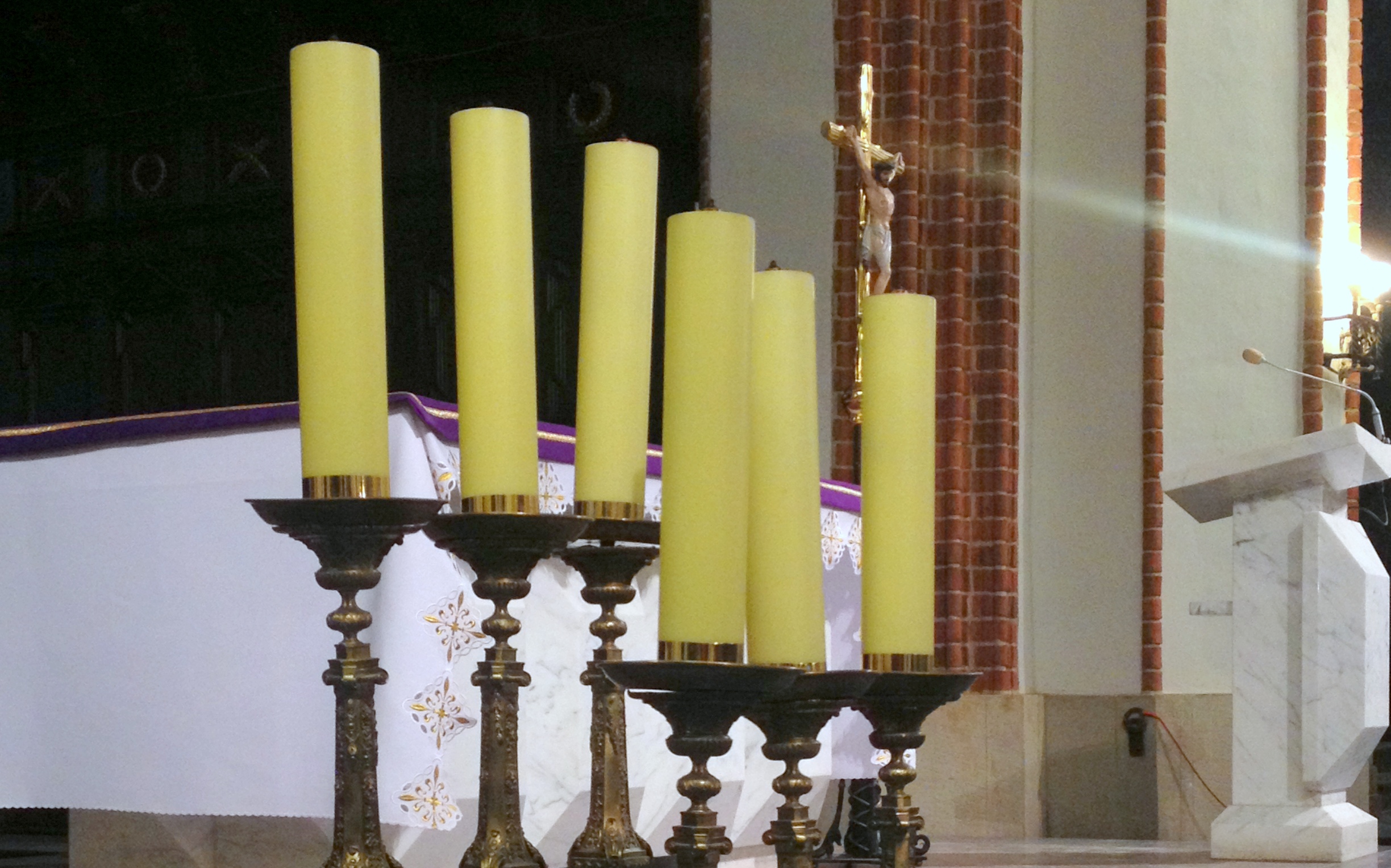
Warsaw church candles

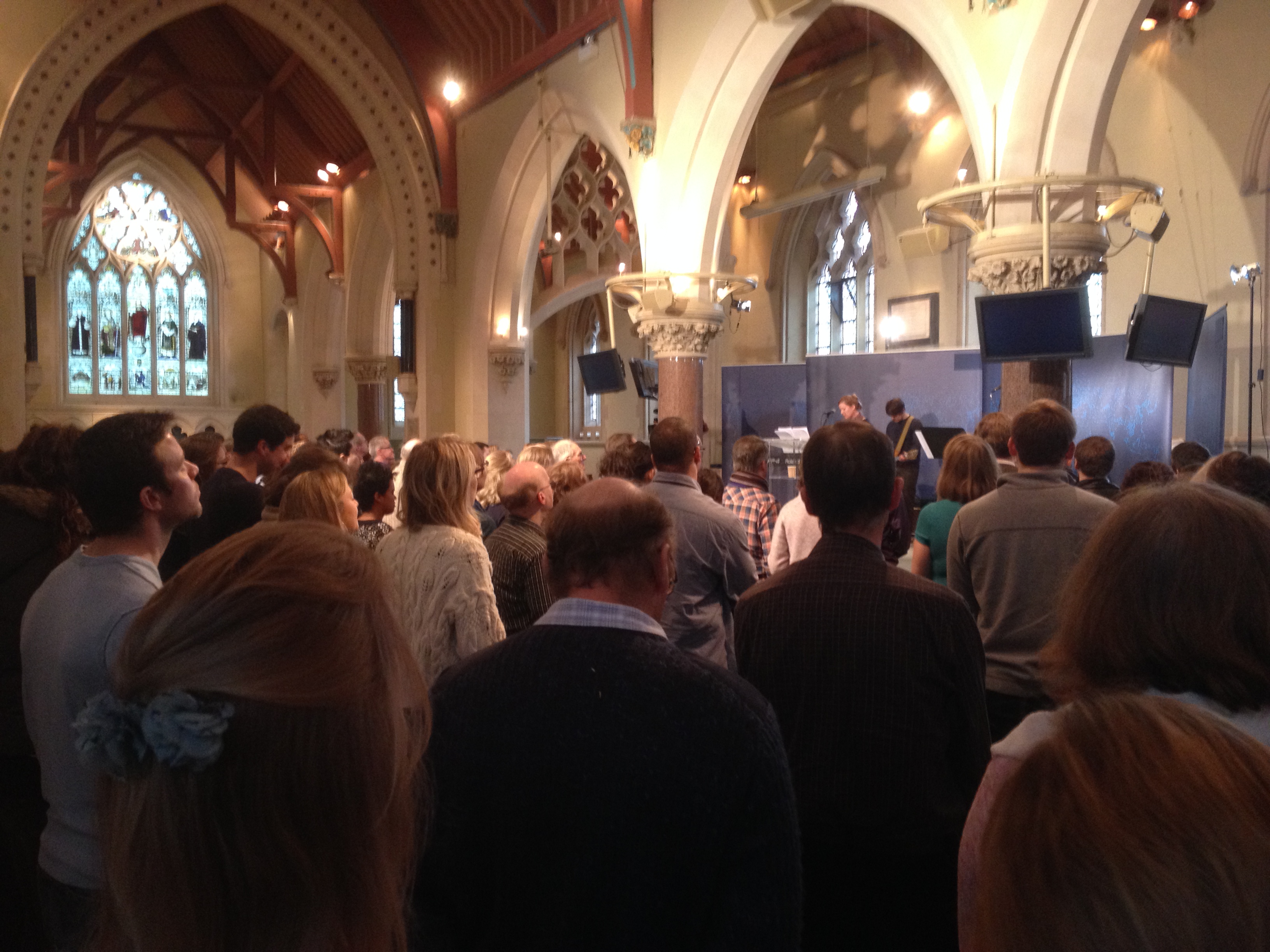
Every Sunday afternoon I cross the Thames, usually over Millennium Bridge and walk into a conference centre. Some weeks I’m away, but I can’t remember the last time I missed a Sunday I could make.

I go to church.

I walk into a crowd of a few hundred people, more than I can ever know, even their names. And yet, it is the place that I am known. There are people who know my fears, who know my doubts, have seen my failings, have heard my anger. And those who’ve seen me kind, watched me excel, encouraged me to grow, pushed me outwards, upwards, and delved into the places I would choose to keep to myself.

Church is home.

It’s not always easy, it’s frequently hard, painful, annoying, boring, it exhibits all those dreadful traits, the ones we have ourselves but expect the church to be above. For the first eighteen months I went to this church I would arrive as the worship team struck the first chords and slip out as the ministry team offered prayer at the front. I was leading a small group for most of this time, I had responsibility, I welcomed people into a place and into a community that I didn’t feel welcomed in.

Some essential caveats to begin with. I know the church is not about buildings. I grew up in a charismatic congregation began by students in the 1970s, and which my parents joined soon after, it met in schools, colleges, graduated to a lecture hall in Southampton University before buying the old Methodist Central Hall in the city centre. We held a church picnic when the purchase was completed, all I remember was playing hide and seek and finding a nook to hide in the huge organ soon to be ripped from its setting. Continue reading

Good works or good news – must we choose?

Good works or good news – must we choose? from Evangelical Alliance on Vimeo.

Last November I gave a talk at the Evangelical Alliance Confidence in the Gospel consultation on ‘A Public Gospel’. I discuss the challenge for churches in working with local authorities, and in particular whether working with them affects their ability to share the good news.

You can read more or less what I said here, but this is a subject I am going to return to. Mez McConnell, who I heard at the Scottish Prayer Breakfast last year, has written about mercy ministries and provokes the evangelical church to have a long hard think about the impact such activities have, both on the ability to share the gospel, and also on providing real and lasting help.

His words contain one of the most striking indictments against the UK church – the frequency with which he is called by pastors who have someone who has come to know Jesus and they don’t know what to do because they don’t fit into the middle class church they have.

I think churches running food banks are fantastic. Churches are the people who stay in communities when everyone else leaves. They are there before the funding kicks in and after it is cut. They are lifesavers. But the church must also critically reflect on what it is doing, and the impact that is having – both on the community and the church.

The reasons for mercy ministries are fairly obvious, at least I would hope so. But what are the downsides, or perhaps phrased better, what are the unintended consequences we must be aware of?

Knowing when it’s time to leave

Heart of Tuscany July 2013 089 - Copy

I’ve been part of four churches in my life. I’ve visited many more but I’ve only ever changed church when I moved city.

From birth to 18 I went first at my parent’s bequest and then under my own intent to the same church, it moved venue, morphed form, but it was the same church. It never crossed my mind that I would leave it but for the reason I did. I moved nearly 200 miles north and very quickly found the next church which would be my home while I studied. There was a year in London which I’ll come to soon, then back to Southampton for a couple of years at the church I grew up in, and back to London with over five years in the bank at my present church.

And in only one phase of my life have I thought seriously about leaving church because of something to do with it rather than my circumstances.

Recently I’ve had quite a few conversations about leaving church. It’ll crop up in different environments, some who I know well, others I don’t. Some go to my church, others might end up coming there. I also remember several in the past with people who had left my church and were going elsewhere or not really going at all.

After I graduated I moved to London. Having grown up in a church there was always an element of familiarity about the congregation, and at university there was the safety of crowds as we visited churches and decided which we would be a part of. There were special activities for students, special groups, courses, socials, buses laid on to get to campus and back. There were lunches and bouncy castles, worship nights and designated pastors. I was catered for.

And then came the prospect of walking into church alone, searching for a place of worship I would fit into, a place I would be known and know others. I went to a service I liked, a location that worked, one with friends and they were three different places. I opted for the first, a place a little distance from home but most familiar in style and substance. On paper it was a good fit. And yet, a year later I left London and my exit from church required no send off, there was no point of departure, I had already drifted far from the church, my attendance on Sundays required only the vaguest excuse to slip, and small group was a tyranny of small talk among people I never got to know.

It was a church I should have left earlier. Back in Southampton I felt at home, I felt like I belonged and I feared returning to London. When I returned to the capital in the summer of 2008 finding a church where I could settle was the most pressing of my anxieties. I had the same dilemma, the same lonely sense of walking into a crowd. For the first year, even as I took on responsibilities and leadership, I walked in and walked out, I connected occasionally with individuals but church was a difficult place. It was not home.

I don’t know when it changed but I know what happened. I turned around and realised that the people I worship with on a Sunday, the leaders who’s authority I respect and the friends I spend time with, times of prayer and times of pranks. I realised these people were the ones I wanted to be walking this road with.

Leaving church is not a question of doctrine or principle. It is at root a pastoral concern. There are good and bad reasons to leave church, and behind each good reason can be bad motives, and behind each bad reason a strand of good.

I first heard about “5 really bad reasons to leave church” when Hannah Mudge responded to it. Her substantive point is one I agree with, this has to be about responsibility on both sides, that of the pastor looking after their congregation and those attending looking for something more than the next thing to consume to make them feel better. Relevant reposted it and even more people were talking about it. 

Of his points, on not agreeing with everything taught, I have little to add, although it does pose the question of where does this end? Should we accept any amount of disagreement with what is taught? Sarah Bessey poses the question whether egalitarians should attend complementarian churches and presumably a similar question would work in the opposite direction.

His point about size is lacking in any nuance, big is not always beautiful, and nor is it always preferable to small. I don’t think it’s good for churches to despise growth, or go out of their way to avoid getting bigger, and I like big churches (by UK standards), but there are many valuable things about smaller congregations his comment ignores.

On conflict, again this is a point that requires nuance and we get a little bit. Conflict is a fact of life but there comes a point when it is detrimental to the life and ministry of the church and its members. If and where it can be resolved that is to be welcomed but it shouldn’t be held out as an an elixir that will one day come.

His other two points are basically the same, congregations are too consumerist and leave when they don’t get what they want. This is a problem that is legion across out culture and he is right to point it out. At the RZIM training day on Saturday Michael Ramsden addressed this point, when we treat church and its component parts as something we can use we devalue it. When we are only in it for what we get out of it we deprive the relationship of the very thing that makes it a relationship. When we do not connect, with God and others, when we do not commune, we use. And when a relationship becomes about use and what we can get out of it we start to question the purpose of the relationship in the first place. It’s an important point he makes and a challenge the church has to address.

But he overstates his point and misses the other side of the story. For each of his reasons there could be good motives behind them and bad motives. Leaving church is a pastoral issue and one not best dealt with by criticising people for consuming church. Otherwise the congregation becomes an object of use for the pastor and not a people with whom to connect. It can sound, as Hannah Mudge noted, rather like asking someone to stay in an abusive relationship.

Leaders of churches have a responsibility to listen to their congregation, if people are leaving, then maybe something needs to change. There is a responsibility on leaders to do more than tell their congregation to suck it up and stop complaining. Telling the congregation they can listen to podcasts if they’re not getting enough teaching suggests maybe teaching in a church service doesn’t matter that much. We should seek to serve the church and not just be served, but we should aim for more than that. We should search for a church where it is home. Where we treat one another as family. Where we grieve when one another leaves. When while we may give to the child who only comes to visit when they need bailing out of debt, we long for so much more.

Church cannot be about people stifling their criticisms or using the internet as a permanent addendum to the Sunday service. It must be about where frailty is welcome, from the pews and from the pulpit. When the teaching can be improved and the service strengthened. When size and shape are methods and modes and not metrics of success.

Church should be a home with all the honesty and the struggles and the tensions that any family has.

I never really criticised the church I was part of for a year when I first lived in London. I didn’t care enough about it. I wasn’t in relationship with it. I was consuming but not connecting. When we connect we care, and when we care we want to see things grow closer to how they ought to be.

UPDATE

It’s been pointed out that I don’t answer the question I pose, when is the right time, or the right reason to leave church? I think that’s because I don’t know, for me I know in hindsight I should have left one church earlier, not because there was anything particularly wrong with it, but because I wasn’t connected to it. But I can’t give you 5 reasons why you should leave a church. I think leaving a church is a hard thing to do, and often involves letting go of relationships. Ultimately, I think churches should be positive about their members going elsewhere if that will enable them to grow closer to God and into greater likeness to him. There’s a tension between listening to concerns, being committed to the mission of the church, and being willing to let people go. Also, there is departure that is about going onto something new, and departure that is about getting away from something. Both in their time have their place but are two quite different situations to address.  

Where are all the Anglican Tories?

lobby

Theos have published a fascinating report analysing the role of religion in voting behaviour and political attitudes. I’ve provided an overview of the main findings elsewhere, and following a briefing last week when I, along with others, got the chance to question the authors I’ve now consumed the full report.

The headlines of the report are that Anglicans are more likely to back the Conservative Party and Catholics support Labour, minority religions generally vote Labour except for Jews who support the Conservatives and Buddhists who back the Liberal Democrats.

Firstly, this is a report full of really interesting data and there are literally hundreds of findings worth pulling out, weighing and considering. Secondly, there is a lot the report doesn’t do. Repeatedly during the briefing Nick Spencer and Ben Clements, who wrote the report, had to apologise that they didn’t have the answers to the plethora of fascinating supplementary questions many wanted answering. Thirdly, this is not a report that considers causality, it doesn’t tell you why someone voted one way or an other, or why they might take a particular view on welfare, censorship or the death penalty.

What it does provide is an indication of association, so for example, among the most interesting findings is that attendance at services matters a lot, but even if you don’t attend it matters what label you give yourself. Those who nominally hold a religious identity (any) but never attend services are likely to be more authoritarian in their outlook than any other group. Likewise, those who do attend services are likely to be more proud of the welfare state and support higher benefits even if their taxes go up.

There are findings that are surprising and those that are patently obvious. The look on an Anglican official’s face when the graph showing support for the death penalty revealed as Anglicans consistently the most supportive was priceless. When the data is subject to more detailed scrutiny it sometimes allows our shock to recede, as in this case where nominal Anglicans distort the figure with their high support while frequent attenders are much less likely to back capital punishment. On other occasions it reinforces the picture presented at first sight. For example, the support for the Conservative Party among Anglicans is not undermined when it is looked at by age groups, 42 per cent of voters under 30 voted Conservative and only 26 per cent Labour.

Other findings that are understandable but surprising all the same include the very high level of support for the Labour party among minority ethnic groups. In 2005 the lowest supporting group were Hindus with 68 per cent, and all though this dropped to 49 per cent in 2010 all other groups still exhibited high levels of support with over four out of five black Pentecostal Christians supporting Labour.

What struck me with greatest force when the report was released was not any of these findings, it was not the very small number of Christians who considered morals or a lack of family values as the most important issue at the 2010 election. Instead it was the reaction to the findings, and in particular the idea that Anglicans tend to support the Conservative party.

There was a wave of astonishment across twitter, ‘what!’ they cried, ‘that can’t be true, I’m a Christian and I vote Labour. And so do all my friends’. Of course the immediate response is that in the Anglican church there are many who voted for the Labour and Liberal Democrats, as too are there Catholics who voted Tory (especially those over 65). The second response is to wonder why this provoked such a shock.

Is it because the Church of England, and particularly through their Bishops in the House of Lords and their public statements make it seem that the official position of the church is on the left of politics? Is it the echo of dissent from Margaret Thatcher’s policies of the 1980s heard through those now in lofty positions detached from the views of the congregations in their pews? Is there actually a silent majority of right wing Anglicans failed by their leadership?

The support for welfare policies among those who attend frequently paints a more complex picture, and the individual statements which are used to plot the position a group on the three axes (left-right, libertarian-authoritarian and welfarist-individualist) also support this more complex picture but Anglicans still often come out with what would be considered positions more aligned with the Conservatives.

The report doesn’t provide evidence for the Conservative party to target their next election at the Church of England to lock up their chances of election. The support is simply not that significant, there are still plenty who vote otherwise. But perhaps it is slightly more salutary sign to the church to listen a little harder to what the views of their congregations are.

One aspect of this debate over political affiliation of Christians has struck me recently and been reinforced by the response to this report, why do left wing Christians feel more able to be public about their views while right wing Christians keep quiet? Could it be a response to the reputation of Republican Christians in the States, and a fear that if they come out as Conservatives they will be branded likewise? Is their a norm of acceptable views among Christians that leave some feeling as though their support for one political party is something they should hide?

These are only questions, but the silence of Christians on the right and the protest from those on the left was the most notable feature of this report’s publication. With a General Election a little over a year away Christians will be thinking more and more about politics, and across the church there needs to be a space for Christians to explore how they will vote and consider the way their faith impacts their politics. It’s a task for the church to set itself to, it’s a task that requires maturity and respect for a range of political opinions. And a task that requires sight on the bigger vision of a kingdom.

Relatively Godless: To Be Or Not To Be – live blog

To be, or not to be, that is the question.
Whether ’tis Nobler in the mind to suffer
The Slings and Arrows of outrageous Fortune,
Or to take Arms against a Sea of troubles,
And by opposing end them? To die, to sleep.

This is ridiculous. I’m going to try and live blog the RZIM triaining day – Relatively Godless. With Michael Ramsden speaking at, I expect, his usual machine gun pace this could prove impossible.  Anyway, some worship to get us going, (I’m not going to live blog that).

Session 1 Michael Ramsden on Objectification

Session 2 Tom Price on Downloading Hope 

Session 3 Questions & Answers 

Session 4 – Sharon Dirckx: The morality of God, responding to objections to God’s character

Jan 2014 003

Michael Ramsden starting off with the topic of Objectification: From connection to consumerism Continue reading