Good works or good news – must we choose?

Good works or good news – must we choose? from Evangelical Alliance on Vimeo.

Last November I gave a talk at the Evangelical Alliance Confidence in the Gospel consultation on ‘A Public Gospel’. I discuss the challenge for churches in working with local authorities, and in particular whether working with them affects their ability to share the good news.

You can read more or less what I said here, but this is a subject I am going to return to. Mez McConnell, who I heard at the Scottish Prayer Breakfast last year, has written about mercy ministries and provokes the evangelical church to have a long hard think about the impact such activities have, both on the ability to share the gospel, and also on providing real and lasting help.

His words contain one of the most striking indictments against the UK church – the frequency with which he is called by pastors who have someone who has come to know Jesus and they don’t know what to do because they don’t fit into the middle class church they have.

I think churches running food banks are fantastic. Churches are the people who stay in communities when everyone else leaves. They are there before the funding kicks in and after it is cut. They are lifesavers. But the church must also critically reflect on what it is doing, and the impact that is having – both on the community and the church.

The reasons for mercy ministries are fairly obvious, at least I would hope so. But what are the downsides, or perhaps phrased better, what are the unintended consequences we must be aware of?

Where are all the Anglican Tories?

lobby

Theos have published a fascinating report analysing the role of religion in voting behaviour and political attitudes. I’ve provided an overview of the main findings elsewhere, and following a briefing last week when I, along with others, got the chance to question the authors I’ve now consumed the full report.

The headlines of the report are that Anglicans are more likely to back the Conservative Party and Catholics support Labour, minority religions generally vote Labour except for Jews who support the Conservatives and Buddhists who back the Liberal Democrats.

Firstly, this is a report full of really interesting data and there are literally hundreds of findings worth pulling out, weighing and considering. Secondly, there is a lot the report doesn’t do. Repeatedly during the briefing Nick Spencer and Ben Clements, who wrote the report, had to apologise that they didn’t have the answers to the plethora of fascinating supplementary questions many wanted answering. Thirdly, this is not a report that considers causality, it doesn’t tell you why someone voted one way or an other, or why they might take a particular view on welfare, censorship or the death penalty.

What it does provide is an indication of association, so for example, among the most interesting findings is that attendance at services matters a lot, but even if you don’t attend it matters what label you give yourself. Those who nominally hold a religious identity (any) but never attend services are likely to be more authoritarian in their outlook than any other group. Likewise, those who do attend services are likely to be more proud of the welfare state and support higher benefits even if their taxes go up.

There are findings that are surprising and those that are patently obvious. The look on an Anglican official’s face when the graph showing support for the death penalty revealed as Anglicans consistently the most supportive was priceless. When the data is subject to more detailed scrutiny it sometimes allows our shock to recede, as in this case where nominal Anglicans distort the figure with their high support while frequent attenders are much less likely to back capital punishment. On other occasions it reinforces the picture presented at first sight. For example, the support for the Conservative Party among Anglicans is not undermined when it is looked at by age groups, 42 per cent of voters under 30 voted Conservative and only 26 per cent Labour.

Other findings that are understandable but surprising all the same include the very high level of support for the Labour party among minority ethnic groups. In 2005 the lowest supporting group were Hindus with 68 per cent, and all though this dropped to 49 per cent in 2010 all other groups still exhibited high levels of support with over four out of five black Pentecostal Christians supporting Labour.

What struck me with greatest force when the report was released was not any of these findings, it was not the very small number of Christians who considered morals or a lack of family values as the most important issue at the 2010 election. Instead it was the reaction to the findings, and in particular the idea that Anglicans tend to support the Conservative party.

There was a wave of astonishment across twitter, ‘what!’ they cried, ‘that can’t be true, I’m a Christian and I vote Labour. And so do all my friends’. Of course the immediate response is that in the Anglican church there are many who voted for the Labour and Liberal Democrats, as too are there Catholics who voted Tory (especially those over 65). The second response is to wonder why this provoked such a shock.

Is it because the Church of England, and particularly through their Bishops in the House of Lords and their public statements make it seem that the official position of the church is on the left of politics? Is it the echo of dissent from Margaret Thatcher’s policies of the 1980s heard through those now in lofty positions detached from the views of the congregations in their pews? Is there actually a silent majority of right wing Anglicans failed by their leadership?

The support for welfare policies among those who attend frequently paints a more complex picture, and the individual statements which are used to plot the position a group on the three axes (left-right, libertarian-authoritarian and welfarist-individualist) also support this more complex picture but Anglicans still often come out with what would be considered positions more aligned with the Conservatives.

The report doesn’t provide evidence for the Conservative party to target their next election at the Church of England to lock up their chances of election. The support is simply not that significant, there are still plenty who vote otherwise. But perhaps it is slightly more salutary sign to the church to listen a little harder to what the views of their congregations are.

One aspect of this debate over political affiliation of Christians has struck me recently and been reinforced by the response to this report, why do left wing Christians feel more able to be public about their views while right wing Christians keep quiet? Could it be a response to the reputation of Republican Christians in the States, and a fear that if they come out as Conservatives they will be branded likewise? Is their a norm of acceptable views among Christians that leave some feeling as though their support for one political party is something they should hide?

These are only questions, but the silence of Christians on the right and the protest from those on the left was the most notable feature of this report’s publication. With a General Election a little over a year away Christians will be thinking more and more about politics, and across the church there needs to be a space for Christians to explore how they will vote and consider the way their faith impacts their politics. It’s a task for the church to set itself to, it’s a task that requires maturity and respect for a range of political opinions. And a task that requires sight on the bigger vision of a kingdom.

Miliband, the Mail and making sense of malice

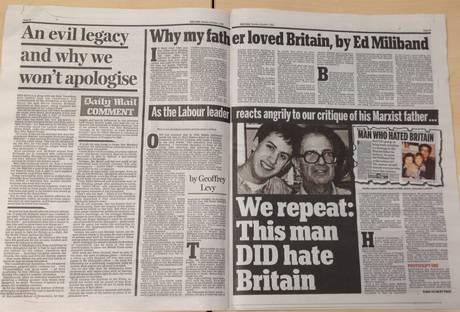
v2-Miliband-MAIL2

I haven’t read the Daily Mail’s article about Ralph Miliband. Nor have I read Ed Miliband’s response. I did look at a photo posted on twitter of the Daily Mail’s editorial defending their decision and I read a bit about that. Whenever national papers quote the Bible in their editorials it always peaks my interest.

I come to this like a lot of people. My views of the situation are mediated by how it has been presented, and as I decided to write something I took the decision to not read the pieces. And this is how I see it.

  • The Daily Mail ran a column saying nasty things about Ralph Miliband, father to Ed and David, including that he was a Marxist, called him evil, and that he hated Britain.
  • Ed Miliband complained and the paper agreed to publish a right of reply. He wrote it saying how day you say nasty things about my Dad, he fought in the Navy, he was a patriot.
  • The Daily Mail duly published this response but alongside a reprint of the original piece and a editorial defending the decision and refusing to apologise.
  • Hysteria broke out.
  • Photos of previous Daily Mail proprietors posing with Hitler were found and the Mail’s fascist sympathies in the 1930s were recalled.
  • It turned into something resembling, your dead forebears were worse than our dead forebears.
  • The Daily Mail continued to publish pieces highly critical of the Milibands
  • The Labour party turned this into a data harvesting exercise to get supporters and donations, and to generally galvanise outrage.
  • Alastair Campbell somehow got involved. Yelled quite a lot at deputy editor on Newsnight, who basically refused to say anything, and once again refused to back down.
  • The Mail on Sunday sent two journalists to Ed Miliband’s uncle’s memorial service looking for a reaction to the furore. Full apology given and journalists suspended.
  • Paul Dacre editor of the Daily Mail has said nothing so Alastair Campbell decided to launch an online petition calling for a debate, which had last check had 43,000 supporters.

And that’s how I’ve followed this latest controversy de jour, or de semaine. It’s not been very edifying. And the conventional wisdom seems to be spreading that this has massively backfired. There has also been speculation that the Daily Mail went down this particularly aggressive route in retaliation for Labour’s support of statutory press regulation

It really shouldn’t be necessary, but in light of what I’m about to say let me make this abundantly clear: from what I’ve seen, the way Ralph Miliband was described and used as a proxy to attack his son is deplorable. If you’re going to have a go at someone, have a go at them, don’t do it through the teenage writings of their now dead father.

I want to examine two things, one the idea that Ralph Miliband was evil, and the second that this will help Labour. Firstly, I don’t think that particular positions on the monarchy, democracy, or other cherished institutions make someone evil. I also wonder if a committed Marxist, as I believe Ralph Miliband was, would be against the idea of the nation state of Britain, in the way they would oppose any nation state and prefer and international socialism. But that’s a tangent

What does make someone evil? Is it a label so niche it is reserved for Hitler, Stalin, Pol Pot, Saddam Hussein, Osama bin Laden, and maybe George W Bush if you’re so inclined. Oh, and it’s also used to describe those who contemporaneously commit acts so vile they still appal our collective conscious. Basically paedophiles, rapists and murders. The tag of ‘evil’ suggests someone no sane human would ever support.

But that’s not how we are. We are not defined by the acts that we do, as egregious or exemplary as they may be. One is not made evil by committing horrific wrongs, or made good by their acts of kindness. So no more is Ralph Miliband evil than are you or I, but evil we do, and a propensity to do it comes more often than we would like to imagine.

“If only it were all so simple! If only there were evil people somewhere insidiously committing evil deeds, and it were necessary only to separate them from the rest of us and destroy them. But the line dividing good and evil cuts through the heart of every human being. And who is willing to destroy a piece of his own heart?” Aleksandr Solzhenitsyn

While evil is so rare to never be something applied to regular people sin is trivialised, as Francis Spufford comments, to mean things like indulging in a bit too much chocolate. But we have a propensity to wreck things, the HPtFTu as Spufford puts it.

On the other point, will this really help Labour? Well maybe. It has certainly galvanised many on the left, and outraged people across the spectrum. It’s simply not nice to treat people as Ralph Miliband was treated. Nor how Margaret Thatcher was upon her death.

It has provoked people to have a go at the Daily Mail, refuse to buy it, encourage advertisers to pull out, call for better press regulation. And for the editor to debate Alastair Campbell. From what I’ve seen and picked up I do not think that what the Daily Mail published should be stopped from being published again. I would prefer they didn’t, I think it is damaging for our trust and appreciation for politician regardless of their position, but I don’t think it should be stopped. I think seguing this into an argument for better regulation of the press comes close to arguing that they cannot say nasty things about us. A free press requires that they can.

UKIP benefit when politicians have a go at them. They thrive when they are mocked, abused, hounded by the press. When Michael Crick doorsteps one of their MEPs can get swotted by a fly UKIP are seen as refusing to dance to the tune set by the media establishment. They do well when other people think they are making fools of themselves. Their very outsider status makes them particularly hard to respond to.

I wonder if the same is happening here with the Daily Mail. While the collective establishment is outraged and shocked that they would publish such words and follow it up with such a relentlessly personal campaign against one family. I wonder, I just wonder, if there are many people who side with the Daily Mail, who read their pages and are not outraged, who do not get the commentariat’s little jokes about the side bar of shame. Who read the columns and see the headlines, and follow the coverage and will walk away with the conclusion that Ed Miliband is not the man to lead Britain.

And that’s why I chose not to read the pieces, because many who respond to them and whose views of politics and the press are affected by them will not have either. The impression that a situation provokes, especially one such as this is as important as the actual content and intention.

I’m not saying for a moment that they should, that this justifies the words printed, or their stoic defence. But I think we should pause a moment before laughing in their face and thinking it has failed to achieve what they might have intended. A lot is often misappropriated in the name of the silent majority, the masses beyond Westminster, Mr Mondeo and Mrs Mitsubishi, but maybe more identify with what those anti-establishment voices say than we might like.

And can I say one more thing before the outrage descends? Perhaps among the legitimate outrage and annoyance, among the valid grievance and complaint, is just a hint of the feigned and the faux? That this is a good stick to beat a paper never accommodating to Labour’s policies, positions or personalities, and now they have a good reason for that cleft to become a canyon. And at the time getting their supporters impassioned and empowered.

The curious case of Dr Drew and St Ignatius’ prayer

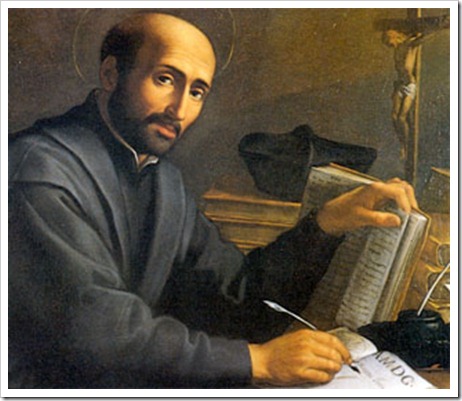
Ignatius-Loyola_thumb3

Sending a prayer to colleagues shouldn’t be a sackable offence. If we have freedom of religious expression what use is it if we are told we can only exercise it in private? Freedom of religion and freedom of expression have to include a public dimension if the freedoms are to be substantive.

But does the public expression of belief require that workplaces accommodate it in all its forms? Probably not.

While religious freedom should allow for religious expression within the workplace, that doesn’t mean it should in all its forms. The two cases of Shirley Chaplin and Nadia Eweida provide a helpful illustration, they both complained at their employers’ restrictions on wearing a religious symbol, in the first case the restriction was considered legitimate due to health and safety concerns (and reasonable alternatives offered), in the latter it was not because only due to a uniform code.

There are actions on the part of an employer which are undue restrictions on religious liberty, and there are actions from employees which may restrict religious liberty, but which may also be justified. The challenge when assessing cases such as these, and Dr Drew’s is the most recent such case, is to work out which side of the line they sit.

The case of Dr Drew and Walsall NHS Trust is more complicated than simply deciding where it sits on a spectrum of fair and unfair interference with religious liberty. In fact, the case doesn’t get into the details of where or how it engages Article 9 of the European Convention of Human Rights. This is because it is a very confused case. The problem arose from a complaint which was investigated, and taken through various rounds of internal processes, an independent review, a disciplinary process, a termination of employment and an employment tribunal before it reached its current stage at the employment appeal tribunal (EAT). The initial complaint, which did have a religious dimension, Dr Drew circulated an email including a prayer, became lost under a wider breakdown of employment relations, and at one point the EAT concludes that he shared confidential information by forwarding on an email, which was gross misconduct in and of itself. Therefore, from my lay reading, it seems reasonable that he was sacked, but he wasn’t sacked for sending an email which contained a prayer.

The sticking point is that the situation escalated because Dr Drew would not accept the recommendations of the independent review panel in their entirety. In particular he took issue from the instruction to refrain from use of religious references in his professional communications. He questioned this requirement and asked for an explanation of how it would work in practice because the English language is replete with metaphor and allegory, much of which is derived from the Bible. It was Dr Drew’s failure and unwillingness to comply with the review’s recommendations that ultimately led to his dismissal, and the main reason he wouldn’t was because he was being asked to not speak about his religious beliefs.

Therefore, although the case can and was dealt with largely without engaging a substantive consideration of whether his religious expression was constrained, it has at its heart the actions of an employer seeking to constrain religious expression, and whether this restriction was valid does not seem to have been adequately considered by the court.

This is a poor case, it seems relationships had broken down, both sides come across as antagonistic and seeking out a dispute rather than a resolution.

But I am concerned that an employer can ask an employee to refrain from using religious language. The case discusses in some detail what the appropriate comparator is to decide whether doing this and acting on Dr Drew’s failure to comply is religious discrimination. The comparator, both the original tribunal and the EAT agreed was another person with a different religious belief or no religious belief being asked not to send texts important to their system of belief or non-belief. The problem is that this creates a barrier between religious beliefs and non-religious beliefs, for example, would an employee be reprimanded for sending poetry to other staff? If you do not follow a religious system of belief you do not have a text or source of texts that can so simply be considered.

The requirement not to use religious references disadvantages those with a religious system of belief over those who do not have one at all or hold only very lightly to one. Therefore, while perhaps not pertinent to the eventual outcome of this case is still a matter of concern. A all encompassing request to not use religious references is secularism writ large, and writ large in a pernicious form. It is a pity it got lost beneath this case.

FURTHER READING: Summary from Law & Religion blog, and the full EAT judgement.

Should street preachers be arrested?

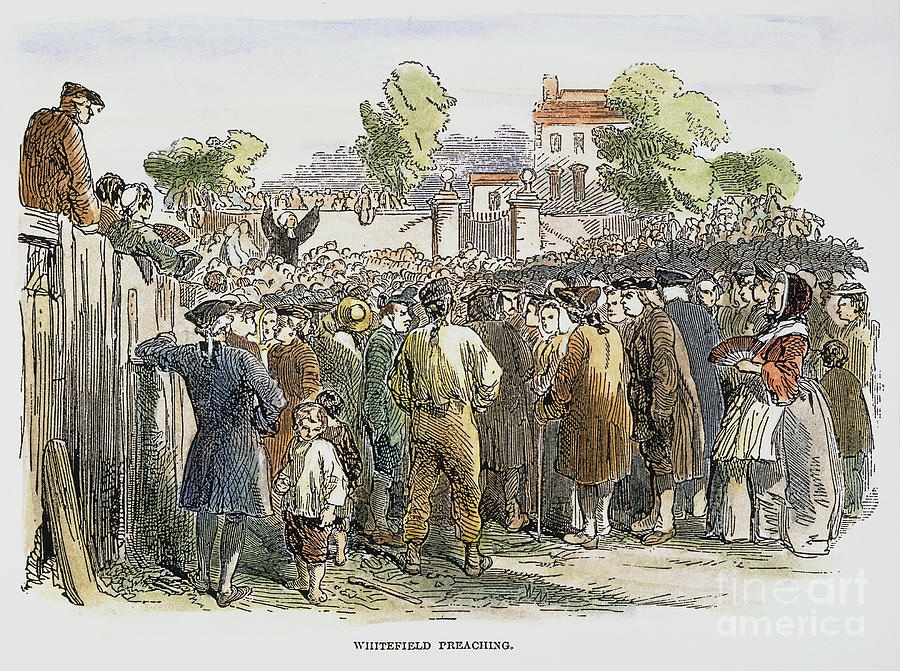
George Whitefield preaching

It’s surely a QTWTAIN. A question to which the answer is no. Ensuring that people are free to preach, worship and change their religious beliefs is a fundamental freedom and a hallmark of a country that respects human rights.

In addition, for Christians there is the clear command of scripture to go out into all the world and preach the good news. Not only should public preaching be allowed, but it is an outworking of Christian belief.

Yet rights are very rarely unlimited, they are mostly qualified, subject to legitimate restrictions. But if religious freedom allows preaching in public, which I believe it should, there should be a fairly high bar for stopping it. If the preaching is disliked or disagreed with, this should not be enough. We live in a country with myriad different beliefs and hues of adherence, it is inevitable someone will disagree with what you believe, and especially if you think that others should also believe what you believe. Freedom of belief is an empty freedom if it is only granted when no one complains.

The government recently accepted amendments to the 1986 Public Order Act which removes the justification for arrest if someone’s words are insulting. Insulting is a subjective charge, and too easily applied to someone who you disagree with. The law will still protect against abusive and threatening behaviour, but the removal of the word insulting raises the bar, which had been used to arrest people for preaching on the streets.

However, in recent months several street preachers have been arrested or taken into custody by the police due to their street preaching. The most recent case is Josh Williamson who has twice been arrested in Perth. This past Saturday he stood on his stool and started preaching.

I’ve watched the video twice and am still not sure what I think, in particular whether I think the police were right to get involved. Also, my understanding of the law is patchy, and the police were not making an arrest under the Public Order Act, but on grounds of failing to desist and threatening to cause a breach of the peace. As I understand the situation, once the police got involved, it stopped become about his preaching but about his attitude towards the police and their requests, whether they were right to get involved at all is more dubious. I would be very grateful for any legal insight into this, I believe the relevant precedent in this area is Redmond-Bate v Director of Public Prosecutions.

As I understand it, the reaction to someone’s actions is not in itself enough to define the original actions as a breach of the peace, those actions have to be considered as intended to provoke. And if I’ve got it right, provocation that is likely to lead to violence. I would argue that his actions were intended to provoke, but not likely to lead to violence.

I want people to be free to preach in public, many will disagree, some will find it offensive, but that shouldn’t be cause for arrest. But here’s the difficult part. As I watched the interaction I found myself on the side of the police. I felt they were trying to handle a tricky situation with care, even if they were wrong to arrest him. I thought their words and actions were reasonable, even if not legally correct. I want to defend the preacher’s freedom, but his actions seemed designed to goad the police and test their tolerance.

I’ve seen the Easter story played out before multiple thousands in Southampton and Winchester, it happens in Trafalgar Square each year, I’ve been involved in public acts of worship in Parliament Square. I’ve prayed on the walls of Southampton, and I’ve been moved on by the police for ‘loitering’. I’ve filed the paper work to present a prayer to Downing Street (technically it was a petition). In each of these cases the right to preach and worship in public was not guaranteed. Forms usually had to be filled, permission given.

The freedom to preach does not give us a blank cheque to do whatever we like. We still have laws to follow, and structures and systems to work within and abide by. There are places where those systems become iniquitous and breaking the law is an act of good conscience, but that is not what’s going on here.

This is not persecution, I’m not even sure it’s discrimination. I also think it can make us look indolent in the face of what happens across the world. The Archbishop of Canterbury said on Radio 4 yesterday: “The appearance is often deceptive but I think Christians have been attacked in some cases simply because of their faith,” and he went on: “we have seen more than 80 martyrs in the last few days. They have been attacked because they were testifying to their faith in Jesus Christ by going to church. That is outside any acceptable expression in any circumstances for any reason of religious difference.”

There’s also the other half of the Great Commission in Matthew 28. To go into all of the world preaching the good news and making disciples.

I don’t think the street preaching was any good. One twitter response said he should be arrested for ‘mundane and uninspiring preaching’, another said what he was doing was ‘aggressive, unattractive and far from winsome’. I’m not saying the freedom to preach the gospel only applies if the oratory is of sufficient quality, but we have to consider what is being heard as well as what is being said.

I would question whether this sort of street preaching is making disciples, and therefore whether it is effective preaching of the good news. I believe in the good news of Jesus. I believe it has the power to transform lives like no other. I believe we should be bold and courageous about telling people the impact it can have. But we should also see what works and what doesn’t. I was reminded last night of an analogy of a man standing in the street asking people to kiss him. The 98th woman assents. He has success he cries, forgetting the 97 who went before who he alienated and freaked out.

The gospel will offend. It will send some away. It is difficult to take. We do not have to do that work for it. We do not have to offend. We do not have to alienate in order to have authentically preached the gospel. We have to make disciples as well as preach the good news.

Sometimes being the victim seems to come a little too easy. There are injustices and poor behaviour by the police and authorities, arrests that shouldn’t be made. But there are also times when being the victim provides a sense of affirmation that we are doing things right, that if we’re suffering we must be on the right course.

The clothes of the martyr some times fit too easily when we haven’t walked in their shoes.

Syria: Prayer is not a weapon of last resort

Last night Threads hosted a gathering to discuss Syria and what we can do in response to it. It also involved a broken chair which I was unfairly characterised as having ‘brandished’, but the less about that the better.

The need acutely highlighted by articles such as ‘9 questions about Syria you were too embarrassed to ask‘. A meme spread a few weeks ago where you had to pin point on a map where Damascus is – I was relieved to only be about 80 miles out, apparently better that most other users.

That the situation is complex is a statement so obvious it borders on meaningless. Neither side are angels (are they ever?), the crimes committed are disputed, the efficacy of military action disputed.

Complexity can blind us. Imperfect options can ground us. Fear can stall us. Fatigue can make us turn away.

I put the case last night that while there is a just cause and a moral case for intervention, we should still not take military action. I made the case that without a good prospect of success, or a clear idea of what that success looks like, the moral weight behind military intervention would be scuppered. Continue reading

Does the lobbying bill really gag charities?

lobby

Sometimes I like to read bills that are before parliament just for fun. I also have to do it for work. I’m not expert, I’m not a lawyer, and I don’t always know what various clauses mean and what their impact will be. But give me some guidance notes, some advice and I can usually make a decent attempt at decoding the peculiar form of words used to craft law.

Except yesterday. It wasn’t the first time I tried to understand this particular piece of legislation, earlier in the summer I was alerted to concerns about the impact of the Transparency of lobbying, non-party campaigning and trade union administration bill so took a look – that’s far too long a title so I’ll stick to lobbying bill, but it’s also been tagged the gagging bill by some of its critics… more of that to come.

My analysis is not complete, it might be wrong, and part of the reason for writing this is to work out whether I’ve got it wrong and whether you can help.

This bill is a mess, there’s no getting around that, it tries to address concerns about the access of lobbyists, regulate campaigning by non-party groups, and reform rules on trade union membership. The first part is ineffectual, the second controversial, and the third clearly partisan. On lobbying, it will only cover a small number of lobbyists, and only cover their meetings with ministers and permanent secretaries. On trade union membership, some of the goals of what is being endeavoured are valid but in this bill at this time, before parliament yesterday as the Trade Unions Congress opens today? It seems like a very partisan move.

So onto the non-party campaigning. The hue and cry has come out over recent weeks reaching a crescendo yesterday that this bill will stop charities from speaking out against or in favour of policy positions, especially in the twelve months prior to an election. Once again, let me reiterate, I want advice as to whether I’m interpreting this correctly.

Political parties are regulated in the money they can spend campaigning for election. The Electoral Commission also cover the activities of other groups referred to as ‘third parties’. These are groups who are not political parties, but their activities and campaigning are considered to be seeking to influence a voter’s choice. The bill cuts the amount of money that can be spent before it can be declared, it widens the scope of what is covered – most notably to cover staff time, and is alleged to widen who is covered by these rules to those whose actions have the affect of influencing the outcome of an election, even if that was not its purpose.

I spent a lot of yesterday searching what in the bill does this, and I failed to find it, I repeatedly heard it cited as stopping charities, churches, campaign groups, political websites, think tanks, etc, from expressing political opinions in the run up to an election. Asked twitter for help and it let me down. The closest thing which backs up these fears, which if valid are very legitimate, is the legal opinion provided for the NCVO. The key issue is summarised on their blog as “The wording is quite technical but we’ve moved away from looking at whether campaigning activity‘ can reasonably be regarded’ as ‘election material’ to looking at whether activity can be deemed ‘for electoral purposes’ which may have ‘the purpose of or in connection with affecting the prospects of parties or candidates’.”

Clause 26(3) defines the meaning of election purposes, and is where this shift in description takes place. However, the legal opinion, which is worth a read if you’re a geek and want to know about charities and electoral law, comments in paragraph 51: “The real vice of the new definition is the lack of clarity, and the consequent lack of certainty as to when expenditure (of time and/or money) ought to have been included as ‘for electoral purposes’.”

The government swear blind they’re not changing the definition of a third party and it is not their intent to capture charities, voluntary organisations or faith groups in these criteria. What makes all this more complicated is that charities are regulated in regards to their actions around elections by both The Electoral Commission and the Charity Commission.

The bill may create sufficient confusion to create a chill and cause charities to limit their political campaigning, it might even at a push prevent them from doing so. But the bandwagon that’s started rolling and snowballed this week has not prevent it as this. It has suggested this is an attempt to gag charities, it has suggested it is an assault on free speech, and all with very little reference to what the bill actually says.

This bill might be targeted in its attack on Trade Unions, and disagree with that as you will, but charities are not the intended victim. And what, what if, the confusion around the impact on charities is being used as a shield to deflect attention from the Trade Union aspect of the bill, so a bill is criticised, mocked and opposed, but done so with a more sympathetic guise?

Andrew Lansley was in a conciliatory mood before the House of Commons yesterday, he pledged to listen to concerns, and was willing to make amendments or insert an additional clause to clarify the government’s intent.

Currently most charities and voluntary organisations are not registered as third parties. The law before parliament does not change who would be classed as this but The Electoral Commission have previously commented that many charities may well already fall under the definition of a third party.

I’m not defending the bill, it’s an absolute mess. But what if at its core is a kernel of a good idea. What if those engaged in campaigning on policy issues which favour one party or candidate should be regulated in their funding, what if stopping organisations becoming the equivalent of American Political Action Committees is a good idea?

And what if websites such as Labour List or Conservative Home should be regulated? Where does the line between a media organisation with a political viewpoint and an organisation campaigning for the success of a political party lie? What about think tanks whose policies are identikit to those of political parties? What about groups that are proxy for political parties waging war over the airwaves without the controls imposed on parties?

What if charities are too party political? I think charities should be political, I think churches should be political, I think they should campaign, I think they should protest against injustice. But there is a difference between being political and working for the advantage of a political party. Sometimes the actions of a charity, and the issues they focus on may be so closely aligned with those of a particular political party, as to contribute to its electoral success. And the charity might know that the electoral success of a certain party or politician is more likely to secure policy developments that it approves of.

How do you draw the line between when a political party takes up a policy promoted by a charity or voluntary organisation, and when an organisation’s policy aims are intentionally furthered by the victory or loss of certain candidates?

A lot is said about cleaning up politics and the influence of charities shouldn’t be exempt. When money is donated to parties to contribute to their success there is rightly careful scrutiny as to its origin and impact. I think it is reasonable that other organisations with political intent furthered by the success or failure of those political parties bear the same level of scrutiny.

This bill should be amended, reformed, and quite probably dropped. But just because organisations aren’t political parties doesn’t mean their political activity should not be regulated.

Is it the church or the media who’s obsessed with sex?

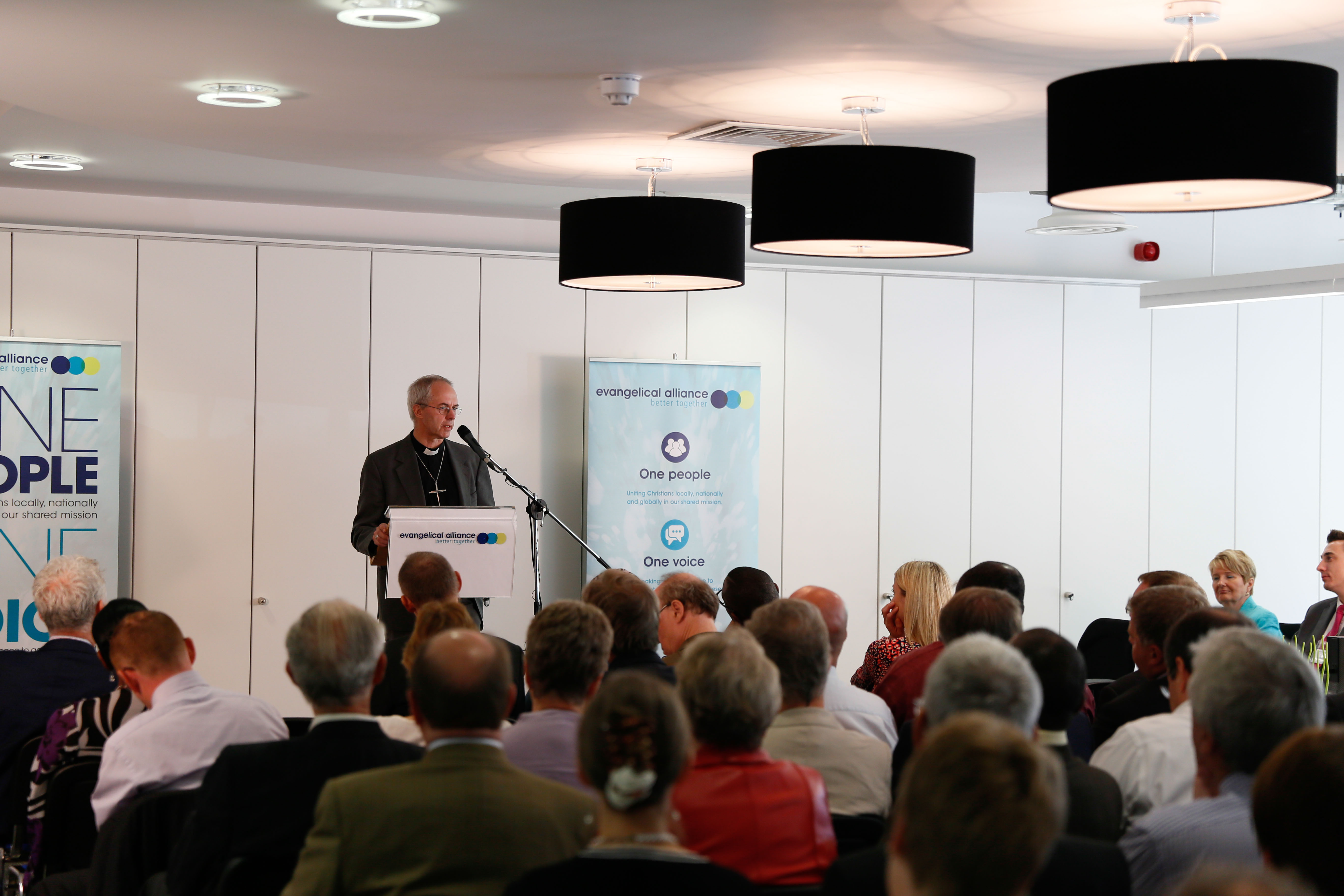
Justin Welby

Credit: Alex Moyler

Yesterday the Archbishop of Canterbury came to work for the official opening of our new building. He spoke with wisdom and grace, he spoke of the need for unity in the church – especially poignant exactly 50 years on from when Martin Luther King declared he had a dream.

He challenged the church to begin with repentance, to recognise the scars that still hurt, and to follow Martin Luther King’s example and set a vision for what society should look like, and how the Church can bring that into being.

He spoke of the contribution churches bring to communities, the places they bring hope to communities in need. He spoke of the power of the gospel to transform people, and through transformed people change society.

If you see anything in the press about his visit, and a few papers have covered it, this is not the message you will have read. Continue reading

A church is more than timber and stone: on Egypt and not knowing what to think

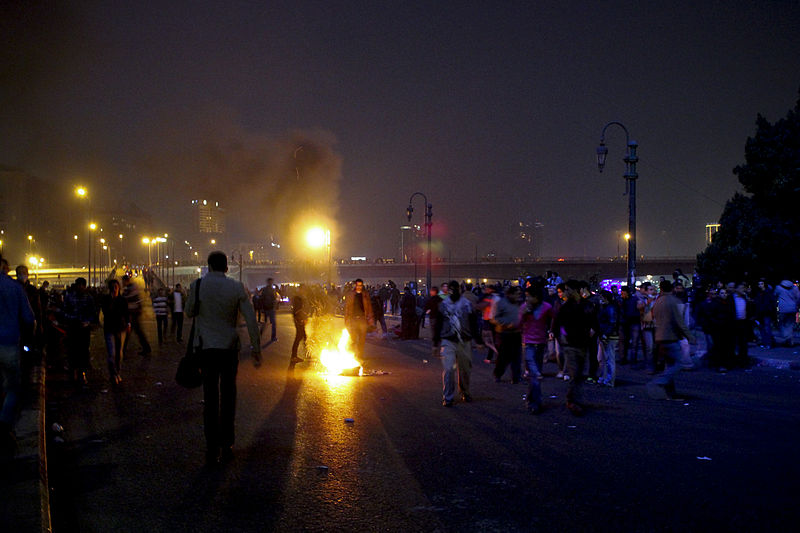
Protests_in_Egypt_January_2013When President Morsi was overthrown earlier in the summer I knew not what to think. Was this a good thing, a bad thing, or a complicated thing? I wanted to have it decided what I should think, which side I should support. I wanted flash card answers to geo-politics fused with religious tension spanning centuries.

I want the media to tell me what to think. I want the politicians to denounce the bad guys and support the good ones. I want the killing to stop.

When a first hand observer, complete with remnants of shot lodged in his wallet, cannot tell you who started it, and who is on the side of the angels. When confusion reigns, when hopes are extinguished, when lives are taken. I want the killing to stop.

When the US declares it’s cancelling it’s planned joint military exercises, but not its military aid (because that might further destabilise the region), I don’t know whose side they are on. Continue reading

A Safe Bet? Gambling on a conflict of interests

Gamble,_I've_already_rolled_the_diceMP takes donation from business man. It’s a bit of a dog bites man news story.

Except when that politician has previously spoken out against the practice at the heart of said businessman’s interests.

Chuka Umunna, Labour shadow business secretary, is in the news this morning for taking a £20 000 donation from Neil Goulden. Neil Goulden was Chief Executive of Gala Coral Group, still provides some consultancy for them, and in an aspect missed by most of the papers is the current and active Chairman of the Association of British Bookmakers (ABB).

What makes this donation newsworthy are comments the Streatham MP had previously made about betting shops in his South London constituency: “I know there is huge concern that some streets in our area are steadily filling up with betting shops and payday loan companies that take advantage of our community, rather than help us.” He also promised “new powers to control the number of betting shops”. Continue reading