Thoughts on Bangladesh – bought at too heavy a price

130425062811-01-bangladesh-building-collapse-0425-horizontal-galleryIt’s thought that over 1000 people died after a garment factory in Bangladesh collapsed. They say that guns don’t kill people: bullets do. Maybe in this case t-shirts don’t kill people but garment buyers do.

This is nearly a third the number of people who died in the terrorist attacks of 9/11. But the cause was not terrorism, it was not global jihad. Perhaps if it was it might be easier to explain, it might be easier to put the tragedy at a distance with a clearly defined other responsible for the senseless loss of life. Perhaps then we might have an enemy to label and target if we were wont to avenge their deaths.

But apportioning blame in this case is harder. I can wring my hands and reach out for someone somewhere who could have done something different, who could have acted to prevent this tragedy.

I blame the building owner for the unsafe structure.

I blame the manager for making people work there.

I blame the authorities for failing to enforce safety standards.

I blame middle-men for complicated supply chains that obscure responsibility.

I blame shops that sell clothes produced at such a cost.

I blame consumers and the cheap clothes they buy because of cheap labour they ignore.

I blame myself for not noticing the abhorrent and the abusive. I blame myself for using complexity as the crutch of the complicit.

And it doesn’t help.

I can also read articles that tell me wages in urban Bangladesh are double what they were six years ago, and offer more than a subsistent rural lifestyle would provide. I can nod in agreement at the thought that if everyone stopped buying clothes produced in such conditions at such a cost the 4 million garment workers in Bangladesh would be even worse off.

But 1000 people died when a building collapsed. 2500 more were injured, rescued from the rubble as cries reached through crushed concrete. Today the rescuers moved out and the bulldozers start to clear the rubble.

And today a woman was pulled from the wreckage after 17 days entombed in the fallen structure. The redemption of one life is a symbol of hope. Almost a motif of resilience against the greed of corporations; against the ignorance of consumers; against the treatment by employers of workers trapped in a choiceless world.

Is knowing that things could be even worse than their current dire state enough to excuse the status quo? Clothes marketed for our convenience and sold at great cost. Is it enough to realise that stopping buying clothes the price of a cappuccino might actually make things worse?

Of course it isn’t. The complexity of supply chains, and the undesirable consequences of good intentions, cannot be allowed to shunt us into acquiescence. It cannot stop us from taking notice that of the £6 we pay for a t-shirt only two pence goes to the garment worker. Complexity cannot be an excuse for indifference.

We’re not indifferent when a single hoarse cry echoes through layers of mangled building. Hundreds of soldiers and fire-fighters rushed to drag her clear of the rubble. Not indifferent when the chance of saving a life means amputating a hand. Life seems precious in the moments its precarious state is presented to us.

We’re not indifferent when it’s someone we know. We’re not indifferent if they’ve been missing two days or twelve years. Hope isn’t extinguished with the passage of time or tonnes of wrought concrete.

Immediacy conquers indifference.

When we know our actions have an immediate impact for better or worse we weigh them more carefully. We rush into act, or we suddenly halt. We drop everything.

Why then do we let detachment and distance dull our relationship to those who stitch our clothes?
Death and all his friends

The last mile of the Boston Marathon was dedicated to the memory of the victims of the Newtown shootings. The 26th mile for the 26 who died.

Reports suggest family members lined the final mile. Tragedy upon tragedy. Tears weighed down with grief. Reports also suggest no one from Newtown was among those killed or injured in the bomb blast.

And I want to say that amid the trauma and the tragedy that is the faintest glimmer of good news.

And I suppose it is. But pain is not dealt out in equal measure. Suffering is not even handed. Suffering is the plaything of a crooked dealer wielding death and destruction, rending families apart. Taking from a father who was running the marathon an eight year old son who was cheering him along.

Fairness does not have a say when death is at hand. Death is indiscriminate in who it takes, who it hurts and who it leaves behind.

God and Politics got there before me and wrote this morning: Yesterday’s bombings in Iraq have killed at least 31 people and wounded more than 200, yet we hardly react to it at all.”

That is not the worst of it, bombs ahead of the upcoming elections killed scores more over the weekend. When it is almost a daily occasion news slips out of the news. It stops being of interest, it is simply one more tragedy piled upon a nation torn to shreds, and we look the other way.

Whether it is the Boston bombings, or in Iraq, or the acts of Kermit Gonsell carrying out late term abortions in torrid conditions, death seems closer than usual.

Tomorrow the streets of London will be lined with fans, adherents and hecklers as Margaret Thatcher’s funeral takes place. She was never anything but a historical figure to me, out of Downing Street before I could tie my shoelaces. But in death emotions are stirred and we are reminded that what we do in life matters.

I was far more affected by the death of Brennan Manning. Philip Yancey wrote in the forward to his final book: As you read this memoir you may be tempted, as I am, to think “Oh, what might have been…if Brennan hadn’t given into drink.” I urge you to reframe the thought to, “Oh, what might have been…if Brennan hadn’t discovered grace.”’

In death we look back because we cannot see any further forward.

And in the end we lie awake and dream of making our escape.

Or at least so say Coldplay.

But I think that they are wrong.

Escape is not the goal.

We are not in heaven’s waiting room.

We live amid the rubble and the destruction and the tears and the grief and in it all we search for the glimmer of hope that points to something which says one day all of that will go away. One day cheeks will not be stained by the soft hint of swiftly mopped up tears.

One day the church militant, those of us living each day fighting for strength, battling evil, will have struggled for its last time.

But that day isn’t when we step onto an intergalactic elevator to move us through the stars.

God came to us. He invited us into his arms as he hung on the cross. The suffering servant that gave hope in His dying breath.

This God hasn’t given up on us. And he hasn’t given up on the world he created.

A ragamuffin called home

“The greatest single cause of atheism in the world today is Christians who acknowledge Jesus with their lips and walk out the door and deny Him by their lifestyle. That is what an unbelieving world simply finds unbelievable.”

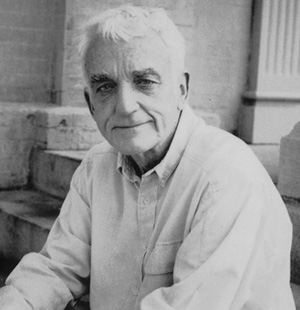
brennan manningDC Talk first introduced me to Brennan Manning. These words spoken as ‘What if I stumble’ kicks in were less a clarion call for action and more of a lament. Today is also a day for lament.

Brennan Manning passed away yesterday. He was a voice for scandalous grace throughout his life and a witness to the work grace can do for each of us. He was a ragamuffin and he taught me to be one too.

He was captured by grace that transforms and by grace that does not let us off the hook. Last year I sat on a sun lounger in Cyprus and read All is Grace. It only took me a few hours and tears strained for release. Brennan Manning knew he was beat-up, burdened, weak-kneed. He knew he was bent and bruised. He knew he was in need of grace.

Manning wrote words in prose of a quality rarely equalled. He wrote words that challenged and comforted. He wrote words that made me cry.

He wrote All is Grace as his health began to fade. It reads as a confession as something he felt needed to be said. And he said that grace isn’t just a one time remedy. Brennan was known as a one time priest, one time alcoholic who had left both behind to get married and preach God’s grace.

But the grace that comes to the ragamuffin prepared to limp and stumble to the cross is not a simple one time only fix all. Before God we can stand as victors but the battle goes on. Brennan Manning continued to be an alcoholic.

Sometimes the questions why came with sincerity, sometimes as a Pharisaical grenade, he wrote in All is Grace. And he said his response shifted between the words of 1990 with verbose theological explanation to the words of the past few years: “These things happen.”

They do. They happen to you and they happen to me. Things happen to us and we do things. It is why the scandal of God’s grace is that it is there for us each and every time. Why it helps us to our feet when we hit the ground. Why it lifts its arms around us. Why it holds us tight and why it lets us go.

Why grace is enough.

Why in the end, all is grace.

Today Brennan Manning stands in the freedom of God’s everlasting grace. Let us be thankful for the life that he led and the message he lived.

‘A Word Before’ from The Ragamuffin Gospel

The Ragamuffin Gospel was written with a specific reading audience in mind.

This book is not for the super-spiritual.

It is not for muscular Christians who have made John Wayne and not Jesus their hero.

It is not for academicians who would imprison Jesus in the ivory tower of exegesis.

It is not for noisy, feel-good folks who manipulate Christianity into a naked appeal to emotion.

It is not for hooded mystics who want magic in their religion.

It is not for Alleluia Christians who live only on the maountaintop and have never visited the valley of desolation.

It is not for the fearless and tearless.

It is not for re-hot zealots who boast with the rich young ruler of the gospels: “All these commandments I have kept from my youth.”

It is not for the complacent, hoisting over their shoulder a tote-bag of honours,, diplomas, and good works actually believing they have it made.

It is not for legalists who would rather surrender control of their soulds to rules than run the risk of living in union with Jesus.

If anyone is still reading along, The Ragamuffin Gospel was written for the bedraggled, beat-up, and burnt-out.

It is for the sorely burdened who are still shifting the heavy suitcase from one hand to the other.

It is for the wobbly and weak-kneed who know they don’t have it altogether and are too proud to accept the handout of amazing grace.

It is for the inconsistent, unsteady disciples whose cheese is falling off their cracker.

It is for poor, weak sinful men and women with hereditary faults and limited talents.

It is for earthen vessels who shuffle along on feet of clay.

It is for the bent and the bruised who feel that their lives are a grave disappointment to God.

It is for smart people who know they are stupid and honest disciples who admit they are scalawags.

The Ragamuffin Gospel is a book I wrote for myself and anyone who has grown weary and discouraged along the Way.

Brennan Manning, 1934-2013

No point having an easy life

In his discussion of Matthew 2.13-23 in ‘Matthew for Everyone’ Tom Wright says:

The gospel of Jesus the Messiah was born, then, in a land and at a time of trouble, tension, violence and fear. Banish all thoughts of peaceful Christmas scenes. Before the Prince of Peace had learned to walk and talk he had a price on his head. At the same time, in this passage and several others Matthew insists that we see in Jesus, even when things are at their darkest, the fulfilment of scripture. This is how Israel’s redeemer was to appear; this is how God would set about liberating his people, and bringing justice to the whole world. No point in arriving in comfort, when the world is in misery; no point in having an easy life, when the world suffers violence and injustice! If he is to be Emmanuel, God-with-us, he must be with us where the pain is. That’s what this chapter is about.

That.

Writing and wronging: learning lessons as I go along

Jan Feb 2012 002Recently I have rather gone off blogging.

There’s a lot I could say, I’m fascinated by the current resurgent feminism that is highly active in many Christian circles. I want Christians to have a grounded, reasoned, theological and compassionate understanding of equality. And I want it to make a difference.

I want Christians to have confidence in their beliefs and not fear their doubts. I could write a lot more about that.

I want the church to be a place where we stand close enough to each other to see the pain in the eyes before words need to be said. When tears are greeted with arms wide open and not a shrug of the shoulder.

I want the church to be a home for the fatherless. A refuge for the widows. A community for the lonely. A sanctuary for the forgotten.

I want the church to be united.

But that doesn’t mean I want dissenters to be silenced. I’m sure I’ve been guilty at times of playing the unity card. You know the one, a bit like the race card, the good intentions, honourable goals, but brought out to end a conversation

Unity is not unity if we stop those who we disagree with from speaking. That’s uniformity.

* * *

I was asked what my blog was about, and a friend kindly explained it was about how we should ask more questions. But I also remember that the question is not the end.

I think doubt is a good thing. I think it is what provokes us to think again. It reminds us of the seriousness of what we are doing. The act of doubting and looking for reassurance is the act of remembering that we are not alone.

Once I was in the depth of my most serious doubts about God’s existence. I was on a train, I was lost in my maudlin thoughts. And I was arguing with a God I was ready to consign to the heap of non-existence. And then I realised. I was arguing with God over whether he was really there. I granted him enough status to engage with, but I only wanted Him on my terms. I wanted a god I could define, a god I could control. A god that was not a god at all.

Because God is not at our whim. But nor is he distant. For a long time I had an image of God as standing behind me, with his arms wrapped across my chest. And I didn’t like it. I wanted to get in the face of God, I thought that was the pinnacle of worship. I thought that’s what a good encounter with God meant.

But if I am looking in God’s face then I am facing a different direction to him.

* * *

Writing is not a status game. And living a life of worship is not about status. Or perhaps more precisely it is. It is about being downwardly mobile, constantly seeking to get closer to those who are in the greatest need.

I had a difficult entry into blogging. The stats for my first month took a while to top. And even then only by a month of dedicated writing on relationships last summer. I’m told my honesty and vulnerability are what makes my writing worth reading.

But being vulnerable is hard work. There are mornings when I head into work exhausted from pouring everything onto the keys. From saying words I know others are saying in the quiet huddles and furtive asides. Words that they think shouldn’t be spoken because they’re not spoken out loud. But when they are said under the breath of so many people they need to be given oxygen.

That’s why I write about relationships, it’s why I try and get to grips with things I struggle to live out myself.

It’s why I’m looking for the words to explain the challenges so many face in living a life of faith.

Sometimes there’s also a place for a bit of controversy. Sometimes I don’t agree with something. I may be on my own, my views might be wrong, they might be unfair, they might be misinterpreted, they might be used in a way that I would prefer they were not. But that doesn’t mean I shouldn’t speak.

Because unity requires honesty. If the body of Christ is to be more than a nominal label we apply when we want to, then disagreement has to be engaged with and not sidelined.

Last week I wrote a post and lost a night’s sleep. I disagreed with someone, and they disagreed with me back. I think that is okay. I don’t mind someone disagreeing with me. But something in me wanted to keep the peace, I didn’t want to cause a ruction, I wanted people to like me and I was afraid that publicly disagreeing might mean that some people didn’t.

I’ve mentioned being close to packing in placing words I scribe in this place. And I’ve been told not to do so. I like the affirmation I get, I like the kindness of friends and the support of strangers. It’s a nice ego trip but it’s not enough.

I will carry on writing hard things and I ask you to be my editors. To tell me when I cross the line, to share wisdom that I do not have. To encourage me and to call me out. The words may be my own but I want to learn more, and I need you for that. In the work we do we have supervisors and managers, in church we have leaders and support, in our family we have each other.

When we write we are also part of a community and we need each other. I certainly need you.

Sexual advances and the advancement of power

The weekend papers were full of it. Nick Clegg came back early from his holiday to issue a statement. The next morning the top Catholic in Scotland, Cardinal Keith O’Brien, brought forward his retirement and recused himself from the Papal conclave soon to begin which will choose the next Pope.

But it’s not just about those whose names are known and paraded in the press. Nor is it just more about the women, or men, affected. It’s about something that let this happen, and not just in its magnitude but also in the little things, the hand on the knee, the closed door, the subtle pressure to go along.

It is about the relationship between men and women, and about the relationship between sex and power. Lord Rennard, the former chief executive of the Liberal Democrats has been accused of inappropriate sexual advances to various women over several years, and that has been accompanied by accusations the party did not do enough about it. And Cardinal O’Brien faces allegations of inappropriate behaviour toward three priests and one former priest in the 1980s.

It could be presented as a straightforward case of right and wrong, or of particular people acting badly towards other. And in a way it is and they did. But it is not straightforward, men were the alleged victims as well as women, and as several commentators have blundered into saying, what’s so wrong with a hand on the knee?

That’s where power comes in. It’s why it doesn’t matter if it’s a man or woman, or girl or boy. It’s what differentiates a hand on the knee that’s a fairly normal act of flirting, from abusive behaviour.

Power changes things.

It makes something wrong that might otherwise be okay. And why does it do that? It is because power places pressure; power exists in hierarchy; power operates with authority. And that matters because power takes away autonomy. Power makes it hard to say no. Power makes us dependent on other people.

Whether it is with a boss who could fire you, demote you, make your life a living hell. Or a respected community figure, a church leader, part of who’s role it is to tell you what is right or wrong. And now what they are doing – they are telling you, with their actions if not words – is right and to object is wrong.

It is what made it hard for Liberal Democrat staffers to come forward and talk about their experiences. It is was has enshrined a culture of secrecy in the church that has covered over a multitude of sins.

When power is used to silence, it is a sign that something is wrong. This is what we are talking about when we find that we are not able to talk about something. In Shane Hipps’ book ‘Selling water by the river’ he talks about light and darkness. Light is not the opposite of darkness, darkness is the absence of light. It is impossible for the two to exist together, one removes, without hindrance, the other. Where there is light there cannot be darkness.

Where there is light there cannot be darkness.

It doesn’t mean the darkness never exists. But it means that there is another road. A road where light illuminates the way, and where things that might thrive in the dark, may be enforced by an abuse of power, have no place.

Sex and power also point to other things. These two forces rarely operate in isolation, they expose other agendas, other problems that might lie a little deeper down. Whether it is questions about whether celibacy in the Catholic church has had its day, or if women in politics have to fight a culture we may have hoped had seen its last.

And maybe this is where we circle back around to the conversation about sex and shame and silence. And why we need to talk about things that might be awkward, if only so that others are helped to talk about what might be the hardest words for them to say.

Speaking truth to power helps others speak truth too. If there are things that we will not say, we should question our silence if only to question whether we might be complicit in others feeling they have no option but silence.  

On the sixth day…

Today I’ve written, a post for the #God52 blog, which if you’re not already familiar with – and its eponymous weekly challenges – you should be. The challenge for this week was to spend an hour on your own doing nothing. I tell my story of how I go a bit further…

Walking through the streets of Bern in Switzerland on a cold March evening I realised I was sad. I had visited the famed bears, strolled around the beautiful city and had a coffee in front of the Bundestag while watching gentlemen ageing gracefully play chess in the square. But everything was not fine, I was missing other people.

Rewind six days and I arrived in Salzburg, Austria, ready to embark on an eleven day tour of five cities all alone. This was five years ago, and each year since I have done something similar. I have driven around Slovenia, Serbia, Bosnia and Croatia, I have stayed in a converted barn in Portugal and a former monastery in Tuscany. And I have done all these things on my own.

It was not until the sixth day that I felt lonely. I am an introvert who lives in a busy world and going away alone has become an important, nigh on therapeutic, activity. Spending an hour alone hardly seems worth bothering with…

Read the rest of the post here

Vulnerability hangover

You lay it all on the line, you write until you bleed. You throw every ounce of the aches of your heart onto the page.

Long words do not impress. Vain self image does not fool anyone. Writing that seeks only to serve your self is a window to your soul. But how often am I tricked into thinking that if only I can find the right formula of words everything will be okay? How often do I want to set everything straight with carefully measured lines, and compassion bleeding onto the page?

Words can make a difference. Words, arranged in a form to provoke emotion; words, designed to force the hairs on your arms stand on end; words, that convey far more than their simple meaning. Words, that drag the beating, screaming, reluctant, truth out of the dark and into the light.

When I write I want to write with integrity and I do not want to hold back. I’ve written about this before elsewhere – it’s the process of stripping away the layers that shield us from the affrays that bombard, but also hide our identity behind their strong defence. We get so good at protecting ourselves, I get so good at protecting myself I forget what it is I am trying to shield from the storm.

I lift my eyes and wonder what I have been fighting all along. I wonder what I have been fighting for. I wonder, what is left of the heart that cries.

Last week I first heard the term ‘vulnerability hangover’ – I can’t remember from whom, and then I encountered exactly what it meant. I posted some raw thoughts, after waiting most of the day agonising over whether to hit publish. But the next day it hit home. I had written that I didn’t feel like going to church, and yet I was due to walk through the doors in a few hours time. I had already decided that I would feel the eyes piercing into my soul as I sat or stood, as I lingered and listened, as I paid attention, or paid lip service to the norms.

The vulnerability that had fuelled my words would not leave me alone. I spent most of the day before heading to church in a daze, I wrestled with why I was going – was it simply to keep up appearances? The kind words of many, both in public and private, convinced me that I was right to say what I had said, but that did not make walking through the doors any easier. In the same way I want the words I write to accurately convey what I am feeling and doing, I likewise want my actions to match the words I write. I do not want to simply promote a facade of vulnerability that only adds another layer to my distorted self-image.

I had a vulnerability hangover. It took away any words I might have to share, I tried to talk to a few people but I was spent. I had no appetite to write any posts this week.

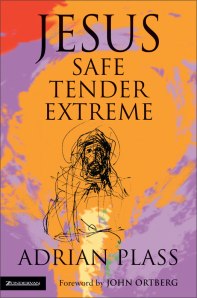
Jesus safe tender extremeFor most of this week I have had a simple refrain from an old hymn in my head. It provided tonic for my soul. I first encountered the words in the final lines of a book by Adrian Plass, ‘Jesus – Safe, tender, Extreme’, I didn’t remember the context until I pulled it off the shelf to check I’d not distorted the lines in my mind. He closes his book talking about a friend who has recently died:

Do I have a 100 percent belief in her resurrection and eternal life? I have a 100 percent desire to have that much belief. I have a hope that burns inside me, It sometimes flickers. I have been promised that one day I shall go home to the Father’s house. I guard that promise, but occasionally I forget where I have put it. I have a love for Jesus that has survived all the obstacles and pitfalls that have threatened to distract me from him since I was sixteen years old. I have in my heart the words of a song that continues to comfort me today as it comforted me then:

Turn your eyes upon Jesus,

Look full in his wonderful face,

And the things of earth will grow strangely dim,

In the light of his glory and grace.

I think it’s going to be all right.”

I have nothing more to add. Except to say, the refrain isn’t all there is to this beautiful hymn.


Virginity and Christian expectation

Last week I nearly didn’t go to church, I was bored of all the same words spoken. I was frustrated with the expectations and event management. I had had enough of having enough. I got annoyed with the words that people spoke, and found objections to the smallest of things. There was something deeply out of step, and going to church only made that worse.

Tomorrow I will walk through the doors again, partly out of habit, and partly out of a determination not to let my disenchantment beat me, partly because I still believe the church to be a good thing. But also out of pride.

Out of pride that I don’t want to let my guard down, I don’t want people to know that everything is not quite a-okay. Slightly defeated by writing this post.

I feel as though I have an image to protect. That of the sorted Christian. The one who doesn’t have doubts or struggles, the one who knows which verses to quote at which point, who knows the right point in songs to raise their arms in worship. The one who knows just how much sarcasm and cynicism about church culture is acceptable.

This is probably the most vulnerable thing I have ever written, I can write about relationships and keep that at arms length, I can write about being single, even in deeply personal terms and manage that. I can throw a dose of humour into posts about dating, I try and find the seems of compassion when addressing controversial topics. But on this I have no guard, I am deeply exposed.

Zoe Sanderson has written this week that: “God is big enough to handle our questions, but in my experience churches often aren’t”. When we have questions and doubts church should be a place where they can be wrestled with in all their raw, uncertain, honesty. They shouldn’t be made into abstraction, and they shouldn’t be shunned out of fear they may cause others to question or undermine the values and beliefs of the church. When the church is afraid to listen to questions it loses the right to try and answer them.

Shame is different to acknowledging that something is other than the way it should be. I do not think my attitude towards church is a particularly healthy one, and I would prefer it to be otherwise. However, fearing speaking out about those doubts and problems because shame may be the result is a far worse situation. I worry that promoting too perfect a vision for how something should be creates a culture that silences uncertainty. And this can make the church the last place people turn with their doubts. Continue reading

Community is like swimming fully clothed

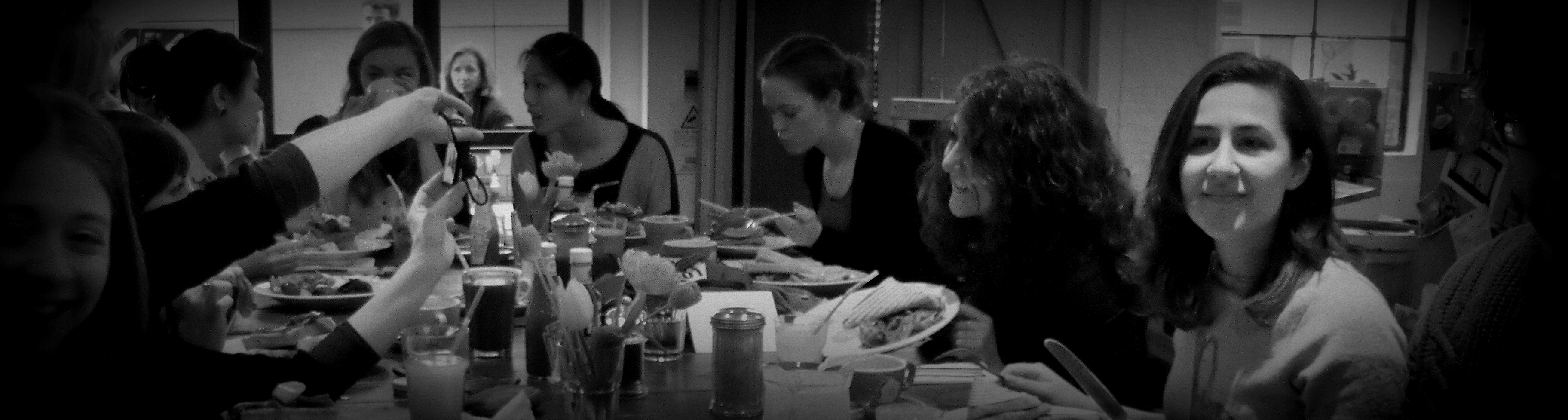
Black and white breakfast clubCommunity is one of those words that floats around. It fades in and out, it is always something that we seem to want more of and always something we perhaps take a little for granted. It is there when we don’t need it and not enough when we do.

It is not the fluffy comfortable stuff made up of laughs and inconsequential conversation, but nor is it just those chats that fall into the accountability category when we talk about our sin and where we’ve got it all wrong, and where we pledge to do better next time. I’ve been turning this one over for a while, several years kind of a while.

Last week I sent out an email, I invited some friends around for dinner. And the problematic word in that sentence is some. On Saturday we ate food, we threw popcorn at each other and we played Jungle Speed. But I was wrestling with an awkwardness and was ill at ease. I’m not very good at curating social space, it doesn’t come naturally it causes me to fret and fear, it encourages the anxieties of social isolation and the vulnerable liminality between the invite and the acceptance.

I’d not invited all of my friends, and there was some ad hoc rationality constructed. Mostly I’d set a number in my head and stuck to that. There was no exclusion intended, but I think it was felt. And the irony was that this vague idea of community was what prompted my rare foray into social organisation.

I have a hunch that we’re not always very good at finding that line between the organised spiritual and the casual friendship, the space where the hard questions get asked. I want to be known by people who do not shy away from saying the difficult things. I want to be known by people who can ask why I didn’t invite certain people, who can kindly, carefully, question my actions.

Church makes a grand play for providing community, where else are the young and the elderly, the rich and the poor, the South American, South African and South Korean stood side by side? It makes the play but doesn’t always follow through, it has the potential, but not always the result. Sometimes I am at my most lonely when I am in the biggest crowds. And it concerns me how frequently those large crowds are in church.

Community is something I long after. Maybe it is the absence of more permanent relationships that prompt the searching, maybe if I had what I thought would fulfil me I would not be frustrated that nothing else quite made do.

And then are the times when I need a smack round the head, when I need grabbing by my ankles and some sense shaken into me and my maudlin mood shaken off. Tonight Lauren Dubinsky did that for me:

Community is not accountability to sinless-ness. Jesus has already given us that.

Community is the people who surround you that ease your burdens.

Community is the people who fight the same battles that you do; laugh when you laugh, cry when you cry.

Community is the people who are in the exact same predicament you are in. All the same struggles, all the same questions.

Community is the group of people where, when you enter the room, you can collapse on the sofa and not care if the way you’re sitting makes you look like you have a double chin.

A beautiful story follows, if you didn’t before, pause now to read it all, but it draws to an end with this: Community is just… life. Willing to give, willing to receive. Willing to believe that we are all equal, and no one moves forward without the other.

It threw me over the edge and forced some perspective into my myopic vision. I’d been fretting over social gatherings and awkward subsets and limited invites, all of my own creation. I’d been frustrated that the community I wanted to be a part of was not forming in the ways that I would like. I got a little angry when things didn’t go my way.

I was worrying about whether I stood a chance at building the relationships I wanted, relationships I imagine I need.

All I was doing was trying to turn the community that I have into the community that I want.

Last year I wrote that: “Community is the gradual unravelling of the layers that we shroud our innermost being with. It’s the place where we find the courage to bare our souls. It’s the people with whom we can share the things that hurt more than the words we muster can convey.”

And yes, I suppose it is, but I think it is also where the layers of clothes stick together like swimming in the river fully clothed. Community is not only where the good stuff happens, where the spiritual impartation, the rebuking and correcting, the admonishing and training in righteousness, community is where we sometimes don’t manage to do so much of that.

We are in community, we are swimming together, but frequently we are swimming fully clothed.