The faded certainty of attraction

I thought that I would know. I thought that the moment the right person walked into my life all would become clear. Sirens would scream, lights would flare, passions would ignite and all doubt would be banished.

I thought that one day I’d be mature enough to move past the waves of attraction that fade in and out like the intermittent reception on the battered transistor radio placed between the paint and tins of nails in the garden shed. I hope in some recess of my mind that certainty is still only the right person away. But that hope recedes into the realms of fantasy.

Because what I learn each moment that I pass through life is that affection and attraction are fickle friends. And knowledge and certainty are elusive ideas that once found only present more dilemmas. Following yesterday’s post on Vaughan Roberts’ interview, I thought I’d ponder a little more. This is a tad more theological that I originally intended, maybe all a smokescreen to protect my fragile emotional state!

In response I, and you, and anyone else, could take either of two divergent paths. Either we see the doubt that lies before us and turn and run away. We could opt for what we know, what is safe and what is comfortable. In the most relativistic sense we rely on where we are to authenticate our ability to decide truth. We either allow comfort to lead to inertia or dissatisfaction to prompt change.

The second option is to live in the light of what Francis Spufford in his new book apparently labels with the acronym HPtFtU. I haven’t read the book – it’s on my ever expanding list – and for the sake of modesty I won’t unravel the abbreviation, but it’s what we in more biblically literate times might label as sin. Stuff goes wrong, and we do not see clearly how things can work themselves out. We live in chaos and confusion, and in the most enlightened of moments only have hazy clarity and even then we might be kidding ourselves.

So the gaze of attraction I cast toward a lady in my midst might be motivated by lust, or it might be the beginning of a love that she is due. And in most cases it is probably a little bit of both. Because even if I get married I will not be free from lust – I’m told that enough by my married friends – I will at times lust after my wife, and other women I encounter.

But all this talk of lust scares me off. It makes me worry that any attraction is motivated by my nefarious desires. Somehow this needs to be redeemed. Beauty is not bad, attraction is not bad.

Beauty must be appreciated for what it represents. It represents God’s creation and his love for us. It is not just the physical but it is the physical. We are not to get so spiritual that we deny what is literally right in front of us. Something I have to repeatedly remind myself is that finding someone attractive is not a bad thing.

It leaves me embracing uncertainty, and learning that as much as I might like things ordered and classified, colour coded and project managed, that’s not the way life works. There is ambiguity around every corner, there is discernment over what needs discernment and what needs a shunt of courage to spur us to take risks when we will never know all we wish we did.

Doubt lurks around every corner waiting to cripple me and hold me back. Whether it is my worth, my value to others, my abilities, or the prospects of love, doubt undermines your security and tries to tell you your identity is in whether you overcome these frailties, and if you don’t then your identity is as a failure.

But doubt is the door through which redemption arrives. We learn that we cannot do it on our own, we are weak and we are frail, and we are broken and lost, and these will not be cast aside any time soon. But when we learn that we cannot overcome all that might try to drag us down we look up. We see that in the mystery and confusion, and the uncertainty and unsettled resolve there is a place we can be secure. And from the place of security we can go on adventures unshackled by doubts and fears.
Appropriate attraction

Vaughan Roberts has won plaudits for the incredible honesty and bravery he has shown in his interview with Evangelicals Now. Those I share and add to: I think the words of a man highly respected for his commitment to biblical truth and Christian ministry describing his struggle with same sex attraction could potentially be a game changing moment for the way such issues are understood and handled in the church.

What Vaughan Roberts says, and the way that he says it, is a mark of maturity. It has and will continue to attract attention because of the subject matter and the highly volatile current political debates around same sex marriage. I encourage you to read the interview in full, but to summarise he outlines that while he has struggled with same sex attraction this has not diminished his commitment to living a life that upholds the orthodox Christian understanding of sex as reserved for a man and a wife. For him, this means he lives a celibate life.

Each of us have things in our life which pull us away from the type of life God would prefer us to lead. For each of us these are different in their specifics, but hallmarks ring loud and clear. Sexual attraction of one sort or another ranks high, as does a desire for power and authority, a propensity for self interest and greed dominates too many of our lives. We put ourselves above God and choose to let that which is not God take priority in the ordering of our lives.

In the interview Vaughan Roberts studiously avoids describing himself as gay, a demarcation that has already generated discussion. This is interesting because it raises the question for all of us of how we define ourselves and what identifies us from the crowd. I recall a quote which I’m failing to attribute, whoever it was he was asked whether he was homosexual or heterosexual, to which he responded neither. He said that he’s not attracted to men or women but to one woman, his wife.

What struck me as I pondered Vaughan Roberts’ words is that it’s not as simple as same sex attraction is something which we should flee from. I think there are good and bad forms of attraction, the good form, when we indulge it we are actually becoming more human in the giving of ourselves to another. But there are other forms of attraction that we choose to spurn because we believe them not to be in tune with a way of life that honours God.

The most refreshing part of the interview was the implicit acknowledgement, and if I am reading too much into it then I apologise, of the present continuous nature of his struggles. It’s something I’ve been toying with for a few months, how we handle the fact that we don’t just move past our struggles, that they often continue to walk with us. Roberts puts it like this:

While homosexual sin must always be resisted, the circumstances which often accompany same-sex attraction should be accepted as a context in which God can work. There is, without doubt, a difficult aspect to those circumstances, such as, for example, the frustration of not being able to experience the intimacy of a sexual relationship or a feeling of isolation because of the sense of being different.”

He goes on to say: “This perspective should transform how we view all the difficult circumstances in our lives. We’re not called to a super-positivity which denies the frustration and pain; nor are we to embrace a passivity which spurns any opportunity to change our situation. But we are to recognise the loving hand of God in all we experience and see it as an opportunity for service, growth and fruitfulness.”

Because we are not defined by whatever brokenness exists in our lives we are defined by who we are in Christ. Dallas Willard writes in similar terms about our lostness, not something that we resolve as soon as we trust in Christ but a path we will frequently find ourselves on once again.

In a bonus track on the new Mumford and Sons album they sing: “Wanting change but loving her just as she lies, it’s the burden of man who’s built his life on love.” I could take that as how God views us.

So to me. If the only appropriate attraction we are to indulge sexually is between a man and a wife where does that leave me, a single man attracted to women. I hope that for one of those I find my heart stirred towards, that might one day be what we are to each other. But for now I find myself attracted in different ways, at various times, in degrees of intensity to different women. And not all of that can be wholesome. Not least when confusingly they overlap.

There is a goodness in some of my attraction that needs to be discerned. There is prospect for an intimacy where that attraction will be fully indulged. But for now it is as much a temptress as a guide.

And then there is this other thing. The damage we do with only associating beauty with sexual intimacy. A friend recently suggested guys need to do a better job of complimenting girls for how they looked, regardless of whether they were interested in them. And in theory I agree. But first of all I might need to get better at doing it for girls who I am interested in.

The politics of decency and the art of saying sorry

It seems as though you wait an age for an apology from a politician and then three come along at once.

It is the apology, or his multiple fumbling attempts at such, from Andrew Mitchell that has stolen a march on the Liberal Democrat conference and dominated headlines. Accusations surfaced at the end of last week of his foul mouthed tirade against police officers guarding the entrance to Downing Street for asking him to us a different gate for his bike. And as further reports have corroborated the original story and the full police log published in the Daily Telegraph I struggle to see how the Chief Whip’s half hearted apology cuts any ice, or how he can stay in his job.

If the report is wrong, either through mishearing – I suppose he could have said plod instead of pleb – or deliberate incorrect recording, then Andrew Mitchell needs to defend his position, but to do so looks like requiring a full admission that he did swear at the police officers. It also requires that he calls into question at least the diligence if not the repute of the officers specifically tasked with protecting senior members of the government. Doing either of these things make it incredibly difficult to maintain credibility and respect. And in order to fight this crusade for truth a government minister would have in any previous era resigned his post.

The alternative is that Andrew Mitchell did say the words recorded by the police officer. In this case he is either lying or relying on semantic differences between the accounts. If the aggression, swearing, condescension and disrespect of the original outburst was not enough to prompt his resignation, then lying in an attempt to cover up his misdemeanour surely is. And if it is not, then we should lament the state of our body politic.

Because it would entail the acceptance that it is okay to swear and put down those who seek to protect and assist you. And then consider a limited admission of guilt, while lying about certain more damaging parts, a suitable response.

It seems he rode through the original storm with Nick Clegg among those suggest a line drawn under the affair, but now it seems he may have lied in his initial response it might be that which counts for his downfall. But to say that it is the lying that matters most is an interesting chain of web 2.0 historical revisionism. Those calling for him to go for lying were just two days ago calling for him to go for the words he said.

I wrote for Threads last week about the toxicity of the religious right, especially in America, and how the hypocrisy is what frequently strikes the most damaging chord. I made the point that Boris is lauded for his authenticity when he swears at he rival in a lift. Maybe had Andrew Mitchell thrown his hands up and admitted a moment of madness he bitterly regrets and not denied an ounce of the claims against him he could have rode through the criticism.

But what about decency?

It seems a commodity too precious to be on public display.

In the case of Boris the public overlooks his marital indiscretions and his bumbling inclination to offend the populations of northern English cities and Pacific islands alike with his miscued rhetorical excess. But in doing so, and in taking more offence from words like ‘pleb’ than others I refuse to type, do we surrender our aspirations to a politics defined by respect, decency, care and compassion?

Does the high water mark of authenticity legitimate actions which we might want to take another look at? Is it enough to be true to yourself, is it sufficient to be transparent and not deceptive?

I think not. I think it is fair to demand standards of behaviour, I think it is reasonable to ask that our leaders act in ways which show respect and decency, care and compassion. And I think this means not swearing at police officers.

Royal privacy privilege and why page 3 should go

If you’re going to sunbathe topless within 600 metres of a public road, and you’re an attractive young woman married to an heir to the throne it’s not a surprise the images find their way to glossy magazines and tabloids across the globe.

Scandalous? Certainly. Distasteful? Definitely. Predictable? Sadly. Wrong? Probably.

‘Only probably?!’ I hear you cry, and my response would be it depends on what you mean by wrong. Because as I’ve thought and reflected on this issue which has surged up the news agenda and prompted legions of sexually excited men to turn to google images while shaking their heads in disgust at such a gross invasion of privacy, I’ve wondered at why we think it is wrong. And where I’ve ended up is that within the parameters of what we as a society allow and deem acceptable it is hard to logically oppose the publication of the pictures.

That doesn’t mean I think they should have been published. They certainly should not. But the question that’s been playing over in my mind is why should they not have been published? It means we have to reach back and think about what we have already granted license to and whether we should reassess those permissions. I’d be fascinated to hear what you think, and why you think it, and then what we can do to address this. I’ve been playing the ethics and logic of all this over in my mind for the past few days, and it also relates to a new campaign encouraging the Sun to stop putting topless women on page 3.

The photos clearly represent an invasion of the royal couple’s privacy, but other photos from the same location showing the Duchess in a bikini have been published and the news outlets are not subject to the legal action directed at Closer in France and Chi in Italy. Like the topless photos they were taken from the roadside with a telescopic lens. If one set of photos are allowed, or at least tolerated, in the public domain, then why not the others? The issue here is therefore not primarily one of privacy, although that is the legal avenue being pursued to prevent their further publication.

What drives the attention is that the photos are of the Duchess of Cambridge topless. A statement of the obvious if ever there was one.

But topless pictures grace the pages of the UK’s most popular paper everyday. And even those that pour scorn on the endless sexualisation of children plaster the sidebar with image after image of girls in skimpy bikinis, extolling the latest diets of celebrities, or their failures to shed pounds after giving birth.

These pictures fall into two categories, one directly relevant to the most recent scandal, and the other indicative of our cultural attitude. The first is pictures similar in type and origin to those of Kate in Provence, celebrities spotted in private locations snapped with long lenses in positions or states of undress they might hope would remain private. If the photos of the Duchess of Cambridge should not have been printed, then nor should these. While it is undoubtedly more newsworthy that the subject is a future queen, this should not entitle her to any greater protection. This is why the scorn of the British tabloid press, including the Sun which reportedly turned the photos down, rings somewhat hollow. If they empathise with the pain that William and Kate are feeling, do they consider others printed in the 3am column unworthy of empathy?

The second issue is that papers, most notably again the Sun but other papers print far worse, make nudity a key aspect of their sales strategy. Topless Page 3 models grace the inside leaf of the paper each morning (I don’t think at the weekends) in what has become a tolerated and mainstream acceptance of nudity and the commodification of the female form. This is significantly different than the paparazzi shots that breach privacy without any imaginable public interest defence. In these cases the subjects have chosen to be photographed, it is the publishers would argue, a consensual relationship for both the reader and the pictured girls.

To conclude my analysis of the logic before moving on to some further comment, if the paparazzi photos are of the same level of nudity as others that are accepted, and other photos taken in the same manner but not of the Duchess of Cambridge topless are tolerated, then it is hard to see how we can argue the photos should not be printed.

As I said above, I do not think they should be published, but I think the logical inconsistency we are seeing shows why we need to take a step back and consider both privacy and the acceptance of nudity and the sexual form in our culture. Privacy is a matter for another day, but as Mitt Romney has learnt if you are in the public eye perhaps you have to assume virtually anything you ever do can some how be captured, recorded and publicised.

On nudity and sexualisation I’m also not out to be a prude. This post over at prodigal today about relevance and innocence is certainly food for thought. And in response to the current campaign for the Sun to stop putting topless girls on page 3 one Telegraph blogger took out his annoyance on the snobs trying to stop the working man enjoy the view.

I don’t think we can sustain a shocked posture in response to the pictures of the Duchess of Cambridge if we are party to the parading of women for our viewing pleasure and to sate our sexual appetite.

If the naked form is normal why are we shocked by its unveiling?

Because there is something special about who and what we are, that is not to be trivialised or given at any whim. In the film Anna Karenina Constance Levin says: “An impure love is not love, to admire an other man’s wife is a pleasant thing, but sensual desire indulged for its own sake is greed and a misuse of something sacred. It is given to us so that we may choose the one person with whom to fulfil our humanness.”

In an era when the naked form is more available than ever before it is curious that trips to the beaches of Europe do not bring the same quantity of topless sunbathers as it might have a decade before. Maybe we are slowly discovering that the beauty of the human form becomes devalued the more available it becomes. And yet the more we see, the more that we find we want, even though it does not bring us the satisfaction which we thought it might.

Page 3 does not belong. It’s not about being a prude, it’s about wanting sexuality to take its proper place. Sign the petition, encourage everyone you know to as well.

If we cannot stop photographers with telescopic lenses prying into private holiday villas, or mobile cameras lurking in every shirt pocket, maybe we can lessen the normality and the acceptance of naked women as a form of news.

Quarter life crisis – A reader writes

Following my posts last week around the ‘quarter life crisis’ a reader got in touch and has given me permission to share their story:

I once asked a young person how her week had gone.  She replied “Well my teacher told me off for talking but it wasn’t me that started it, it was the girl sitting in front.  And then I didn’t get picked for the hockey team. And I’m tired of going to places where I don’t know anybody and I don’t know what to talk to them about”.
In response I sent her a card not promising her that these things wouldn’t happen when she was a fully grown adult, but suggesting that it might become easier to deal with them.  Because, while we get older, the truth is that the challenges we face as angst ridden teenagers never really go away.  We start a new job and wonder how we will ever make friends and become comfortable there.  We are accused of things that aren’t our fault but have no way of defending ourselves.  We feel left out when we’re pretty sure our rightful place is on the inside.
But maybe life is just lurching from one age related crisis to the other.  In our early twenties we stand at what feels like the door to the world – study, travel, the promise of independence.  Idealistic and wide-eyed, life is to be lived to the full.  But the choices overwhelm us and fear can paralyse.
By our thirties we realise that we’re living with the consequences of those choices.  The person we really wish we had said yes to… or the dawning realisation that this was the person that we really should have said no to.  The treadmill of a career that once promised so much but delivers so little.  A niggling realisation that the black-and-white faith of our youth no longer has the answers to the various complicated shades of grey that life throws up – illness, redundancy, disappointment, regret.
Beyond thirties I can’t speak from personal experience but observation tells me this: each new decade brings with it new challenges, new places to go where we don’t know anybody and we don’t know what to day, new people to get on the wrong side of.  And although many have walked the path before us, we all have to make our own way through.
From the sidelines I’m watching my recently retired father find his place in a new and very different world.  News headlines are no longer the stuff of his in-tray; phone calls are more about DIY projects for his children and less about high profile decisions; emails more likely to offer the latest spam marketing deal than engage him in some complex policy discussion.
So what are we to do with the lives that stretch out before us, with another age-related crisis lying in wait just around the next corner?  There is a quote on the internet which suggests that the Chinese word for crisis has two characters. The first is “danger”.  The second?  “Opportunities”.
The message is simple.  Each crisis presents an opportunity to life live well, and to the full.  For followers of Jesus, by grace each crisis presents an opportunity for the choices of our younger selves to be redeemed.  He  really does make everything beautiful in His time.

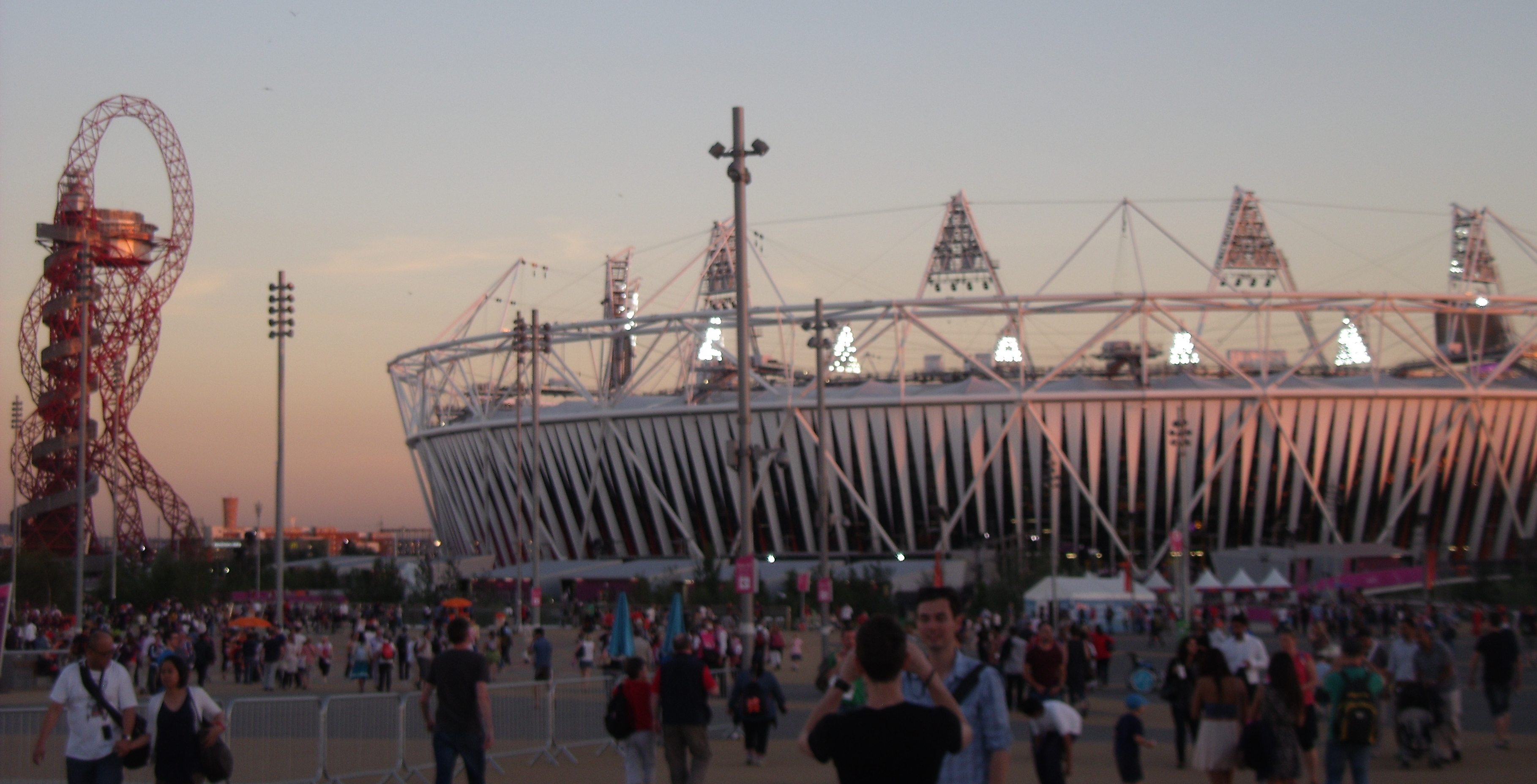
Britain sprints for the line

We did it.

Yes it was the athletes with their astonishing acts of human endeavour. It was the stories of triumph over adversity. It was the legion of volunteer Gamesmakers who sacrificed time to ensure everything ran smoothly. It was the staff, even the G4S security staff, and the armed forces who as so often stepped into the breach. It was the politicians who aimed high: Tony Blair, Ken Livingstone, Boris Johnson, Lord Coe. But it was also something more collective than all that.

We did it. Whether we were spectators in the park, or on our screens. Whether we shone with pride at the wraparound covers on each day’s Times newspaper, or nearly broke down in tears as the final act was played out last night. Great Briton dipped for the line and took the crown.

But it didn’t have to happen this way. There was no guarantee that putting thousands of elite athletes in a corner of East London would provoke such collective euphoria. We could have failed, we could have gambled high and became the laughing stock of the world. We could have been so overcome with cynicism that no matter the achievements on the track we would resent the imposition on our lives. The transport delays, the hiked up prices, the tourists crowding every corner of the place we call home. We even had a sitcom in Twenty Twelve to parody how it would turn out, ready to give us a reference point and a cultural validator when it failed to live up to the hype.

Danny Boyle’s opening ceremony got this perfect. Out of the chaos and melee of ideas, hopes and dreams, emerged something which summed us up. It was self-deprecating in its treatment of our tendency to self-deprecate. It was humble, cautious, loathe to make claims too lofty, reluctant to fuel hopes it could not fulfil.

It was at that point we came together for a summer we will never forget. As if in that moment the cloud of limitation was lifted off us all. Out of chaos came beauty. At the moment when it could have all fallen apart something incredible emerged.

The crowds roared for the favourites and new ones to took up residence in our hearts. On the eve of the Olympics Britain received the shot in its arm to spur us on. How dare Mitt Romney say that we were a little country that never achieved anything? In a master stroke no planner could have dreamt up the country came together.

And together we found our voice. We found who we are.

We did not look on others with envy, wishing the days of the Empire returned. We did not shrink in the shadow of China’s economic growth, America’s military might, or the coming carnival Rio 2016 will bring to the world. We learnt the best is not an imitation of another.

We shrugged off the challenges and sprinted for the line. Achievement can never be taken for granted, but nor is it ever out of reach. Britain learnt this summer that self-deprecation is no alternative to success. We may have a joke at our own expense to mask the fear that we might not make it.

But we made it. Britain, you did good. Very good.

Quarter life crisis – relationships, romance and reality

One of the reasons I felt I needed a break from blogging over the summer was the intensity with which I had posted during June and July, both in terms of volume, and the topic. I’d often rise early write in my favourite spot for an hour or two and then head into work. I was often emotionally as well as physically exhausted. I’ve always tried to write with as much frankness as I can muster and it took its toll.

Which is why when I turned my mind to what I might write about upon my return relationships were further down than the bottom of my list. I was positively determined to steer clear.

Yet as I worked my way through the aspects of life that the phenomenon of the quarter life crisis affects I realised that avoiding talking about relationships would be doing exactly what I fear we do all too often. That is, push to one side the inconvenient and challenging topics and cling to what is safe, known and under our own control.

Emily Maynard wrote a cracking post a couple of days ago about the recurrence of inquiries about ‘why are you not married?’. I think it’s slightly different from a guy’s perspective, I don’t think it comes so frequently, but rather than the sympathy that is perhaps attached (but not always appreciated) when directed at women, for men there is built into the question an element of criticism. That’s because in the church one of the seemingly irrefutable facts is that women outnumber men. Also, as men and women age through their late twenties and beyond, it is women who see the biological countdown with greater clarity.

When the question comes there is always a hint of the underlying questions, either, ‘why haven’t you got your act together?’ or ‘why are you being so picky, there are lots of stunning girls at church?’. And yes I’m guilty of the first charge and I agree with at least the second clause of the latter critique.

What most often provokes the question is when I bake a cake, or brownies, or a pavlova, or decide on a whim to spend an entire Saturday creating a unique, never to be replicated dessert concoction. Then the question is a little different, it’s usually backed up with: ‘any woman would be grateful for a husband who can cook’. Ignoring for now the incredible gender stereotypes in such a statement, such a question places incredible pressure, am I supposed to use edible goods as my principle flirting mechanism?

The other prompt for the gentle prising open of my romantic commitments, or lack thereof, is when I’m in the company of either of my incredibly beautiful nieces. They’re 18 and 15 months old (each other’s cousin) and generally amazing. The occasional case of mistaken identity as their father is quite fun, but sometimes I manage to successfully pacify them, and then the observation comes once again…

Coming back to the quarter life crisis theme this comes into play because I have too many choices. My friends and colleagues, with their not always subtle critique, have a point. I am overwhelmed with choice. There are many incredible women who if in a different situation, with less choice, I may well view in a more romantic light.

But my hopes are built for that experience, that attraction, which transcends the normal. The defining feature of what makes life special seems to be that which lifts us from where we are and onto another plane. Relationships, and the romance within them, are heralded as the hosts of such achievement.

From a personal perspective, for most of my life I simply shrug it off and move on. But this makes me inoculated from the promise of relationships. It makes me view it as something that is even further away from my present state. It allows me to think in abstract concepts and not engage with what the challenge might actually be. I don’t have to become comfortable in my life outside of marriage if I don’t consider that an important part of me.

I respond to choice by running away. Scared of opting for an imperfect solution I prefer to delay resolution altogether. I let it linger in the air, I wait for too long to decide whether or not I – in that most infantile of phrases – fancy a particular person. I hang on to attraction even when I know that it is going nowhere, I hold it like a comfort blanket that doesn’t satisfy but constantly offers the promise that maybe one day it will.

During the frenzy of posts earlier in the summer Jennie Pollock wrote a guest post for me, Singleness is not a prelude, and it has attracted quite a lot of attention. It’s a really good call for contentment in where God has placed you. In it Jennie challenges our view of singleness: “our cultural attitude to singleness – particularly within the church – is similar to my attitude to my life in OM: it’s fun, but it’s not the real thing. It’s the phase you have to get through while waiting for your real life to start.”

The quarter life crisis is about wanting adventure and change, and a life that does not disappoint. But when the adventure carries the risk of disappointment we are pulled in different directions, some pursue the adventure and some avoid disappointment. Unfortunately the adventure is always a gamble.

What questions about relationships do you find hardest to handle? Do they cause you to question you place, identity and security?

Quarter life crisis – a community called love

One of the things that I’ve highlighted as a defining feature for the lives of plenty of people in their twenties is a lack of commitments. This can take the form of getting married and having families later, changing jobs frequently, and being unable, or unwilling, to buy a house. The composite effect of these trends is a generation that is transient and is always open to change. But moreover, change is championed as a good in and of itself, decisions that could tie you down are delayed in order to be able to change at a moment’s notice.

I don’t think this is all bad, I think there are in fact very good things to be said for an attitude that is willing to experiment, and a flexibility to change when that is necessary. But it can also have a corrosive effect. It can shun stability as boring or constricting, it can limit the depth of relationships, and it stands in the way of developing community.

We’re so open to change that we no longer know what holds us together.

In the absence of married and family life, not only is permanence a luxury, but community is harder to form. I may have plenty of friends, I may have a diary full of social activities, and facebook notifications inviting me to more, but am I part of a community that invests in each other and cares and grows.

There is something about being part of a family unit that makes the development of community easier. And as you grow older and more people shift into that camp the remaining options become sparser. This is on top of the life in a city such as London where people frequently work long hours, commute considerable distances, live far apart and have hectic social lives. Where in this space does the energy and capacity for community?

A contradiction is at work here, I want to be a part of something, I want to know people and I want to be known. But I don’t always make the sacrifices necessary to make that happen. I tick the box to say that I want it but my priorities tell a different tale. We turn creating community into a purpose that we can reduce to defined functions and complete. We will spend time with people, we will eat together, we will be accountable to one another. We will do so much while still failing to build a community of love.

There are two things that mimic community but in my experience tend to fall short. The first is friendship groups and social activity and the second are church small groups. I think they come at the need from two different directions, friendships are built on time and communal activity, small groups based on defined purpose and structured meeting.

And we avoid intentionality, whether it’s in friendships or in church small groups. We like things to go with the flow, intentionality in friendship seems forced, and our church groups are too often simply a secondary reprise of the Sunday before. We can do a lot of stuff, whether it’s social or spiritual activity, but that doesn’t by itself translate to community.

I’m beginning to think that the starting point for developing an authentic community is a willingness to prioritise, so that while other things will make their calls on our life, the community to which we commit does not suffer. The social dimension of the gospel means that we cannot live out our faith alone, or in narrow silos unconcerned with each other. It needs an integrated space where we may live different lives, and work out our own stories but we can come together, and in doing that the stories of our life will always be changed.

Quarter life crisis – a place called home

I still think that Southampton is my home. I’ve lived in London for four years this time around and in a couple of weeks, all being well, will own a flat. I will have a home of my own but it still doesn’t feel like home.

Maybe when I’ve painted the walls, purchased the oven, chosen which tea towels to buy and the rail to hang them on I may achieve a more marked sense of rootedness. Maybe when I know my neighbour’s names, taken my place in the residents management company, felt the first mortgage payments leave my account. Maybe then it will feel like home.

The biggest hurdle to buying a flat has not been the money, or the bureaucracy – although I know more about double glazing regulations than I ever thought possible – it has been surrendering transience. I could still just about bail, and I’ve thought about it once or twice. I could pull out of the process, count my losses and move on. I would then have the flexibility and the freedom to do what I wanted when I wanted.

Because I have taken certain choices my life is now constrained. The other day in the opening post to this series I referred to people getting married at a relatively young age and that this choice, and even more so having kids, restricts your ability to do whatever it is that takes your fancy. One of the causes of the quarter life crisis is the delaying of taking decisions that tie you down and limit your flexibility.

Freedom is exalted, the ability to do what you want and when you want it is lifted high, and even choices taken for your own interest that limit this freedom are somewhat frowned upon. Next month if I wanted to become a cattle drover in the Australian outback it would be harder. There are now things that I cannot do. Andy Crouch talks about the horizons of the possible, that by doing things we not only make some things possible we make other things impossible. It is my hope that by investing, in a personal rather than financial sense, I will open up possibilities even though I close others off.

I shuddered for too long at the prospect of putting down roots because I wanted to be free to move on at a moments notice. In some not so hidden recess of my mind I hoped I wouldn’t be living in London forever. I may still not, but I am for now, and the reluctance to accept that with any certitude meant I lived on the verge of the potential for change.

But home is not just about bricks and mortar. It is about commitment and it is about community. I didn’t have to buy a flat to settle down, but it’s something that forces me into that mindset. Maybe transience is here to stay, but that shouldn’t prevent commitment, rather it should make commitment even more urgent.

How would you live if you knew you were where you would be for the rest of your life? What do you need to change about your habits, routines and commitments? Are you afraid of permanence?

Quarter life crisis – work and the need for adventure

I’ve written before about how even in a job that I love, working with people who are great, I at times get dissatisfied. And I think that’s a pretty common symptom of the quarter life crisis.

Later this week I’ll reflect a little more about the factors that come together to create this effect, but for now let me simply say that there is both good and bad in the dissatisfaction with how things are and the desire for something more fulfilling.

Like virtually all people who enter adulthood, whether after university or having skipped it, I need to work in order to pay my rent, keep my stocks of ready meals intact and occasionally have some fun. For many work is simply a way of paying the bills, but for many also this is not all they want work to be. There is a desire that while the pecuniary aspects are essential, fulfilment of some sort would be a nice accompaniment.

On the spectrum of work satisfaction I consider myself fortunate to be towards the positive end. Although I could hardly write this if I were to vent my frustrations and hatred of my place of work. I like variety, and in work I get variety. I like challenging tasks, I get those, I get to write, solve problems and work with some great people in a cause I believe passionately in.

And yet. And yet it doesn’t give me everything I want. Sometimes the workload is heavy and the problems too complex and I decide that becoming a tree surgeon might be a serious option. At other times I want something more tangible, perhaps providing clean sanitation to children in The Sahel would sate my appetite for doing good. But what I’ve come to realise is that I would always want something else.

There is a need for adventure in all of us. There is a desire to be living a story that has purpose and be playing a role quenched with meaning. Last week I got to go to a screening of Blue Like Jazz and hear from the director afterwards. Part of what he said was the story of Don Miller’s follow up best seller: A Million Miles in a Thousand Years which chronicles the process of writing the screenplay for the film and in the process learning what it felt like to edit your life down to a meaningful and worthwhile story. What if, he pondered, we did a better jump of knowing the story that we are living and the part we get to play?

It may be that you are fortunate to be living out a story that melds your work and your passions together. But I don’t think the Paul’s overriding passion in life was to make tents. It may be a cliché to fall back on, but I think it helps, sometimes our jobs will pay the bills and our adventure will come alongside. However, I wouldn’t write off just working to pay the bills, or marking time until the next big thing comes along. I spent a year making sandwiches and coffee and was challenged for the way I tended to say that this was ‘just what I was doing for now’. It was important and I learnt a lot through what I was just doing which I thought was to just pass the time.

How should we embrace the need for adventure without giving into every wave of dissatisfaction that comes? How do we integrate all parts of our life into a story that is consistent with the purposes we seek?