A collective day of Eshet Chayil

Today is a day of collective Eshet Chayil.

450px-Edward_S._Curtis_Collection_People_008

Today is International Women’s Day. And I wish it wasn’t. I wish it wasn’t necessary to take a day to celebrate women

Maybe I take the typically chauvinistic perspective and ask why we take a day to do this, but do not do likewise, or at least not with the same gravity and publicity for men (apparently there is an international men’s day – it’s in November).’s achievements, contributions and continued struggles.

And then I remember. Every day men’s achievements are celebrated, it goes with out notice because it is normal. It is the everyday fabric of our life to celebrate men and take women for granted. Our culture operates in a way that gives men authority by default, privileges their status and orients society around their behaviour.

That’s why a day is needed to say something different. To draw lines in the sand that relegate cynics to the league of the also ran. To praise women who achieve, and women who achieve by simply surviving. The virtue is not in grandiose claims or conquering Everest (although this particular female first deserves every accolade) but in the living of life to the full.

Fullness of life is not determined by success or status. It’s not the Margaret Thatchers or Hillary Clintons that define the role of women. It’s not Taylor Swift or Anne Hathaway either. It’s my mother and my sisters, it’s their daughters with their whole life ahead of them. It’s doing what you are called to do, doing what is in front of you, and doing it without having to battle for the right to achieve it because you are a woman.

But on this day, when women are celebrated, applauded and encouraged, is it possible that men could feel left out? The response that men get 364 days of the year to parade their achievements doesn’t quite do justice. Because the world is changing, and even when it is changing for the better, that doesn’t mean change is easy.

While the church takes its time deciding the role of women in leadership it misses the men that are slipping out the back door. There are roughly twice as many women as men in church, and although men frequently control the leadership of churches they feel power and position slipping from their grasp. I’m not saying that this is the right response, but it is a common response, and it is one that needs to be acknowledged. Where purpose and position used to be axiomatic, they are now conditional and shared, there’s a transition that is taking too long, and it is a transition that leave women still struggling, and men seemingly displaced. It is the world where things are rarely easily won.

It’s this power shift that causes the problems. It is why a day such as today is both needed and lamentable. The fact that we have to fight for rights and equality and not live in the light of should never need stating. Steve Holmes put it beautifully this morning, “I’m not going to try and illuminate the sun. I’m not going to try and dampen the sea. I’m not, any longer, going to try and defend the ministry of women in the church.”

I don’t think the church should trade in their sermons for Ultimate Fighting Championships. And nor do I think that means the church must be gilded in petals and painted pink.

The church should shine a light to the world and proclaim loudly that men and women do not win at the other’s expense.

Today is a day when men should celebrate the women they know, the heroines of their life. And when they should stand beside those they do not know and need an advocate to give them a voice. It is a day when we should cry out for the women of valour who are living out their purpose in the great and the grit. A day when the name Eshet Chayil should be shared with abandon.

Will the Real Easter Egg please stand up?

Are Real Easter Eggs more problematic than they seem? Is it possible that something as wonderful tasting as chocolate could be linked to more sinister problems in the church? I suppose small children are taught not to take sweets from strangers for a reason.

Vicky Beeching has an interesting piece on the Independent comment pages looking at Real Easter Eggs and suggests they are an identifiable step towards a Christian culture, and a Christian culture that can become a ghetto, and within that ghetto allow things to go on which should never be allowed.

I think Vicky has the principles right, but has the wrong product in her sights. Christians should be concerned with impacting all of society rather than just a niche, and they should do so in a way that serves all regardless of their beliefs. I also think Christians should be the very best at creating culture – Andy Crouch’s work has been instrumental in helping my thinking in this area.

Crouch suggests in his book Culture Making that Christians should focus on creating and cultivating instead of condemning, critiquing, consuming and copying. The latter all have a place, but should only be gestures and not our posture. Our posture should be to create and cultivate.

The danger of doing our culture making in an insular way is that we create norms that are alien to the world around us. So if our focus is solely driven towards Christian films, books, t-shirts and tea towels, these things will become our reference point. The upshot of this kind of Christian culture is a ghettoisation that separates Christians off from the world.

The more sinister aspect of this is when norms are redefined, or morphed in such a way, that things which should never occur take place without question. It’s here that there is a link between seemingly innocuous things prevalent in Christian culture and the scandals we have seen both far too much of, but also too little and too late. We listen only to what is within the bubble we create, and if our norms are not being challenged then they can take a form we would previously have not believed possible. This is why silence has too often been the answer to scandal.

And now to where I thing Vicky takes a misstep: I don’t think the Real Easter Eggs are a marker along this path. Firstly, they are explicitly aimed at a wider population. The manufacturers have now succeeded in getting them into mainstream shops. They taste good by all accounts, and tap into an important cross-over between secular and Christian festivities.

Secondly, I think there is a potentially damaging impact of branding something that is explicit as Christian beliefs as not having a place in the public square. I think that’s exactly where these eggs should be. Not sold at the back of churches to the faithful, or via mail order from a website only known by a few. Too often we have become very good at defending our faith to each other, or marketing our wares among ourselves. The gospel should be for all of society, and getting it into Tescos is brilliant.

Easter should be about celebrating Christ’s death and resurrection, and if these eggs are communicating this message to a wider public then I think that is an excellent way of doing it.

Finally, aside from communicating a message to the public, the eggs are sending a message to other manufacturers and sellers. They are providing consumers with a way of saying that they want to celebrate Easter, want to celebrate it through eating chocolate, and chocolate that is ethically produced. But they are also saying why they want to do that. And in doing so they may be making a small improvement in our collective public understanding of Christianity. Educating the world and not the ghetto. On balance I think these are good eggs.

Am I a feminist? Opening up a conversation

There’s been a lot written about feminism in the Christian world this week, and recently the Christian feminist network was launched. The question I’ve been turning over in my head is whether I am one. Am I a feminist?

It’s not as easy as it seems to answer. Is it as simple as believing men and women are equal? Is it more systemic: ensuring equal rights, whether that is social, political or economic? Is it challenging structural imbalances that restrict women through spoken and unspoken patriarchal cultural norms? Is it not removing any hair from your body?

Feminism has a bad reputation in conservative Christian circles. It is seen as undermining the family, destabilising society and rejecting God ordained gender roles. Some of the rhetoric that emanates from the church criticising feminism is overblown and unhelpful. But that doesn’t mean all of the questions should be ushered under the carpet. They should be engaged with sensibly and fairly once we have a grasp on what both Christianity and feminism demand of us.

Only when we have clarity over both identities can we decide whether they are compatible, or fundamentally at odds.

I want to open up a conversation and see where we end up. I’ve already got a couple of thought experiments in my mind that I want to work through. The conversation got moving on twitter this afternoon, but hopefully a bit more space will be created by blogging about it. Does being a feminist require that you are pro-choice, or at least think that abortion should be available even if you consider it wrong?

And the one that got me thinking about this, can you be a feminist and hold a complementarian view of women in leadership? Instinctively I say no, but then I step back and ponder the reasoning behind it. What is the starting point for that decision, what are the non-negotiable river banks?

I am committed to the authority of the Bible, and that might make this a hard conversation for some. It means that once I have worked out what the Bible says about something, it is that which guides the other values and priorities in my life. So if I was to hold a view which was the best conclusion I could reach from scriptural evidence that men and women should take different roles, whether in family life, the church or society, that would then guide how I worked out if feminism was compatible with my beliefs.

I am committed to hearing the voices of those who need feminism the most. I am a middle class white man, and I have a lot of learning to do.

I am committed to rooting my conclusions in reality. I could come up with the most sophisticated and elaborate philosophical construct of belief and equality and it be meaningless if it is not grounded in real life. One example of this struck me this afternoon, on twitter:

I understand where this comes from, how easy is it to say that you agree with something but tag a ‘but’ after, which completely undermines your agreement. The most infamous ‘but’ is equal but different. But what if that’s correct? What if men and women are equal but different? I think they are, at its most obvious, men can’t have children.

So the question isn’t removing the buts, but examining whether and how difference is used to undermine equality.

As I said, I don’t think this is simple.

Sexual advances and the advancement of power

The weekend papers were full of it. Nick Clegg came back early from his holiday to issue a statement. The next morning the top Catholic in Scotland, Cardinal Keith O’Brien, brought forward his retirement and recused himself from the Papal conclave soon to begin which will choose the next Pope.

But it’s not just about those whose names are known and paraded in the press. Nor is it just more about the women, or men, affected. It’s about something that let this happen, and not just in its magnitude but also in the little things, the hand on the knee, the closed door, the subtle pressure to go along.

It is about the relationship between men and women, and about the relationship between sex and power. Lord Rennard, the former chief executive of the Liberal Democrats has been accused of inappropriate sexual advances to various women over several years, and that has been accompanied by accusations the party did not do enough about it. And Cardinal O’Brien faces allegations of inappropriate behaviour toward three priests and one former priest in the 1980s.

It could be presented as a straightforward case of right and wrong, or of particular people acting badly towards other. And in a way it is and they did. But it is not straightforward, men were the alleged victims as well as women, and as several commentators have blundered into saying, what’s so wrong with a hand on the knee?

That’s where power comes in. It’s why it doesn’t matter if it’s a man or woman, or girl or boy. It’s what differentiates a hand on the knee that’s a fairly normal act of flirting, from abusive behaviour.

Power changes things.

It makes something wrong that might otherwise be okay. And why does it do that? It is because power places pressure; power exists in hierarchy; power operates with authority. And that matters because power takes away autonomy. Power makes it hard to say no. Power makes us dependent on other people.

Whether it is with a boss who could fire you, demote you, make your life a living hell. Or a respected community figure, a church leader, part of who’s role it is to tell you what is right or wrong. And now what they are doing – they are telling you, with their actions if not words – is right and to object is wrong.

It is what made it hard for Liberal Democrat staffers to come forward and talk about their experiences. It is was has enshrined a culture of secrecy in the church that has covered over a multitude of sins.

When power is used to silence, it is a sign that something is wrong. This is what we are talking about when we find that we are not able to talk about something. In Shane Hipps’ book ‘Selling water by the river’ he talks about light and darkness. Light is not the opposite of darkness, darkness is the absence of light. It is impossible for the two to exist together, one removes, without hindrance, the other. Where there is light there cannot be darkness.

Where there is light there cannot be darkness.

It doesn’t mean the darkness never exists. But it means that there is another road. A road where light illuminates the way, and where things that might thrive in the dark, may be enforced by an abuse of power, have no place.

Sex and power also point to other things. These two forces rarely operate in isolation, they expose other agendas, other problems that might lie a little deeper down. Whether it is questions about whether celibacy in the Catholic church has had its day, or if women in politics have to fight a culture we may have hoped had seen its last.

And maybe this is where we circle back around to the conversation about sex and shame and silence. And why we need to talk about things that might be awkward, if only so that others are helped to talk about what might be the hardest words for them to say.

Speaking truth to power helps others speak truth too. If there are things that we will not say, we should question our silence if only to question whether we might be complicit in others feeling they have no option but silence.  

On the sixth day…

Today I’ve written, a post for the #God52 blog, which if you’re not already familiar with – and its eponymous weekly challenges – you should be. The challenge for this week was to spend an hour on your own doing nothing. I tell my story of how I go a bit further…

Walking through the streets of Bern in Switzerland on a cold March evening I realised I was sad. I had visited the famed bears, strolled around the beautiful city and had a coffee in front of the Bundestag while watching gentlemen ageing gracefully play chess in the square. But everything was not fine, I was missing other people.

Rewind six days and I arrived in Salzburg, Austria, ready to embark on an eleven day tour of five cities all alone. This was five years ago, and each year since I have done something similar. I have driven around Slovenia, Serbia, Bosnia and Croatia, I have stayed in a converted barn in Portugal and a former monastery in Tuscany. And I have done all these things on my own.

It was not until the sixth day that I felt lonely. I am an introvert who lives in a busy world and going away alone has become an important, nigh on therapeutic, activity. Spending an hour alone hardly seems worth bothering with…

Read the rest of the post here

Vulnerability hangover

You lay it all on the line, you write until you bleed. You throw every ounce of the aches of your heart onto the page.

Long words do not impress. Vain self image does not fool anyone. Writing that seeks only to serve your self is a window to your soul. But how often am I tricked into thinking that if only I can find the right formula of words everything will be okay? How often do I want to set everything straight with carefully measured lines, and compassion bleeding onto the page?

Words can make a difference. Words, arranged in a form to provoke emotion; words, designed to force the hairs on your arms stand on end; words, that convey far more than their simple meaning. Words, that drag the beating, screaming, reluctant, truth out of the dark and into the light.

When I write I want to write with integrity and I do not want to hold back. I’ve written about this before elsewhere – it’s the process of stripping away the layers that shield us from the affrays that bombard, but also hide our identity behind their strong defence. We get so good at protecting ourselves, I get so good at protecting myself I forget what it is I am trying to shield from the storm.

I lift my eyes and wonder what I have been fighting all along. I wonder what I have been fighting for. I wonder, what is left of the heart that cries.

Last week I first heard the term ‘vulnerability hangover’ – I can’t remember from whom, and then I encountered exactly what it meant. I posted some raw thoughts, after waiting most of the day agonising over whether to hit publish. But the next day it hit home. I had written that I didn’t feel like going to church, and yet I was due to walk through the doors in a few hours time. I had already decided that I would feel the eyes piercing into my soul as I sat or stood, as I lingered and listened, as I paid attention, or paid lip service to the norms.

The vulnerability that had fuelled my words would not leave me alone. I spent most of the day before heading to church in a daze, I wrestled with why I was going – was it simply to keep up appearances? The kind words of many, both in public and private, convinced me that I was right to say what I had said, but that did not make walking through the doors any easier. In the same way I want the words I write to accurately convey what I am feeling and doing, I likewise want my actions to match the words I write. I do not want to simply promote a facade of vulnerability that only adds another layer to my distorted self-image.

I had a vulnerability hangover. It took away any words I might have to share, I tried to talk to a few people but I was spent. I had no appetite to write any posts this week.

Jesus safe tender extremeFor most of this week I have had a simple refrain from an old hymn in my head. It provided tonic for my soul. I first encountered the words in the final lines of a book by Adrian Plass, ‘Jesus – Safe, tender, Extreme’, I didn’t remember the context until I pulled it off the shelf to check I’d not distorted the lines in my mind. He closes his book talking about a friend who has recently died:

Do I have a 100 percent belief in her resurrection and eternal life? I have a 100 percent desire to have that much belief. I have a hope that burns inside me, It sometimes flickers. I have been promised that one day I shall go home to the Father’s house. I guard that promise, but occasionally I forget where I have put it. I have a love for Jesus that has survived all the obstacles and pitfalls that have threatened to distract me from him since I was sixteen years old. I have in my heart the words of a song that continues to comfort me today as it comforted me then:

Turn your eyes upon Jesus,

Look full in his wonderful face,

And the things of earth will grow strangely dim,

In the light of his glory and grace.

I think it’s going to be all right.”

I have nothing more to add. Except to say, the refrain isn’t all there is to this beautiful hymn.


Virginity and Christian expectation

Last week I nearly didn’t go to church, I was bored of all the same words spoken. I was frustrated with the expectations and event management. I had had enough of having enough. I got annoyed with the words that people spoke, and found objections to the smallest of things. There was something deeply out of step, and going to church only made that worse.

Tomorrow I will walk through the doors again, partly out of habit, and partly out of a determination not to let my disenchantment beat me, partly because I still believe the church to be a good thing. But also out of pride.

Out of pride that I don’t want to let my guard down, I don’t want people to know that everything is not quite a-okay. Slightly defeated by writing this post.

I feel as though I have an image to protect. That of the sorted Christian. The one who doesn’t have doubts or struggles, the one who knows which verses to quote at which point, who knows the right point in songs to raise their arms in worship. The one who knows just how much sarcasm and cynicism about church culture is acceptable.

This is probably the most vulnerable thing I have ever written, I can write about relationships and keep that at arms length, I can write about being single, even in deeply personal terms and manage that. I can throw a dose of humour into posts about dating, I try and find the seems of compassion when addressing controversial topics. But on this I have no guard, I am deeply exposed.

Zoe Sanderson has written this week that: “God is big enough to handle our questions, but in my experience churches often aren’t”. When we have questions and doubts church should be a place where they can be wrestled with in all their raw, uncertain, honesty. They shouldn’t be made into abstraction, and they shouldn’t be shunned out of fear they may cause others to question or undermine the values and beliefs of the church. When the church is afraid to listen to questions it loses the right to try and answer them.

Shame is different to acknowledging that something is other than the way it should be. I do not think my attitude towards church is a particularly healthy one, and I would prefer it to be otherwise. However, fearing speaking out about those doubts and problems because shame may be the result is a far worse situation. I worry that promoting too perfect a vision for how something should be creates a culture that silences uncertainty. And this can make the church the last place people turn with their doubts. Continue reading

What might Lincoln and Euclid have to say about same-sex marriage?

Last night I heard Bible verses quoted with abandon.

I heard God’s will invoked in defence of the cause.

I heard that some things are against how God created nature.

I also heard a man quote Euclid, “things which are equal to the same thing are equal to each other”. I saw a man who for the greater good denied the strength of his commitment to racial equality: to free the slaves he was prepared to limit his conviction that all men are equal.

Last night I went to watch Lincoln after watching the parliamentary debate on the Marriage (Same-Sex Couples) Bill. And I’m well aware that Jennie Pollock has already made precisely this comparison, perhaps it was why my ears pricked up at the relevant moment.

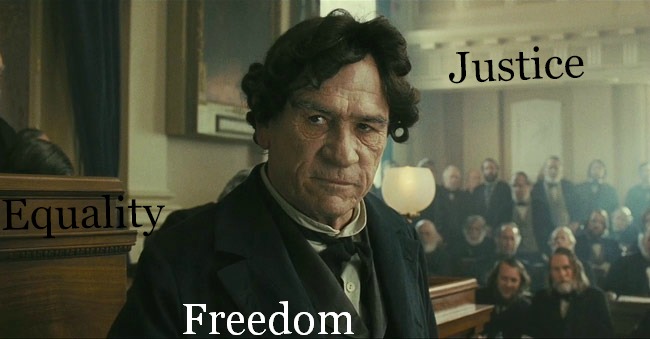
tommy-lee-jones-linconln-thaddeus-stevens EJFAdvocates of same-sex marriage argue that this is an issue of equality on a par with the struggle for racial equality which won a huge leap through Abraham Lincoln and then lurched on in fits and starts for the following century. I do not, however, think this is an appropriate comparison, and maybe Euclid can help us out. Man, both black and white, equal a human, they are therefore equal to each other.

To achieve the same result with same-sex marriage and heterosexual marriage requires some linguistic gymnastics. It involves emptying marriage of much of its meaning and then refilling the shell which is left with what ever we choose, only then can we suggest that the two are equal. If marriage was only about love and commitment between two people, then Euclid’s notion might provide some comfort, but to achieve that you have to remove much of what makes up marriage and turn it into little more than a contractual agreement. This is why I agree with those who say you can only achieve marriage equality by changing what it fundamentally is. For marriage to be extended beyond it’s heterosexual bounds it requires first turning it into something which it currently is not.

I would have a great deal more respect for the government if they were honest about this, what bothers me is the insistence that this is no great change, just the extension of something to a previously excluded group. But no one is excluded from marriage, people only become excluded from marriage when it is first changed into something different, something that is defined solely by love and commitment and not also by male and female, and conjugation and the potential for children. Only once you have changed this definition can the institution of marriage be considered to be restricted. But the government jump to the end and use their own definition of marriage to pretend their plans are no big deal, moreover that they are a vital step towards equality..

But as Philip Blond and Roger Scruton put it: “The pressure for gay marriage is therefore in a certain measure self-defeating: in seeking equality with something unlike yourself, the thing that you join to is no longer what you joined.”

* * *

Maybe it was the experience of following the debate that made watching Lincoln immediately after a slightly strange experience. But I couldn’t help but watch the many scenes of the House of Representatives debating the thirteenth amendment and wonder whether future generations might look back at yesterday’s debate in the same light. I wondered whether those who oppose same-sex marriage would be viewed in coming years as behind the times, stuck in the mud, on the wrong side of history – as some observers have suggested this week.

I also wondered what I would have said and done had I been in either of those chambers. Whether I would have stood and spoke of the equality of man, or sought to protect my prejudice or financial interest. I wonder whether I would have compromised my beliefs in order to see a greater wrong righted. I wondered what constituted a greater wrong.

I wondered if I would have said what I believed despite the critics howling at the door, I wondered if I would have had the courage to make my own mind up and not hear threats of no promotion, or being ousted by the voters at the next election. I wondered if I would have taken the calls from the media, stood outside the steps of parliament and found the words of grace that did not deny what I believed to be true.

And I saw the hostility of the 1860s and the legacy it left in its wake stretching nearly a century until the 1964 Civil Rights Act achieved much and left much more to do. I saw the bitter wrangling over reconstruction as the Confederate leaders sued for peace.

If I was in that chamber in Washington DC 150 years ago I would hope to have been like Thaddeus Stevens. Many others thought peace was more important that equality but he stood for freedom and justice. But if I was in the House of Commons yesterday, I don’t think I would have been so strident. I wanted understanding, and I wanted peace. I wanted space for different views. And I wanted some understanding that just because something is claimed in the name of equality, that doesn’t automatically make it a good thing.

I didn’t pray enough for peace during the debate yesterday, but I will in the coming weeks. I know not what the weeks and months to come hold but I hope for a future where we can have civility and peace even if we think fundamentally different things. Perhaps I hope that those with the strongest of views can find a way that is better for all of us. Perhaps.

Community is like swimming fully clothed

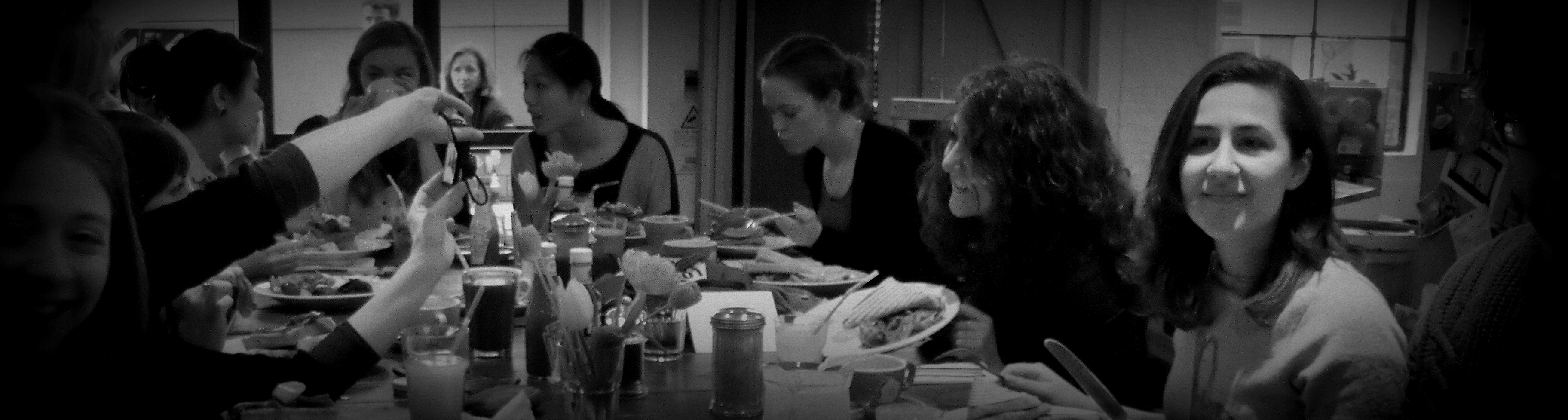
Black and white breakfast clubCommunity is one of those words that floats around. It fades in and out, it is always something that we seem to want more of and always something we perhaps take a little for granted. It is there when we don’t need it and not enough when we do.

It is not the fluffy comfortable stuff made up of laughs and inconsequential conversation, but nor is it just those chats that fall into the accountability category when we talk about our sin and where we’ve got it all wrong, and where we pledge to do better next time. I’ve been turning this one over for a while, several years kind of a while.

Last week I sent out an email, I invited some friends around for dinner. And the problematic word in that sentence is some. On Saturday we ate food, we threw popcorn at each other and we played Jungle Speed. But I was wrestling with an awkwardness and was ill at ease. I’m not very good at curating social space, it doesn’t come naturally it causes me to fret and fear, it encourages the anxieties of social isolation and the vulnerable liminality between the invite and the acceptance.

I’d not invited all of my friends, and there was some ad hoc rationality constructed. Mostly I’d set a number in my head and stuck to that. There was no exclusion intended, but I think it was felt. And the irony was that this vague idea of community was what prompted my rare foray into social organisation.

I have a hunch that we’re not always very good at finding that line between the organised spiritual and the casual friendship, the space where the hard questions get asked. I want to be known by people who do not shy away from saying the difficult things. I want to be known by people who can ask why I didn’t invite certain people, who can kindly, carefully, question my actions.

Church makes a grand play for providing community, where else are the young and the elderly, the rich and the poor, the South American, South African and South Korean stood side by side? It makes the play but doesn’t always follow through, it has the potential, but not always the result. Sometimes I am at my most lonely when I am in the biggest crowds. And it concerns me how frequently those large crowds are in church.

Community is something I long after. Maybe it is the absence of more permanent relationships that prompt the searching, maybe if I had what I thought would fulfil me I would not be frustrated that nothing else quite made do.

And then are the times when I need a smack round the head, when I need grabbing by my ankles and some sense shaken into me and my maudlin mood shaken off. Tonight Lauren Dubinsky did that for me:

Community is not accountability to sinless-ness. Jesus has already given us that.

Community is the people who surround you that ease your burdens.

Community is the people who fight the same battles that you do; laugh when you laugh, cry when you cry.

Community is the people who are in the exact same predicament you are in. All the same struggles, all the same questions.

Community is the group of people where, when you enter the room, you can collapse on the sofa and not care if the way you’re sitting makes you look like you have a double chin.

A beautiful story follows, if you didn’t before, pause now to read it all, but it draws to an end with this: Community is just… life. Willing to give, willing to receive. Willing to believe that we are all equal, and no one moves forward without the other.

It threw me over the edge and forced some perspective into my myopic vision. I’d been fretting over social gatherings and awkward subsets and limited invites, all of my own creation. I’d been frustrated that the community I wanted to be a part of was not forming in the ways that I would like. I got a little angry when things didn’t go my way.

I was worrying about whether I stood a chance at building the relationships I wanted, relationships I imagine I need.

All I was doing was trying to turn the community that I have into the community that I want.

Last year I wrote that: “Community is the gradual unravelling of the layers that we shroud our innermost being with. It’s the place where we find the courage to bare our souls. It’s the people with whom we can share the things that hurt more than the words we muster can convey.”

And yes, I suppose it is, but I think it is also where the layers of clothes stick together like swimming in the river fully clothed. Community is not only where the good stuff happens, where the spiritual impartation, the rebuking and correcting, the admonishing and training in righteousness, community is where we sometimes don’t manage to do so much of that.

We are in community, we are swimming together, but frequently we are swimming fully clothed.

Is there a religious right emerging in Britain?

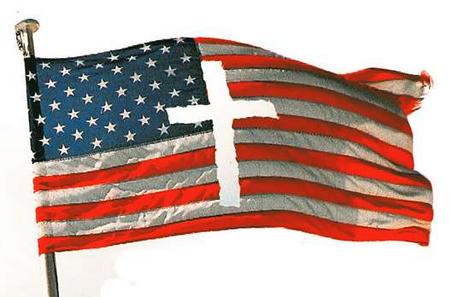
religious-right-flagBefore the US election last autumn several high profile Christian leaders offered their support for the Republican party and I wrote about it. Billy Graham said everything he possibly could short of endorsing Mitt Romney and Wayne Grudem produced a crib sheet comparing party A to party B – there were no prizes for guessing which was which and who a good Christian would vote for.

Taken against the previous 40 years of American politics such interventions are not unusual or unexpected: a cohesive bloc of voters encompassing both evangelicals and Catholics has disproportionately sided with the Republican Party. The political theology behind this is questioned, and rejected by a large minority of evangelicals in the US but the trend still exists, in contrast such a move is currently unthinkable in a British context.

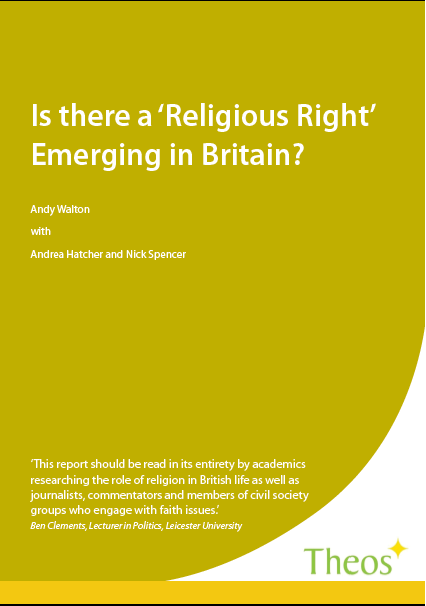
Religious right front coverOr is it? That’s the question at the heart of a new Theos report out today. Because something in Britain has been labelled as the religious right by journalists, commentators and even an Anglican bishop. The activities of Christian groups have been investigated and ‘exposed’ to show the apparent dangerous power of right wing religious lobby groups. Most memorably this took the form of a dispatches documentary in 2008 but perhaps most graphically illustrated through an organogram which accompanying Ben Quinn’s article in 2011.

Andy Walton’s research draws a helpful distinction between Christians with socially conservative values and a religious right. The report develops a criteria for measuring this but at simplified level equates to a clear cohesion of different groups centred around specific policy aims and political affiliation and having the size and influence to leverage political action. This is evident in the US, although perhaps not as stark now as in the mid 1990s with Newt Gingrich’s Contract With America which saw considerable mid term gains in 1994. A movement of this nature is not in existence in the UK, although some of the social conservative policy goals are similar to across the Atlantic.

A more pertinent question than whether a religious right exists is whether one is emerging, or could come to exist. Taking appropriate caution the report does not completely rule out the development of such a trend but considers it unlikely. Three areas of difference back up this argument: size, policy focus and political affiliation. Firstly, the UK religious population is far smaller than the US, the number of evangelical and Catholic voters make up a far smaller percentage of the population and therefore there is less political power to leverage.

Secondly, evangelical organisations that engage in lobbying do so on a far broader range of topics than those characterised as ‘right-wing’, these include adoption, alcohol and aid. Issues around sexual ethics and abortion do feature, but not to the exclusion of other policy goals, and have not become the touchstone for evangelical engagement. Research from the Evangelical Alliance showed the diversity of issues Christians contacted their MPs about (page 12 of this research booklet).

Finally, and perhaps related to the previous point, evangelical Christians in the UK support political parties along broadly the same lines as the wider population. While they are more socially conservative than average they are also more likely to support traditionally left-wing economic policies (see page 11 of this booklet). There is also minimal evidence of key Christian leaders encouraging their congregations or supporters to vote for or against certain parties or candidates. One point that is relevant here which is not noted in the report is the role of charitable status: a church could not retain its charitable status and support one party or candidate over another. While this should not be the principle reason for remaining a(party) political, it could be a factor which discourages campaigning organisations from taking this position.

The report shows good reasons why the UK has not seen the development of a religious right along the lines of the US and offers strong evidence for why the development of such is unlikely. But the question that recurred earlier this week at a discussion around the report was whether the definition had been drawn too narrowly and even the US religious right would fail to meet the criteria. The defence offered was that when the comparison is used it is used to suggest a certain thing, and certainly not a good thing, is happening within UK politics, and the report strives to point out this is not the case. But something is happening, several commentators suggested that the way Christian groups engage has changed and become more sophisticated and the current focus on government plans to introduce same-sex marriage perhaps invite the US comparison.

If something is emerging that represents a new turn in Christian political engagement in the UK then it is definitely different to what occurred in the US over the past 40 years. The challenge for commentators, researchers and Christian organisations is to identify what it is and discuss it without recourse to simplistic comparisons. It is also incumbent upon Christian organisations involved in political activity to understand the direction they might be travelling in and the potential consequences both of such a shift and the perceptions of this move.

As the report makes clear, organised political activity, or lobbying to give it its sometimes more grubby title which I’ve defended before, is a legitimate part of our democratic system. It shouldn’t be pejoratively labelled just because you might disagree with the goals. At the same time, perhaps there is a space for Christians to imagine a better way of engaging in politics: one that is more akin to playing on the pitch than shouting from the sidelines.