UKIP if you want to: How to assess UKIP following the local elections?

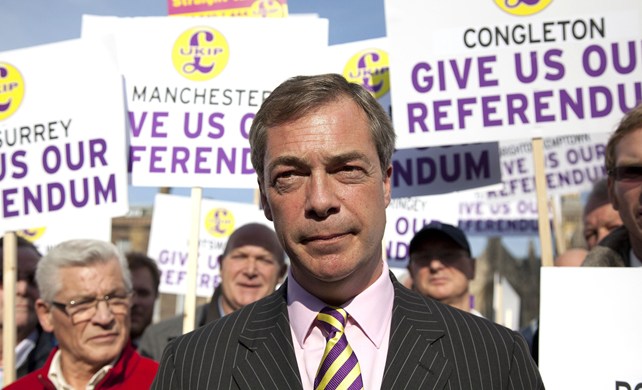
FarageFirstly, did they really do that well?

There’s been some comment casting doubt on this, pointing out that their presence on local councils across the UK is similar to the Green Party, and unlike the Greens they don’t have control of any councils, or an MP in parliament. I reject this response, it’s indisputable that until this week the Green Party’s electoral achievements were more significant than those of UKIP, and with council control and Caroline Lucas in parliament they have a better embedded depth of political support. But this week’s events were remarkable, from some back of a napkin calculations I reckon the Greens have 127 councillors across the UK, and UKIP have 163. What is notable about Thursday’s election is that UKIP gained 137 of those councillors in one day, from virtually a standing start it is a noteworthy achievement, and one that deserve the attention being paid to it.

Local elections are also notoriously difficult landmarks between general elections. Not only do the councillors elected have different responsibilities, the parties often have a different flavour on a local level, local issues are in play, and because they are sometimes seen as less important they can be used as the repository for a vote against the parties in government. The way that people vote in mid term local or European elections isn’t necessarily an indicator of what will happen the next time parliament is elected. Further, trying to work out who does well and who does badly is complicated because not all parts of the country elect at the same time, or the same cycle. It is therefore difficult to turn the votes cast in local elections in a national percentage for each party, you can read more about that here.

The seats contested this week were last fought in 2009, a year where Labour sunk to the 22 per cent, and lost 291 councillors, the exact number they won back this year. So Labour did fairly well, but against a background of a deeply unpopular coalition government with the normal recipient of protest votes co-opted in to culpability for the nation’s woes, this wasn’t a result to get the pulses racing for them. The problem, for Labour, was that voters turned off by the policies, actions and personalities in the Conservative and Liberal Democrat parties, had an alternative vehicle to use to register their dissent.

UKIP did very well in seats they had not previously contested and okay in those they held. There was not a continuation of a dramatic swing in places they had already won council seats. This suggests their support is broad but shallow. If they are to have more, and more substantial, electoral success in the future they will need to marshal their forces to target gaining control of councils or specific parliamentary seats. To some extent this goes against the nature of their support which has an element of Farage against the machine. Professionalism and strategy don’t always go well with raw passion and dissenchantment.

Is UKIP full of loonies and fruitcakes?

Maybe, a party that expands is candidate list as fast as UKIP has will have had a fairly low level of competition and scrutiny for selection. Following this week’s results, the attention paid to candidates by the press will increase, and the party is likely to up its game and vet candidates if it doesn’t want to shoot itself in the foot. A caveat here is that the very unvetted nature of the candidates appeals to the non-PR-polished image the party seeks to portray, too much professionalism may also damage the party’s prospects.

Is UKIP just a protest party?

A lot of the support that UKIP received comes because of dissatisfaction with parties that voters would traditionally support, that they are not doing what the voters would like them to do. So to some extent the UKIP surge is a beneficiary of protest voting. But it is more than that, the votes for UKIP are not only votes against the policies of the traditional three parties, but against the politics they are seen to represent. Their support is less protest and more anti-politics.

Is UKIP a single issue party?

Their origin and their initial support was single issue, it is still their raison d’etre. But they are supported for multiple reasons not just because of their views on Europe. They are seen as a more straight-talking right wing party, they pledge to do something about the things other politicians make excuses for. They are prepared to talk about immigration and tackle it. But their policies also don’t add up because they haven’t come under the scrutiny other parties do, and this is likely to change in the near future. Their spending is uncosted and set against aspirational, plucked from thin air, cuts in taxation.

But Europe does matter, and it is a form of xenophobia.

Europe matters less in terms of a policy position, which they are clear and unequivocal about, and has garnered them a certain amount of support in recent years, but more of a symbol of what politics has become and what it shouldn’t be. There is a core of support for UKIP which is passionately Eurosceptic and sufficiently so for that to be the main reason choosing this party over the others, but I don’t think their expansion this year is due to an increase in support for that perspective. Those voters aren’t going to be won back to the other parties by a more Eurosceptic position, because they’ll always be outflanked.

But Europe is a bogeyman. It is the exemplary case of a political institution disconnected from the real world, it is overseas, it is far away, it is overpaid, it makes unnecessary laws, it makes laws that cut across our way of life. It is something else, it is distinctly other, it is easy to reject and easy to use as a basket-catch-all for political disgruntlement.

And the opposition to this aloof political institution provides a platform to set the party as different to the conventional political class. We are different, they say, we’re not like them. UKIP thrive, as do all populist parties, by emphasising a faux familial relationship with voters and casting that in contrast to the disconnect other parties represent.

The problem with populism

It’s easy to be liked when you don’t have to do anything. As soon as difficult decisions have to be taken greater conflict will emerge and the rosy, simplistic picture presented collapses. Populist parties present politics as easy and straightforward, and sometimes a bit of clear passion and direction is vital to good leadership, but decisions are difficult.

When President Bartlett was running for re-election his opponent came out with a brilliant sound bite answer during a debate: “We need to cut taxes for one reason – the American people know how to spend their money better than the federal government does.” This is what populist politics does, it cuts complex issues down to fortune cookie wisdom. It suggests complex situations and simple solutions. But Bartlett catches it and replies:

“That’s the ten word answer my staff’s been looking for two weeks. There it is. Ten-word answers can kill you in political campaigns. They’re the tip of the sword. Here’s my question: What are the next ten words of your answer? Your taxes are too high? So are mine. Give me the next ten words. How are we going to do it? Give me ten after that, and I’ll drop out of the race right now.”

The test for UKIP will be whether they can follow up this week’s success in future years, can they translate second places into victories, can they work as the opposition to the ruling group in local authorities, can they turn opposition into council control? Can they focus their resources in a way that translate broad but shallow support into sufficient backing to win a foothold in parliament. And will they be as popular when they have to make decisions that are difficult? I don’t think so.

Did marriage matter?

I don’t think the government’s plans to introduce same sex marriage were hugely influential in the tide of support that swept toward Nigel Farage’s party. I’m sure for some it was a crucial issue, and I’m sure the presence of a minor party opposing the government on this provided a useful way of signalling disagreement at a local election. I’m sure for many Christians frustrated at the actions and positions of the three main parties it was appealing to see a party taking a position they could support. But I think in a similar manner to Europe as a symbolic policy area representing disillusionment with politics, same sex marriage could be symbolic of disenchantment with policy positions. The political efficacy of voting for UKIP on the basis of their opposition to same-sex marriage is also open to debate, personally I don’t think it is particularly affective.

I would also question Christians supporting, or not supporting, any party on the basis of one issue. Political parties are there as vehicles to govern and when considering which to support we should take a broader perspective than just a signal issue, even though for many this is a vitally important one. If it is the issue that tips the balance then fair enough, but I don’t think it should provoke a switch in support in ignorance of other policies.

What does this mean for Cameron, the Conservatives and the Coalition?

Cameron has a problem because the voters do not see him as sincere, they consider him opportunistic and pragmatic, and will do what it takes to win votes. This is problematic for him because if he now pitches explicitly for those voters disenchanted with him and his party for that very reason he will look like he is being opportunistic and interested in winning votes more than standing for principles. It’s a bit of a catch-22.

With the emergence and success of a party such as UKIP it is possibly a little too easy to rely on a generic anti-politics response as the reason for their success, and this to some extent places the blame on the voters for not being sensible in their voting. This ignores the very real deficiencies in our political system and the political class. There are political parties led by people not trusted by the public and not wanted by large sections of their parties.

Saying a party succeeds because of anti-politics sentiment ignores that it is politics which is allowing this sentiment to be expressed. It can be a way of letting unpopular politicians off the hook by blaming the voting public.

Politics, perhaps to the chagrin of UKIP, is not other, it is not detached from the people. It is not a disconnected alternative reality far away from the lives of people casting votes in schools, community halls and leisure centres. Politics is of the people, and that is what we have seen this week.

It may be a short term development, it may be all flash and no lasting significance. But my hunch is that it is a decisive marker in collective disillusionment with politics as business as usual, and politics as process over policy. We want our politicians to be without fault, but moreover, we don’t want them to pretend they are without fault. It’s why Boris wins after swearing at Ken in the lift.

UKIP have a gift with the European Parliament elections next year, they are not voted on based on European policies or the performance of the European representatives. They will likely do well. The challenge for other parties is taking them seriously as a party that has received a significant number of votes, but also not jumping to the tune of a party that sets itself against the notion of politics and the manner in which it is performed. If they do try and ape UKIP too much politics could become a cross between blind man’s buff and Russian roulette.

Living on porridge and making pea soup: I’m living below the line

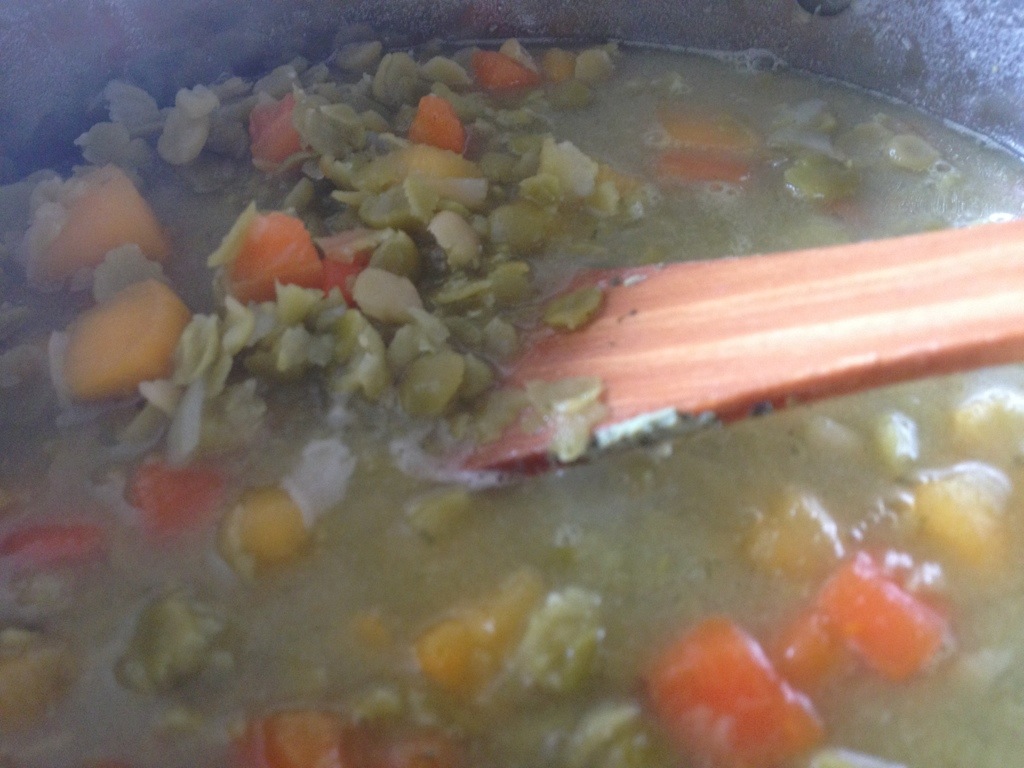
20130429-151914.jpg50 grammes of porridge isn’t very much. And it’s fairly tasteless on its own, but I’d ran out of money so couldn’t afford even the cheapest jam, honey or golden syrup.

For £1 I’ve got a pot of broth on the hob that will be my lunch for the entire week. A bag of split green peas, a carrot, an onion and part of a swede. And to do this this with the greatest level of integrity I have to account for the shake of salt, pepper and parsley from my shelf.

And yes, the pot is still on the hob and won’t be ready until gone 3pm. And this is my lunch. Good job I’ve got a day off work as I start living below the line for a week. Time in the morning to go shopping, time to prepare cheap but labour and time intensive food. A luxury I won’t have time for the rest of the week, so today’s goods will be divided up, put into boxes along with 3 slices of value bread.

I had to put food back on the shelf at the supermarket. I couldn’t afford as many eggs as I would have liked. If I want to drink tea, which I do, I’ll have to forego an apple one day.

If you haven’t came across Live Below the Line before, let me explain. Across the world 1.4billion people live in extreme poverty while we are too busy buying happy meals. This is twenty times the number of people in the UK living on the equivalent of less than £1 a day. This isn’t one of our pounds taken over to different countries, it is calculated through purchasing power parity – adjusting prices for different countries. More details are available about the calculations on the Live Below the Line site.

So for five days I am joining with many others and living on £1 per day. That’s why my caffeine intact will be down, why I’ll have a small breakfast, the same lunch each day, and an unexciting rice and beans dinner, on a couple of days I get to have eggs.

This is not just a stunt. It’s not just an exercise in embodied empathy, but hopefully it will do that. It’s about learning what many, far too many, go through each and every day. They cannot look forward to Saturday like me, when I can have a fry up.

Live Below the Line is also a fantastic way of raising money for charities who are doing vital work in many of the countries those 1.4 billion people live in. I’m joining up with Tearfund as I live below the line this week, and I would love if you could sponsor me – all the money goes direct to them.

SPONSOR ME NOW!!! (Forgive the poor etiquette, this is important.)

Is finding a wife like shopping for shoes?

20130427-165905.jpg
Are you looking for a wife? Or, are you happy being single?

That wasn’t quite the question put to me but it sums up the sentiment. That it is a choice. And that either I am happy being single or I should start shopping.

Because that seems to be the mentality. Looking for a spouse attracting the same approach as I might take to hunting down a new pair of shoes, or maybe to give it a little more seriousness, similar to buying a flat.

Maybe I should confess that I’m not very good at buying shoes. I don’t find the process difficult, it is not a particularly complex task to complete. I just don’t do it. I have a smart pair and a casual pair and wear them until their resemblance to footwear is solely a historic recollection. I also have sandals for the summer, slippers for the winter and climbing shoes for, well, climbing.

But last year I bought a flat and that was a big decision, it was a task I gave myself to. There were things to do, some time consuming but mundane, others swift but significant. Putting in an offer, signing for a mortgage, collecting keys. There were words spoken and written, the handover of a set of metallic objects. Yet it was much more than that, the simple acts were imbued with significance, they meant something because of what linked them together, where they came from and what that signalled.

So I wonder, is finding someone to spend the rest of your life with like buying a house, and stripping the complexities away to push the point, is it like shopping for any other item?

When I go shoe shopping it’s not for a luxury, but for something I urgently need. Therefore I refuse to let myself come home empty handed. And when I bought my flat I had decided I was going to do so, I took some time but eventually made a decision. It was a big decision but it was not an irrevocable one. I can sell, I can let. It is a material possession.

When we buy something we choose to get something over nothing. We decide that while there are better or worse options, having something is better than having nothing at all.

I don’t believe that getting married is more important than getting married to the right person.

I don’t think getting married is like buying shoes, or a flat. Finding someone to spend your life with is not a consumer experience. It is a dance of emotions and expectations and hopes and dreams. It is prospect that absence may take the place of something.

Maybe it is like Schrödinger’s cat. Until you open the box you don’t know if the cat is dead or alive, so by some ridiculous chain of logic which I cannot begin to fathom, the cat is both dead and alive. Maybe you can be both living life to the full as a single person and want to get married. And until something happens you are both.

If I’m in a relationship it’s not much good living life to the full in my singleness, I don’t think that relationship would last very long. But until that point I am living in a contested reality, there are alternative routes that my life can take and I need to be open to pursuing either while acknowledge one would close off the other.

And that can sometimes stop you from opening the box. Not wanting to close down options can prevent you from making a choice. Sometimes I can be paralysed by indecision, and the multitude of options, and potential future options can cast me in formaldehyde and root me to the spot. Sometimes I wish it wasn’t a choice.

But the choice is what gives it meaning. The choice to take a risk and do something you don’t essentially have to do. Doing something you could live without, doing something that will limit your further choices, doing something that will stop you from always thinking that something better could come along.

Because getting married isn’t a step in life improvement, it isn’t a way of becoming more complete. It isn’t an accessory to make you more glamorous, or an investment to make you more secure.

And it is neither mail order nor magic. It is not a formulaic process or the result of an abracadabra. Relationships do not just happen and we cannot script them.

But we live them and we love them, and in them we find life and we find love. And if that’s how you think about your shoes I recommend some therapy.

What do single Christians want their church leaders to do?

SinglenessTonight I went along to a Christian Connection event reporting back on a survey of 3000 people, mostly users of their dating site, about singleness and the church. David Pullinger analysed the data and presented results focusing on what single Christians appreciated about church, and what they found difficult.

The results are still being finalised, and more formalised reporting will come in due course, and some of the results have already been reported. But a couple of comments immediately stood out.

  • Only 1/3 of single men aged 30-44 socialise with their friends at least once a week. This is a significant drop from those younger than this and is not matched by a similar decline among women.
  • Single women often find married couples reticent to offer hospitality, and this seems to be related to a perceived threat to their marriage. Single women often work, don’t care for children and as a result often find they have more in common with the husband than the wife. I’m fascinated to look into this more and eagerly await seeing the data.
  • And there was a list of twelve things single Christians would like their church leaders to do, in order of importance…
  1. Give talks about singleness
  2. Organise or enable social and fun activities
  3. Hospitality
  4. Provide models of singleness
  5. Pray personally or in the church
  6. Be inclusive in all church activities
  7. Organise or enable single groups
  8. Be in contact, through phone, email or text
  9. Provide or facilitate practical help
  10. Provide practical help in finding a partner
  11. Knowing and recommending singles events
  12. Seeking the single person’s viewpoint

It’s an interesting list, and some I certainly agree with. But in all of this I had a recurring question, is there a danger of entrenching an identity of singleness, and possibly as a result seeing identity defined by the absence of a partner, rather than the many other things which make up the individual’s character.

Is singleness something which should be seen as an identity? If you’re single is it a label you use or appreciate? Or do you think it can do more damage than good?

We need to talk about singleness

singleFirst up, a confession: I was once a junior chess champion. I even got a medal for it. So there’s nothing wrong with joining a chess club to find a date.

I don’t think we talk too much about relationships. But I do think we’re not very good at talking about relationships.

The conversation might vary depending on who it is with, it is different with married friend to those who are also single. But there are some people who I know I will pretty much have the same conversation with whenever I see them, especially if I don’t see them very often. Miriam Skinner’s comments about ‘Martin in the blue jumper’ hit a little close to home. I’ll mention someone in a slightly off-the-cuff but almost obligatory response who I have taken a fancy to, who will then be brought up when I next see someone even if it’s a year later.

Miriam’s article is amusing and clever and filled with plenty of wisdom. But I think I disagree with its core message – that we talk about relationships too much. I don’t think we do, I think we easily slip into stale formulaic conversations that you could record in advance and hit play when the questions arise, and that needs to change. I also think we need to match our words with action, so that frustration is not left to fester.

We waste a lot of breathe and emotional agony on shooting the breeze, feigning sincerity when we speak barely masked gossip. Discussing the relative merits of courting over dating, contemplating whether to use an internet dating site, analysing the minutia of the actions of the opposite sex. Looking for clues about where romance lies and where it leads. Asking each other for advice which more often simply serves as affirmation for our intransigence.

I have a rule that I’ve developed over the past few years: most people who are single would rather not be. Rocket science, I know. Some people are happy – or content, to use the phrase de jour – in their present singleness, and a few think that is how things will always be. But for most people I know, even if they don’t see a relationship as important at the moment envisage themselves at some point with someone, or might like that to happen. I can say I am content being single and would yet might not want that to be the end of the story.

And I do not think that is a problem.

The Church should value and affirm singleness. And not just as a stage of life to exercise patience in. The Church should be aware of the ways its structures, processes and events can sometimes become hard to access for those without families or a husband or wife. I’ve heard of dinner parties that suddenly open up when the first ring goes on the finger: ‘my fiancé and I’ is the password to a new social circle.

Being in a relationship does not remove our need for God, it does not lessen out dependence on him, but I don’t think it needs to be a trade off. I think you can want a lot from romance and get even more from God. In some way the closeness of our human relationships with someone else reflect the way God makes himself known to us, and wants to know us more. We get to have both.

Here’s a hunch I have no way of verifying: if you get married the conversations don’t go away. The same sort of inquisition the Spanish would be proud of probes into new areas, and probably the banality of formulaic conversations won’t go away either. It might be a children, or buying a house. It might be about your sex life, or lack thereof. It might be about lust. Because that doesn’t go away either.

How do we talk about relationships in a way that is not formulaic and does not suggest that the shift from single to married is somehow answering a problem? I don’t know. It is hard.

But not talking about it won’t make the longing many people have go away. But it might, and I absolutely do not consider this to be what Miriam was saying, make people less willing to say words that are hard to say. To admit frailty in knowing who they like and whether they do. To say the person who caught their fancy last week is not in the picture any more. To speak of fears and hopes. To verbalise feelings and emotions that might get lost in a vacuum of solitude.

We probably need to cut out a lot of the crap from our conversations. The flip side is that we do just need to get on with stuff. Relationships, and I don’t just mean the romantic sort, are best built when we do something. As much as I like a relaxing evening in the pub there is something productive about activity, even if it’s playing games or cooking food. Much more if it is some sort of quest, some daring adventure, overcoming foes and reaching for the prize. Sorry, got carried away there.

I don’t mean just guys man-ing up and asking girls out, I mean helping each other, being the go between like we did at school discos when we were twelve. We could even set up our own dating service, I’m thinking ‘Church’ would be a great name for a place to meet and introduce people.

And when talking about relationships…

  • Accept that Sarah, the short brunette mentioned last week might not be someone’s eternal destiny
  • Talk about specifics, don’t let conversations become generic and repetitive, ‘oh there’s someone I like but I’m not sure whether they like me, or if I like them enough’.
  • Talk about beauty and attraction more than lust. Attraction is a good thing.
  • Talk about faith and where our identity and security is coming from (see I agree with Miriam there too).

Christian Connection has carried out research into the views of single Christians in the UK and are presenting the findings at an event in London next Tuesday (23rd April). I’ll be there and having seen a sneak peek of a few of the findings I can assure you it will be fascinating.

Death and all his friends

The last mile of the Boston Marathon was dedicated to the memory of the victims of the Newtown shootings. The 26th mile for the 26 who died.

Reports suggest family members lined the final mile. Tragedy upon tragedy. Tears weighed down with grief. Reports also suggest no one from Newtown was among those killed or injured in the bomb blast.

And I want to say that amid the trauma and the tragedy that is the faintest glimmer of good news.

And I suppose it is. But pain is not dealt out in equal measure. Suffering is not even handed. Suffering is the plaything of a crooked dealer wielding death and destruction, rending families apart. Taking from a father who was running the marathon an eight year old son who was cheering him along.

Fairness does not have a say when death is at hand. Death is indiscriminate in who it takes, who it hurts and who it leaves behind.

God and Politics got there before me and wrote this morning: Yesterday’s bombings in Iraq have killed at least 31 people and wounded more than 200, yet we hardly react to it at all.”

That is not the worst of it, bombs ahead of the upcoming elections killed scores more over the weekend. When it is almost a daily occasion news slips out of the news. It stops being of interest, it is simply one more tragedy piled upon a nation torn to shreds, and we look the other way.

Whether it is the Boston bombings, or in Iraq, or the acts of Kermit Gonsell carrying out late term abortions in torrid conditions, death seems closer than usual.

Tomorrow the streets of London will be lined with fans, adherents and hecklers as Margaret Thatcher’s funeral takes place. She was never anything but a historical figure to me, out of Downing Street before I could tie my shoelaces. But in death emotions are stirred and we are reminded that what we do in life matters.

I was far more affected by the death of Brennan Manning. Philip Yancey wrote in the forward to his final book: As you read this memoir you may be tempted, as I am, to think “Oh, what might have been…if Brennan hadn’t given into drink.” I urge you to reframe the thought to, “Oh, what might have been…if Brennan hadn’t discovered grace.”’

In death we look back because we cannot see any further forward.

And in the end we lie awake and dream of making our escape.

Or at least so say Coldplay.

But I think that they are wrong.

Escape is not the goal.

We are not in heaven’s waiting room.

We live amid the rubble and the destruction and the tears and the grief and in it all we search for the glimmer of hope that points to something which says one day all of that will go away. One day cheeks will not be stained by the soft hint of swiftly mopped up tears.

One day the church militant, those of us living each day fighting for strength, battling evil, will have struggled for its last time.

But that day isn’t when we step onto an intergalactic elevator to move us through the stars.

God came to us. He invited us into his arms as he hung on the cross. The suffering servant that gave hope in His dying breath.

This God hasn’t given up on us. And he hasn’t given up on the world he created.

A ragamuffin called home

“The greatest single cause of atheism in the world today is Christians who acknowledge Jesus with their lips and walk out the door and deny Him by their lifestyle. That is what an unbelieving world simply finds unbelievable.”

brennan manningDC Talk first introduced me to Brennan Manning. These words spoken as ‘What if I stumble’ kicks in were less a clarion call for action and more of a lament. Today is also a day for lament.

Brennan Manning passed away yesterday. He was a voice for scandalous grace throughout his life and a witness to the work grace can do for each of us. He was a ragamuffin and he taught me to be one too.

He was captured by grace that transforms and by grace that does not let us off the hook. Last year I sat on a sun lounger in Cyprus and read All is Grace. It only took me a few hours and tears strained for release. Brennan Manning knew he was beat-up, burdened, weak-kneed. He knew he was bent and bruised. He knew he was in need of grace.

Manning wrote words in prose of a quality rarely equalled. He wrote words that challenged and comforted. He wrote words that made me cry.

He wrote All is Grace as his health began to fade. It reads as a confession as something he felt needed to be said. And he said that grace isn’t just a one time remedy. Brennan was known as a one time priest, one time alcoholic who had left both behind to get married and preach God’s grace.

But the grace that comes to the ragamuffin prepared to limp and stumble to the cross is not a simple one time only fix all. Before God we can stand as victors but the battle goes on. Brennan Manning continued to be an alcoholic.

Sometimes the questions why came with sincerity, sometimes as a Pharisaical grenade, he wrote in All is Grace. And he said his response shifted between the words of 1990 with verbose theological explanation to the words of the past few years: “These things happen.”

They do. They happen to you and they happen to me. Things happen to us and we do things. It is why the scandal of God’s grace is that it is there for us each and every time. Why it helps us to our feet when we hit the ground. Why it lifts its arms around us. Why it holds us tight and why it lets us go.

Why grace is enough.

Why in the end, all is grace.

Today Brennan Manning stands in the freedom of God’s everlasting grace. Let us be thankful for the life that he led and the message he lived.

‘A Word Before’ from The Ragamuffin Gospel

The Ragamuffin Gospel was written with a specific reading audience in mind.

This book is not for the super-spiritual.

It is not for muscular Christians who have made John Wayne and not Jesus their hero.

It is not for academicians who would imprison Jesus in the ivory tower of exegesis.

It is not for noisy, feel-good folks who manipulate Christianity into a naked appeal to emotion.

It is not for hooded mystics who want magic in their religion.

It is not for Alleluia Christians who live only on the maountaintop and have never visited the valley of desolation.

It is not for the fearless and tearless.

It is not for re-hot zealots who boast with the rich young ruler of the gospels: “All these commandments I have kept from my youth.”

It is not for the complacent, hoisting over their shoulder a tote-bag of honours,, diplomas, and good works actually believing they have it made.

It is not for legalists who would rather surrender control of their soulds to rules than run the risk of living in union with Jesus.

If anyone is still reading along, The Ragamuffin Gospel was written for the bedraggled, beat-up, and burnt-out.

It is for the sorely burdened who are still shifting the heavy suitcase from one hand to the other.

It is for the wobbly and weak-kneed who know they don’t have it altogether and are too proud to accept the handout of amazing grace.

It is for the inconsistent, unsteady disciples whose cheese is falling off their cracker.

It is for poor, weak sinful men and women with hereditary faults and limited talents.

It is for earthen vessels who shuffle along on feet of clay.

It is for the bent and the bruised who feel that their lives are a grave disappointment to God.

It is for smart people who know they are stupid and honest disciples who admit they are scalawags.

The Ragamuffin Gospel is a book I wrote for myself and anyone who has grown weary and discouraged along the Way.

Brennan Manning, 1934-2013

The Daily Mail: What an insult to Christians

Jan Feb 2012 008The Daily Mail splashed their front page this morning with “An Insult to Christians”. No, that’s not how I’m describing it, that is their actual headline.

They might think it is a descriptor of the dreadful events they outline in their story, but it is a far closer label for their own treatment of Christians. And in particular in thinking that the situation they discuss is an insult to anyone.

The “insult” is that followers of other religious belief systems including paganism and non religious deeply held belief systems such as vegetarianism will receive the same protections as Christians. Firstly, this is not news. Secondly, it is not controversial (although a little tricky to implement). Thirdly, this is not an insult.

The law has for a while placed all religious and non religious beliefs on a par with regards to their protection under the law. Although only in the last decade has it been codified into statute through regulations following the 2003 Equality Act, and then drawn together in the 2010 Act, court precedence has provided strong protection for non-Christian beliefs in a similar manner (although due to differences in beliefs never quite the same).

The dreadful situation before us today has occurred because the Equality and Human Rights Commission issued guidance last month on how employers should handle religious beliefs and their manifestation. This in the wake of Nadia Eweida’s successful claim in the European Court of Human Rights that her employer had failed to protect her freedom of religious expression when they said wearing a visible cross was against their uniform policy. Legal precedence on religious belief protection is often carried across from one belief to another so there was absolutely nothing of controversy or even interest in the EHRC saying the judgement would affect employers responsibilities towards those with other beliefs.

The controversy has been whipped up because a gaggle of Tory MPs on the right of their party were baited into giving a critical judgement of the EHRC. This is hardly a difficult topic to exploit for that effect, it is high on the list of bodies those of their ilk would prefer were scrapped. What is most controversial about the guidelines is that they had to be written at all, because one would have thought it was common sense. But apparently this morning has demonstrated just why it is necessary.

The requirement to protect non-religious beliefs is also not a new one. A key legal case in 1978 Arrowsmith v United Kingdom found that the applicant’s beliefs in pacifism were deeply held and sufficient to warrant protection under Article 9 of the European Convention of Human Rights. The court found against the claimant for wider reasons but importantly held her beliefs were worthy of protection. The ECtHR judgement in the case of Eweida et al also found that the actions of all four claimants were borne out of religious beliefs and therefore worthy of protection. The Court also went further and said that it was not up to them or any other applicable body to decide what was or was not of sufficient centrality in a belief system to merit protection, or what actions arising from those beliefs should be counted as a manifestation of belief. What the court held to matter was that the belief and action was of importance to the applicant.

Therefore, while this eases the difficulty of deciding when a belief or action becomes sufficiently meritorious for protection, it opens up a whole other can of worms in potentially allowing any belief or opinion protection on these ground. While this is a tricky situation for courts to adjudicate it is not a particularly controversial one. While the beliefs and actions may come under Article 9 jurisdiction it does not mean an employer is forced to allow them. In the case of Eweida the court found that the uniform policy was insufficient grounds to restrict the wearing of a cross, but in Chaplin found the health and safety concerns in a hospital, coupled with the proposal of alternative ways of wearing the cross, were sufficient grounds and found against the claimant. The court also found in Ladele and McFarlane that the equality and anti-discrimination policies of their employers also provided the latitude for their requests to be denied. (This is a more controversial decision and what is at the heart of an emerging hierarchy of rights among equality strands.)

Therefore I doubt that a vegetarian employed in a kitchen role would be granted a request not to handle meat. If it is a central part of the job which would put an unreasonable burden on the company and other staff I suspect the request could be legitimately denied. If however, the staff member is employed in another role but is asked on occasion to assist in the kitchen the request may well be expected to be granted. If we expect a common sense type of accommodation of reasonable requests we also have to understand situations where without any hint of an attack on Christian belief they might not be accommodated.

Finally, this is not an insult. An insult would be to suggest that Christian beliefs alone are worthy of protection. Or moreover that Christian beliefs and practices need more protection than other beliefs. I want the freedom to practice and promote my beliefs and I think the surest way of ensuring that is to fight for others to have the same rights that I do. I may think they are wacky, I may find them absurd. I may even find them offensive. But I want to fight for their freedom of belief: I want them to be as free to promote their beliefs as I want to be to promote mine.

Freedom of belief means freedom of belief for everyone. And at the heart of the Christian message is a voice of freedom that calls into the wilderness. That releases slaves from their captors. It is freedom to choose to worship a God who chose to send his Son so that we could have life and life in all its fullness.

It is the freedom not to worship that makes the choice to worship such a precious gift we have to offer.

To suggest that Christians would rather others were not free to follow their beliefs is an insult.

No point having an easy life

In his discussion of Matthew 2.13-23 in ‘Matthew for Everyone’ Tom Wright says:

The gospel of Jesus the Messiah was born, then, in a land and at a time of trouble, tension, violence and fear. Banish all thoughts of peaceful Christmas scenes. Before the Prince of Peace had learned to walk and talk he had a price on his head. At the same time, in this passage and several others Matthew insists that we see in Jesus, even when things are at their darkest, the fulfilment of scripture. This is how Israel’s redeemer was to appear; this is how God would set about liberating his people, and bringing justice to the whole world. No point in arriving in comfort, when the world is in misery; no point in having an easy life, when the world suffers violence and injustice! If he is to be Emmanuel, God-with-us, he must be with us where the pain is. That’s what this chapter is about.

That.

Are benefits of benefit?

Is the future of the welfare state “poor, nasty, brutish and short”? To take Thomas Hobbes’ descriptor of humankind and apply it to the welfare state may seem unnecessarily apocalyptic, but it may also be rather apt. I think reform of the welfare system is vital. Whether the current reforms that are starting to come in are the best way ahead is a different matter. But before we get onto that, let’s take a few steps back.

Nearly ten years ago I first realised the scale of the the problems facing any developed countries’ welfare system and then two weeks ago I met the graph of doom. I was in a small seminar at university looking at welfare policy when two numbers made a difference these numbers were 7 and 20. They are the years the average person in the UK was expected to live in retirement in 1945 and 2004 (exact years may have faded in my memory). According to the 2011 census one in six people in the UK are now over 65.

The graph of doom was produced by Barnet Council last year and is now being cited across the country to illustrate the crisis pending for local government funding. By 2022 the cost of adult and child social care will be greater than total local government funding. This means that between now and then they will have less money to do anything else, parks, leisure centres, bin collections and the rest, and from then they will not be able to afford that.

And I know this is not the focus of the benefit reforms that have come into practice this week. But if we think the current reforms are causing upheaval and controversy just wait a few years. It is also why I expect to carry on working beyond my current projected retirement age of 68 and cannot support universal benefits for pensioners such as bus passes, winter fuel credit and free TV licenses.

A further problem in navigating the current debate is that disputes are not about different ways of achieving the same goal, they are marked by significantly different philosophical conceptions of the state – philosophical differences that were overshadowed by the post-war welfare consensus and even as that disintegrated a reluctance to probe beyond a policy level. On one side you have a free market perspective that (usually) supports the welfare state as a safety net, and on the other side a broadly socialist perspective backing wider redistribution.

For some in this latter category lifting the lowest paid workers out of the tax system is not a wholly good thing. When I first came across this opinion it shocked me – surely not paying tax is a good thing, it means you get to keep more of your income and therefore are less reliant on the state? But the point is that by paying tax, and if necessary receiving additional income via state benefits people are brought into a relationship with other people and are not just autonomous individual economic actors. My friend had a point (not one I agree with).

Free marketeers believe that at root taxation is theft. Maybe theft that the victim acquiesces to, but still taking something that belongs to them against their will. What someone has earned or owns should be theirs to keep unless there is a very good reason otherwise. And the more charitable (admittedly most of them) will at least allow that creating a welfare safety net of some sort is a good reason.

These are both fairly extreme positions, and for most their view of the state will lie somewhere in between, and often have aspects of both at different times and be swayed depending on their situation and their view of others. The role of the media in presenting policies and the lives of those impacted therefore also plays a crucial role. It is why, regardless of you position, the report ‘truth and lies about poverty produced by the Methodist, Baptist, URC and Church of Scotland makes essential reading. We have to talk about what really goes on, not what supports our a priori philosophical position.

We also need to watch the language we use. When we talk about welfare dependants we are talking about people. When the BBC runs a cutely times web gimmick to decide which class you are in it puts us in boxes and builds walls rather than tear them down. When we reinforce stereotypes by forcing people into red and blue corners that only encourage them to come out fighting even harder when the bell tolls.

And then a debate about significant welfare changes shifts to whether the cabinet minister in charge of the changes can live on £53 a week. I think those who make decisions which affect the poorest and most vulnerable in society should have an intimate awareness of what their decisions look like in the homes of those they affect. I also think Iain Duncan Smith has done more than most in the past decade to acquaint himself with these very problems.

He dismissed it as a stunt. It was a stunt, but maybe it wasn’t very good politics for him to label it as such. It brought to mind a scene from the final season of the West Wing, Santos has skipped off the campaign trail to fulfil his marine reserve duty, one of the staffers Ned turns to Josh and says: “Half the press is calling it a stunt.” And Josh replies, “Yeah, but all the press is running the footage.” The petition is a stunt, a good stunt, and it makes a good point – but a stunt none the less. Noone is quite sure what the £53 includes or doesn’t include, it would certainly be difficult to live on that amount even if it is after your rent and council tax is paid. But that doesn’t mean it is impossible, or means that Iain Duncan Smith should relent to the wave of pressure building for him to do it for a year.

I think Iain Duncan Smith would acknowledge it would be difficult to live on that amount, but maybe he would say it should be that way. Maybe he wants the benefits system structured to discourage reliance and encourage people to find other ways to pay their bills. Of course that’s not an easy route in a economy where jobs are scarce and living costs rising fast, but I think it should still be our intent.

There’s one other big hurdle in understanding the contours of the current debate about benefits. The tension between long term goals and short term necessities. The long term goals are reforming our welfare systems to make them affordable for a population that is getting older and costing more to look after, and doing so at a time of continued high unemployment and stagnant economic growth. The short term necessities recognises the financial difficulties many people are in and prioritises meeting those needs.

While many may object to specifics in policy changes, the philosophical differences come to the fore when considering whether a system should remove people out of the benefit system altogether or provide support towards a more equitable distribution of resources. Personally I think in an ideal system no one paying tax should receive benefits and vice versa, and I think the Universal Credit – in its intent – is a way of moving toward such a system without too steep a cliff edge. But then I am at heart an advocate of the free market.

I also recognise that making changes to the welfare system comes at a real cost and people will suffer because of changes made, and I do not think that is a price worth paying. It is why I back the principle of the bedroom tax/spare room subsidy, I think if the state is providing for your housing needs it should only provide for what is necessary. And yet of course it is not that easy, there are not enough smaller properties available, and there are various other wrinkles in the policy that mean it looks pernicious.

Each policy has similar good intents and harmful consequences. The challenge in contemplating the policies is deciding whether the end to which they serve is justified, and then whether the means by which they are achieved is acceptable.

And what for the role of the church in all this? I believe the church should stand on the side of the poorest. I believe it should care for the vulnerable and advocate for their cause. I believe it should be a place of refuge and a speaker of truth. I also believe it should look for good where it can and not slander without cause. It should be quick to care and slow to judge – and that applies to both politicians and those in poverty.

The church should be a witness of a better way. A way that does not get caught in the tramlines of party political campaigns. A way that is wary of easy answers, a way that sees charity as irresistible and politics as necessary.

I’ve heard Christians argue in recent days that their faith backs redistribution and private property rights. And I can consider the cases on both sides. I can look to the Old Testament and the New and see points on both sides. I can see generosity and communal living and a God who gave a people their land.

I also see the temptation to walk away from the debate. Because it is too much. Too aggressive, too difficult to put reasoned arguments that might upset, arguments that might inflame, arguments that might have little to do with what I want to say. But that is the case in most things that matter. And we need to find a way to accept we see things differently, and sometimes want different things but that doesn’t mean we should vilify those we oppose.

I’ve spent the best part of the last week in the company of my niece, she’s not quite two but plenty able to show her own mind. When she wants to stick the blue rocket sticker on the grass and not in the sky. When she wants to wear the pink coat that doesn’t fit her any more. Sometimes you accept that things don’t quite work out how you like, I wasn’t going to pick an argument over a rocket about to destroy Peppa Pig’s house. But sometimes it is worth fighting for what you think is right. We need wisdom to know which and grace to do so in a way that enlightens and does not condemn.

I don’t think the future of the welfare state is necessarily “poor, nasty, brutish and short”, but I think we need to try harder than ever to make sure the way we talk about it isn’t.